
Effective Digital Data Security for Startups has become the most critical foundation for business growth in 2026. As the digital landscape evolves, modern companies are moving away from traditional offices to decentralized networks. Consequently, while this flexibility drives innovation, it also opens a Pandora’s box of cyber vulnerabilities. Furthermore, a single security breach in the early stages is more than a technical glitch; it is a reputational catastrophe that can halt growth before it truly begins.
Moreover, in an era where data is the most valuable currency, founders must transition from being passive observers to active architects of their digital defense. Safeguarding intellectual property is not just an IT task but a core business strategy. Therefore, this comprehensive guide breaks down the essential layers of security every startup needs to thrive.
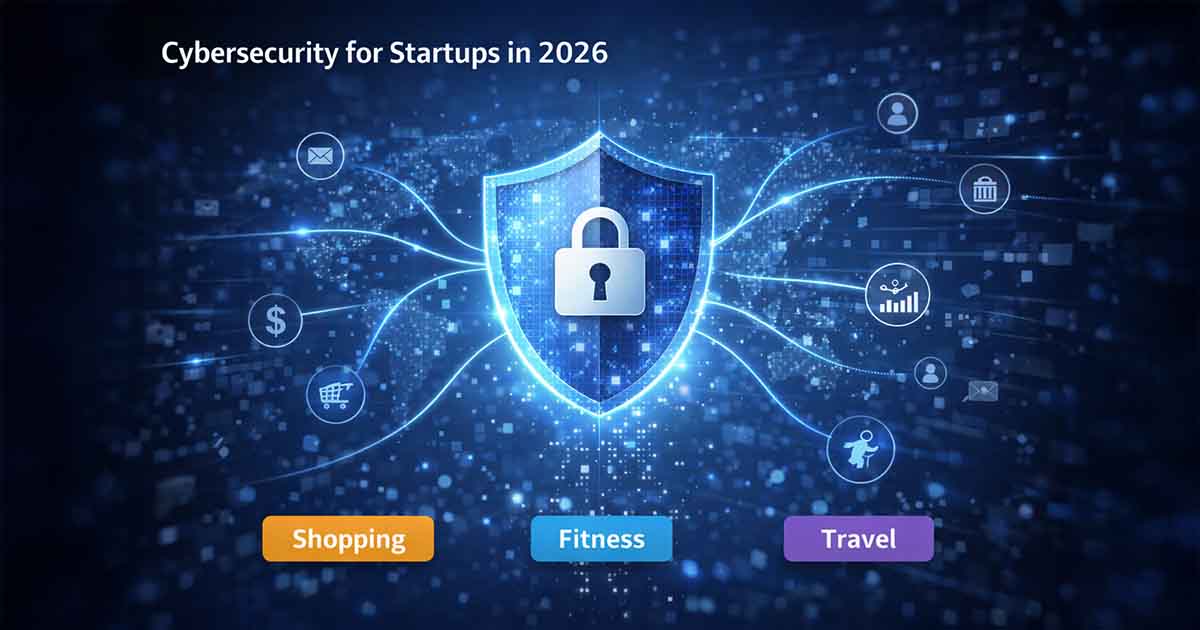
Why Modern Startups are the New Target
There is a dangerous myth circulating in the entrepreneurial world suggesting that small businesses are safe from hackers. However, in 2026, this logic is fundamentally flawed because automated AI bots scan the entire internet for the path of least resistance. In addition to this, startups represent the perfect “soft target” as they often focus on rapid scaling rather than security infrastructure.
Specifically, the modern legal landscape has become unforgiving regarding data privacy. With global regulations tightening, a startup is legally responsible for every byte of customer data it handles. As a result, the cost of a leak includes not just lost revenue but massive fines and the permanent loss of investor confidence. Ultimately, security is the foundation upon which scalability is built.
The Strategic Framework: Three Pillars of Defense
To simplify the complex world of cybersecurity, we can categorize a startup’s needs into three critical pillars. First, we address connection security. Second, we look at storage integrity. Finally, we manage user access. Master these, and you move your business into the top tier of secure digital entities.
Quick Reference: Risks vs. Technical Solutions
| Potential Risk Factor | The Technical Solution | Impact on Business |
| Interception on Public Networks | Enterprise VPN Encryption | High / Immediate |
| Permanent Data Loss / Corruption | Zero Knowledge Cloud Storage | Critical / Long Term |
| Unauthorized Account Takeover | Password Management and 2FA | Essential / Daily |
| Insider Threats and Data Leaks | Advanced Access Controls | Moderate / Scalable |
Pillar 1: Connection Security via Encryption
In a remote-first world, the “network” is often a public Wi-Fi at a local cafe or an airport lounge. Unfortunately, these environments are breeding grounds for “Man in the Middle” attacks. Therefore, without a secure tunnel, your company’s internal communications and login credentials are essentially broadcasted in the clear.
The Virtual Private Network (VPN) Evolution
By 2026, VPN technology has moved beyond simple IP masking to provide military-grade encryption. Specifically, it creates a secure tunnel for every piece of data leaving your device. Moreover, for a startup, implementing a VPN is the simplest way to ensure that remote work remains private. As a result, your team can work from anywhere without exposing internal communications to hackers.
Pros and Cons: Implementing Connection Encryption
| The Advantages | The Disadvantages |
| Complete encryption of all incoming and outgoing data | Can result in minor latency during high bandwidth tasks |
| Protection against DNS leaking and ISP tracking | Requires a culture of consistent use among team members |
| Safe access to geo restricted business tools and sites | Free or low quality versions can compromise privacy |
| Masks the internal office network from external scans | Needs regular updates to maintain the latest protocols |
Pillar 2: Storage Integrity and “Zero Knowledge”
Storing files on physical hardware is a relic of the past, yet the cloud brings its own set of challenges. For instance, the most significant threat to cloud data in 2026 is the service provider’s own vulnerability. Consequently, you must choose a provider that does not have access to your encryption keys.
The Gold Standard: Zero Knowledge Architecture
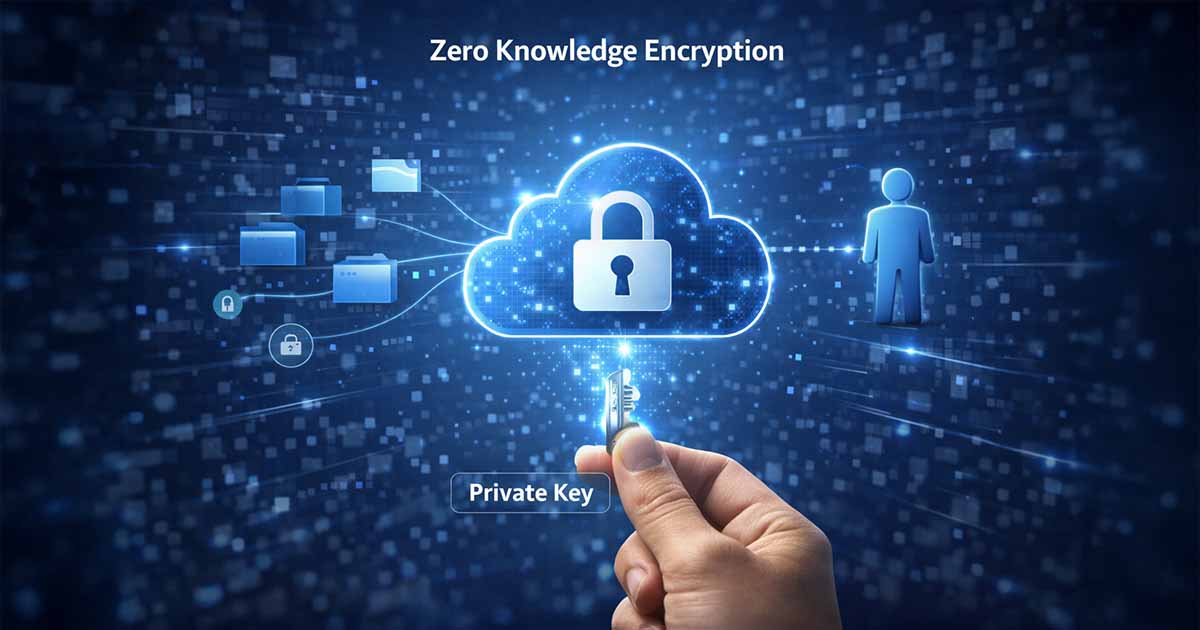
In addition to standard security, “Zero Knowledge” architecture ensures that the provider knows nothing about your data. Since you hold the private keys, the encryption happens on your device before the data ever reaches the cloud. Therefore, if the storage company is hacked, your data remains a useless jumble to the intruders. This is why it is the only way to truly guarantee intellectual property privacy.
Business Cloud Features: Standard vs. Secure Models
| Feature Comparison | Standard Public Cloud | Secure Business Cloud |
| End to End Encryption | Often Optional | Default Requirement |
| Encryption Key Ownership | Held by Provider | Held by Startup (User) |
| File Versioning History | 15 to 30 Days | 180 Days to Unlimited |
| Server Side Protection | General Firewall | Zero Knowledge Architecture |
| Compliance Standards | Basic GDPR | HIPAA / SOC2 / GDPR+ |
Pillar 3: Access Management and the Human Element
The strongest encryption cannot save a business if an employee uses a weak password. In fact, human error remains the primary entry point for 90 percent of cyberattacks. Because of this, access management is about removing the burden of security from the individual and placing it into a system.
Password Managers and MFA
Firstly, startups should adopt a centralized password management tool immediately. Secondly, this allows for the generation of complex passwords that no one has to remember. Furthermore, when coupled with Multi-Factor Authentication (MFA), where a secondary code is sent to a physical device, you effectively eliminate the risk of stolen credentials.

Pros and Cons: Centralized Access Management
The Advantages
- Eliminates weak and reused passwords across the team
- Allows for instant revocation of access for ex employees
- Simplifies the login process for complex internal tools
The Disadvantages
- Creating a single point of failure if the master key is lost
- Requires initial time for team onboarding and training
- Some older legacy software may not support MFA
Step by Step Implementation Checklist for 2026
Building a secure startup is a marathon, not a sprint. Use this phased approach to harden your defenses without disrupting your team’s productivity.
The Critical Foundation (Week 1)
-
Mandate MFA: Enable multi factor authentication on every single business account, from email to Slack.
-
Deploy a VPN: Ensure every team member has a professional encryption tool installed on their work devices.
-
Team Education: Run a 30 minute session on identifying modern phishing attempts.
Infrastructure Migration (Month 1)
-
Secure the Cloud: Move sensitive documents and source code to a Zero Knowledge storage provider.
-
Centralize Logins: Roll out a team wide password manager and phase out personally remembered passwords.
-
Backup Automation: Set up an “air gapped” backup system that updates daily.
Long Term Governance (Ongoing)
-
Quarterly Audits: Review who has access to what. Delete old accounts and update permissions.
-
Legal Compliance: Ensure your data handling practices match the laws of your target markets.
-
Disaster Recovery: Document a clear plan of action in case a breach actually occurs.
Conclusion: Security as a Brand Value
In the competitive market of 2026, Digital Data Security for Startups is no longer a “hidden” feature. It is a powerful selling point. When you can tell your clients and investors that their data is protected by Zero Knowledge encryption and military grade tunnels, you are not just selling a product you are selling trust.
Cybersecurity is a continuous investment in the longevity of your startup. By following the pillars outlined in this guide, you ensure that your focus remains where it should be: on building great things and scaling your vision, rather than fighting digital fires.