
In the ever-evolving landscape of digital marketing, where social media trends flicker and fade like sparks in the wind, one channel has remained remarkably resilient: the inbox. If you are diving into email marketing for beginners, you are not just learning a technical skill; you are acquiring the most powerful asset a digital entrepreneur can own. In 2026, as AI reshapes how we communicate, the direct and personal connection of an email remains the gold standard for building a sustainable business.
At Choosly, we have analyzed hundreds of marketing tools and strategies. Our conclusion is consistent: while SEO and social media are vital for discovery, email marketing is where the actual relationship and the profit are built. This comprehensive guide will take you through every nuance of email marketing for beginners, from the basic philosophy to the advanced automation tactics that define the modern web.
Why Email Marketing Still Rules in 2026
You might hear skeptics claim that “email is dead” because of the rise of instant messaging and social apps. However, for anyone starting with email marketing for beginners, the reality is quite the opposite. Email is the only channel where you have 100% ownership of your audience.
On social media platforms, you are essentially “renting” your followers. If an algorithm changes tomorrow, your reach could drop to zero. In contrast, your email list is a database you can download and move to any provider you choose. This independence is why choosing email marketing for beginners as a primary strategy is the smartest move you can make this year.
The Psychology of the Inbox
The inbox is a private space. When someone gives you their email address, they are granting you a level of trust that a “follow” on social media does not convey. This guide on email marketing for beginners will show you how to respect that trust while effectively turning subscribers into loyal advocates for your brand.
Setting the Foundation: How to Start Your Journey
Before you send your first message, you need a solid foundation. Understanding how to start email marketing requires a blend of strategy and technology.
1. Defining Your Goals
What do you want to achieve? Are you looking to drive sales for an e-commerce store, share your latest blog posts, or build a personal brand? Your goal will dictate the type of content you create. For email marketing for beginners, we recommend starting with a single and clear objective: Value. If your emails provide value, your audience will grow.
2. Choosing the Right Email Service Provider (ESP)
A critical part of email marketing for beginners is selecting the software that will house your list. In 2026, you should not settle for a basic tool. You need an ESP that offers:
-
High Deliverability: Ensuring your emails land in the inbox, not the spam folder.
-
Automation Capabilities: The ability to send “Welcome Sequences” without manual intervention.
-
Segmentation: Grouping your subscribers based on their interests.
Building Your Subscriber List from Scratch
You cannot have email marketing for beginners without an audience. But how do you get people to sign up?
The Power of the Lead Magnet
In 2026, people are protective of their data. You need to offer an ethical “bribe” to get them to share their email address. Common lead magnets include:
-
PDF Checklists: Quick wins that solve a specific problem.
-
Mini-Courses: A series of 3 to 5 emails teaching a skill.
-
Exclusive Discounts: Perfect for SaaS and e-commerce.
Optimizing Your Sign-Up Forms
To master email marketing for beginners, you must place your sign-up forms where people can see them. Consider using:
-
Exit-Intent Popups: Appearing just as a visitor is about to leave your site.
-
Inline Forms: Placed naturally within your blog posts.
-
Dedicated Landing Pages: A page with no distractions, focused solely on the signup.
Crafting Content That Converts
Once you have subscribers, the real work of email marketing for beginners begins: writing the emails.
The Subject Line: Your First Impression
If your subject line is boring, your email will not be opened. Use curiosity, urgency, or a clear benefit. In 2026, personalized subject lines that use the subscriber’s name or recent activity are more effective than ever.
The Body Copy: Building the Relationship
When writing for email marketing for beginners, keep your tone conversational. Write as if you are talking to a single friend. Use short paragraphs, clear headings, and a strong Call to Action (CTA). Remember, every email should have a purpose; do not send an email just for the sake of sending one.
Automation: Making the System Work While You Sleep
One of the most exciting aspects of email marketing for beginners in the modern era is automation. You do not need to be at your computer to send emails.
The Welcome Sequence
This is the most important set of emails you will ever write. When someone joins your list, they are at their peak level of interest. A good welcome sequence for email marketing for beginners should:
-
Email 1: Deliver the promised lead magnet and introduce your brand.
-
Email 2: Provide a “hidden gem” or a tip they did not expect.
-
Email 3: Ask a question to encourage engagement.
Nurture Campaigns
As you advance in email marketing for beginners, you will create nurture campaigns that automatically send content based on how a user interacts with your site. If they click a link about “Web Hosting,” your system can automatically send them more information about that specific topic.
Compliance and Ethics: Staying Out of the Spam Folder
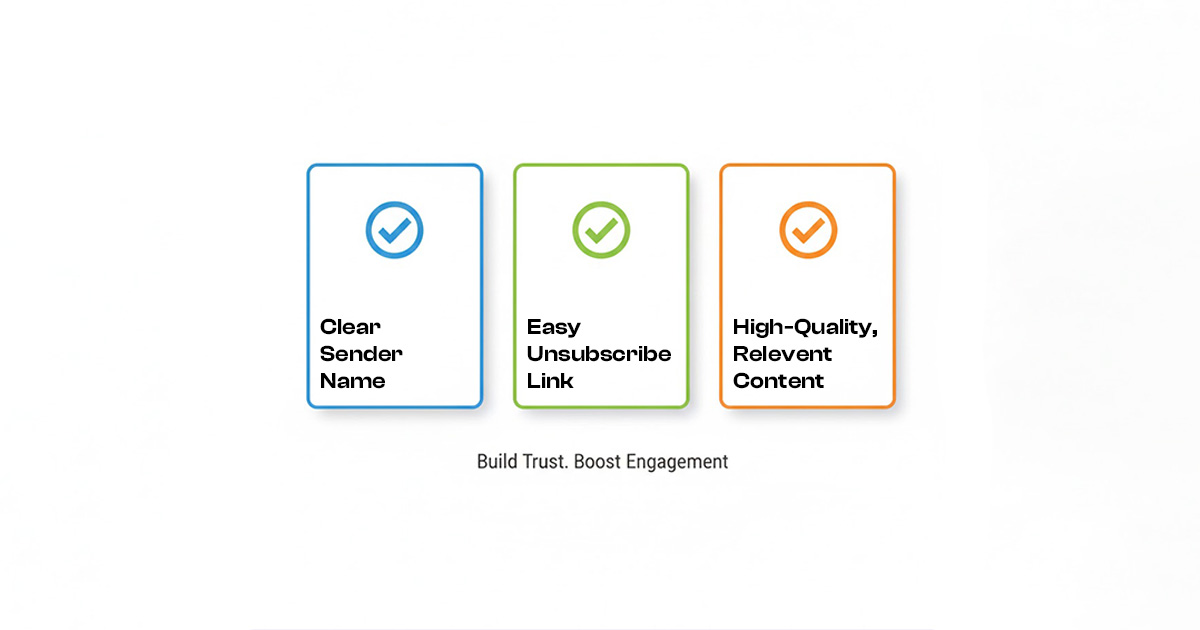
As a beginner, you must understand the legal side of email marketing. Laws like GDPR and CAN-SPAM are not suggestions; they are requirements.
-
Always use a double opt-in: This confirms the user actually wants your emails.
-
Include an Unsubscribe link: It must be easy to find in every single email.
-
Physical Address: Most laws require you to include a physical mailing address in your footer.
Measuring Success: The Metrics That Matter
In email marketing for beginners, you cannot improve what you do not measure. Your ESP will provide a dashboard full of numbers, but focus on these three:
-
Open Rate: This tells you if your subject lines are working. A good average is 20% to 25%.
-
Click-Through Rate (CTR): This tells you if your content is engaging. A CTR of 2% to 5% is generally considered healthy.
-
Conversion Rate: The ultimate goal. How many people who clicked actually performed the desired action like buying a product or signing up for a trial?
Future Trends: Email Marketing in 2026 and Beyond
As we move further into 2026, email marketing for beginners is being influenced by Artificial Intelligence. AI can now help you:
-
Optimize Send Times: Sending the email exactly when each individual subscriber is most likely to be checking their phone.
-
Predictive Analytics: Identifying which subscribers are likely to unsubscribe so you can win them back.
-
Content Generation: Helping you draft ideas and subject lines faster than ever before.
Conclusion: Your Path Forward with Choosly
Mastering email marketing for beginners is a journey, not a sprint. It takes time to find your voice and build a list of people who truly care about what you have to say. However, the effort is worth it. By building an email list, you are creating a digital fortress that protects your business from the whims of algorithms and the rising costs of advertising.
At Choosly, we encourage you to start today. Do not wait until you have a “perfect” website or 10,000 visitors. Start with your first ten subscribers, treat them well, and watch how this powerful channel transforms your digital presence.