
Stop Getting Bad Results From AI Writing Tools
We have all experienced that initial moment of pure excitement. You finally sign up for a brand new artificial intelligence platform, eager to save dozens of hours on your weekly tasks. However, when you type a quick sentence into the glowing chat box, expecting a literary masterpiece to appear instantly on your screen, you get a nasty surprise. Instead of a masterpiece, your new AI writing tools spit out a highly generic, robotic paragraph that sounds like it was written by a boring corporate textbook.
You read the text, let out a deep sigh of frustration, and immediately think the technology is broken or totally overhyped. It is a common experience that causes thousands of smart professionals to abandon these platforms every single day. But here is the harsh truth: the software is not broken at all. The real problem lies entirely in the instructions you are giving it.
If you want to conquer your daily workflow and drastically improve your AI content creation, you have to fundamentally change how you communicate with the machine. In this comprehensive, easy-to-understand educational guide, we are going to explore exactly why you are struggling. We will introduce you to the science of prompt engineering, show you how to properly instruct your AI assistant, and provide a simple framework to generate brilliant text every single time.
The Golden Rule of Digital Generation
Before we dive into the specific mistakes you might be making, we really need to understand a core concept of computer science. There is an old saying in the programming world: "Garbage in, garbage out." This simply means that the quality of the output is entirely dependent on the quality of the input.
When you use modern AI writing tools, you are interacting with what developers call a Large Language Model. These models are essentially advanced prediction engines. They do not actually understand the world as a human being does. They do not know your personal history, they do not know what your company sells, and they certainly do not know what your current marketing goals are. They only know the exact words you type into the small chat box.
If you provide a lazy, five-word instruction, the machine has absolutely zero context to work with. Because it lacks context, it is forced to guess what you want. When a machine guesses, it always defaults to the most generic, safe, and boring language possible. The ultimate secret to getting better AI results is simply giving the software enough detailed context so that it no longer has to guess.
The Enthusiastic Intern Analogy
To make this concept simple to remember, you should always treat your digital assistant like a brand new, eager college intern who just started working at your business today.
Imagine you walk up to a new intern and say, "Write a blog post about running shoes. "
The intern wants to do a good job, but they are completely lost. They do not know if you want a funny article or a serious scientific paper. They do not know if the article is for professional marathon runners or casual weekend joggers. They do not know if the post should be two hundred words or two thousand words long. They will likely spend hours writing a totally useless history of footwear because you failed to give them proper direction.
Now, imagine you walk up to that exact same intern and say, "Act as an expert running coach. I need you to write a five-hundred-word article for absolute beginners explaining why choosing the right running shoe prevents knee injuries. Use an encouraging tone, keep the paragraphs short, and include a bulleted list of three things to look for when shopping."
The intern now knows exactly what to do. They understand their role, the target audience, the desired tone, and the strict formatting rules. They will deliver a fantastic, highly usable piece of content. Your software operates exactly the same way. The detailed instructions you provide are called a prompt, and mastering the art of prompt engineering is the most important digital skill you can learn this year to accelerate your company's growth.
Mistake 1: Being Far Too Vague
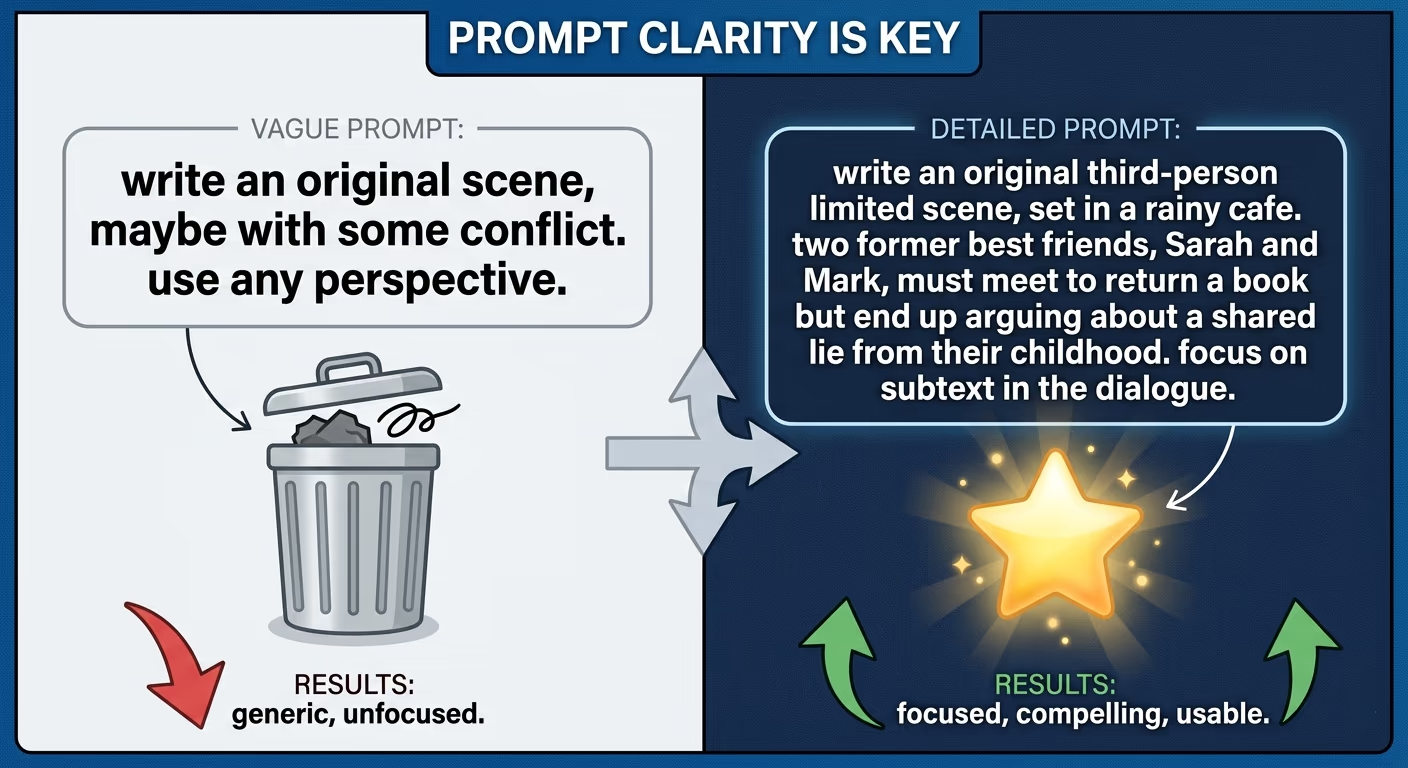
The biggest mistake people make when using this technology is being far too vague. They treat the chat interface like a Google search bar instead of a professional employee.
When you go to a search engine, you type short fragments like "best running shoes 2026." The search engine then shows you links to websites that match those exact words. But an AI assistant is a creative engine, not a search engine. It requires full sentences and deep explanations to function correctly.
If you ask the software to "write a sales email about our new product," the machine will generate a terrible, robotic email. It does not know the name of your product, the price, the main features, or the specific problem it solves for the customer. It will just output filler text.
To fix this common mistake, you must provide the missing details. You need to tell the machine exactly what the product is, what three features are the most valuable, and what specific action you want the reader to take at the very end of the email. Do not be afraid to write a prompt that is an entire paragraph long. The more details you provide upfront, the less editing you will have to do later.
Mistake 2: Forgetting the Target Audience
Every great writer knows that you must adapt your language to fit the person who is actually reading your work. You would never explain a complicated scientific concept to a five-year-old child using the same vocabulary you would use when speaking to a university professor.
Unfortunately, beginners constantly forget to tell their AI writing tools exactly who the final reader is. When the machine does not know the audience, it defaults to a completely neutral, academic tone that puts everyone to sleep. It fails to connect emotionally with anyone because it is trying to speak to everyone.
You can instantly fix this problem by explicitly stating the target demographic in your prompt engineering process. You can tell the software to "explain this concept so a high school student can easily understand it," or you can tell it to "write this landing page for busy corporate executives who only care about saving time and cutting costs."
By clearly defining the audience, the machine will automatically adjust the complexity of the vocabulary, the length of the sentences, and the types of persuasive arguments it uses. This simple addition completely transforms the text from robotic to highly relatable.
Mistake 3: Ignoring Brand Voice and Tone
Have you ever read an article generated by artificial intelligence and instantly thought, "This sounds like a machine wrote it"? This happens because the user failed to give the software any rules regarding the tone of voice.
By default, the software tries to sound polite, objective, and safe. While this is great for writing legal documents or neutral summaries, it is terrible for writing engaging marketing material, entertaining blog posts, or personal social media updates.
If you want your content to sound human, you have to command the machine to act like a human. You can use specific adjectives in your prompt to strictly guide the emotional feel of the output to achieve your desired style.
For example, you can command the software to "use a highly conversational, witty, and slightly sarcastic tone." Alternatively, you can ask it to "write using a deeply empathetic, warm, and highly encouraging voice." You can even tell it to avoid using overly complex business jargon. Giving the machine emotional boundaries forces it to break away from its boring, default robotic state.
The Anatomy of the Perfect Framework
To guarantee you get better AI results every single time, you should always structure your requests using a proven, four-part framework. If you memorize this simple structure, you will completely conquer your daily writing tasks and save yourself hours of frustration.
Part 1: The Persona
Always start by assigning the machine a specific role. Tell it who it is supposed to be.
Example: "Act as a senior digital marketing expert with ten years of experience in the fitness industry. "
Part 2: The Task
Clearly define exactly what you want it to create, including the required length and the overall goal of the document.
Example: "Write a six-hundred-word educational blog post explaining the benefits of drinking water before a morning workout. The goal is to educate beginners and keep them engaged."
Part 3: The Context
Provide the background information, the target audience, and any specific facts or features that absolutely must be included in the text.
Example: "Our target audience is busy working parents who have very little free time. Make sure to mention that staying hydrated improves mental focus during long meetings at work."
Part 4: The Format and Tone
Give strict rules on how the text should look and how it should sound to the reader.
Example: "Use a friendly, encouraging, and conversational tone. Avoid using complicated scientific jargon. Break the text up into short paragraphs and include a bulleted list of three quick tips."
When you combine all four of these elements into a single, detailed prompt, the output you receive will be absolutely breathtaking.

Elevating Your Strategy with Premium Tools
While writing a great prompt is the most crucial skill to learn, utilizing the right platform for your specific goals makes a massive difference in your daily output. Many beginners try to run their entire company on free, basic chatbots, which often leads to frustrating limitations. To truly scale your operations, you should strongly consider investing in dedicated AI writing tools designed for professionals.
Platforms like Jasper are tailored specifically for marketing teams and agencies. They are built from the ground up to help you maintain a consistent brand voice across campaigns. When you purchase a premium subscription, you gain access to advanced features that ensure your content actually sells products and ranks well on search engines. It is an investment that pays for itself by replacing expensive freelance writers.
Similarly, tools like Copy.ai take a brilliant workflow-driven approach. They offer an incredible library of pre-built templates that help you generate short, specific pieces of text rapidly. It is a fantastic purchase for operational teams that want to automate repetitive daily tasks like writing emails or generating social media captions. Investing in these premium, purpose-built platforms will definitely give you an edge over competitors who are still relying on basic, free tools.
The Crucial Step of Human Editing
Even when you write the absolutely perfect prompt using the four-part framework, your job is not completely finished. You must remember that this software is an advanced assistant, not a human editor. It does a phenomenal job of creating a solid rough draft, overcoming the blank page, and organizing your messy thoughts.
However, you should never blindly copy the generated text and instantly publish it to your website or send it to your clients. The machine lacks your unique life experiences, your personal stories, and your specific industry relationships.
You must always take five minutes to read through the output carefully. Verify any bold claims or statistics the machine might have generated. Inject your own personal anecdotes to make the text feel truly authentic. Adjust a few sentences so the rhythm matches your natural speaking voice. When you successfully combine the incredible speed of AI content creation with the genuine empathy of a human editor, you create a final product that is completely unbeatable.
Final Thoughts on Mastering Prompt Engineering
Learning to communicate with artificial intelligence effectively is very similar to learning a new foreign language. It feels strange and awkward at first. You will undoubtedly make a few mistakes, write a few bad prompts, and receive a few robotic paragraphs along the way.
But if you consistently apply the principles outlined in this guide, that awkwardness will quickly disappear. By actively treating the software like an enthusiastic intern, providing deep contextual details, identifying your target audience, and dictating a strict emotional tone, you will permanently stop getting bad results.
Take a few minutes today to open your favorite text generator. Instead of typing a lazy five-word sentence, take your time and write a detailed, thoughtful prompt using the four-part framework. The dramatic difference in quality will completely shock you, and you will finally unlock the true time-saving power of this incredible modern technology.