
The Ultimate Guide to Shared Hosting vs. VPS Hosting
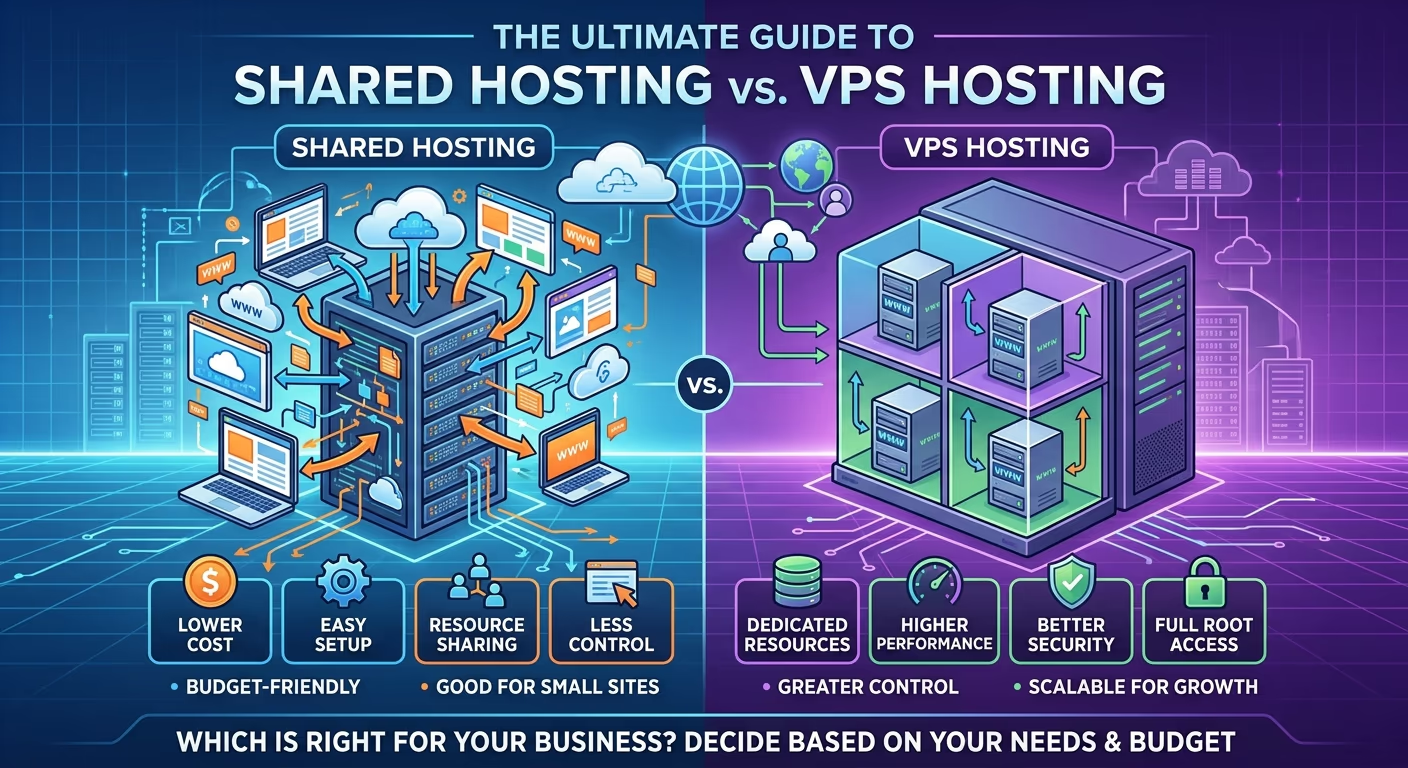
Starting a brand new website is an incredibly exciting journey. You get to pick your colors, write your text, and design your digital home for the world to see. But before any of that can actually go live on the internet, you need a safe and reliable place to store all those digital files. This is exactly where the great debate of Shared Hosting vs. VPS Hosting comes into the picture. Finding the right web hosting plan is a critically important decision that will directly impact your overall website performance and how quickly your pages load for visitors.
If you pick the wrong plan from the start, your site might completely crash when you finally get a big spike in website traffic. If you buy too much server power right away, you will simply be wasting a lot of money every single month. In this educational guide, we are going to break down the Shared Hosting vs. VPS Hosting question using very simple and easy language. We will explore the benefits of each, and by the end of this article, you will know exactly which path is the perfect fit for your specific digital project.
The Foundation of Building Online
Before we jump into the differences between these two options, we need to understand what a server actually does in the real world. Think of a server as a very robust computer that never, ever turns off. Its only job is to hold your website files securely and show them to anyone who types your domain name into their browser.
When you purchase a web hosting plan from a provider, you are basically renting space on their massive machinery. The type of package you select determines exactly how much space you get and how much control you have over that specific area.
For beginners, the technical jargon surrounding the Shared Hosting vs. VPS Hosting decision can feel totally overwhelming. People talk endlessly about bandwidth, RAM, storage limits, and processing power. But you do not need a degree in computer science to understend the basics of how this works. You just need to look at how these massive companies divide their hardware among their paying customers.
Understanding the Basics of Shared Hosting
Let us start with the most common entry point for almost every new webmaster. Shared Hosting is exactly what it sounds like. You are sharing one massive physical server with hundreds, or sometimes even thousands, of other websites.
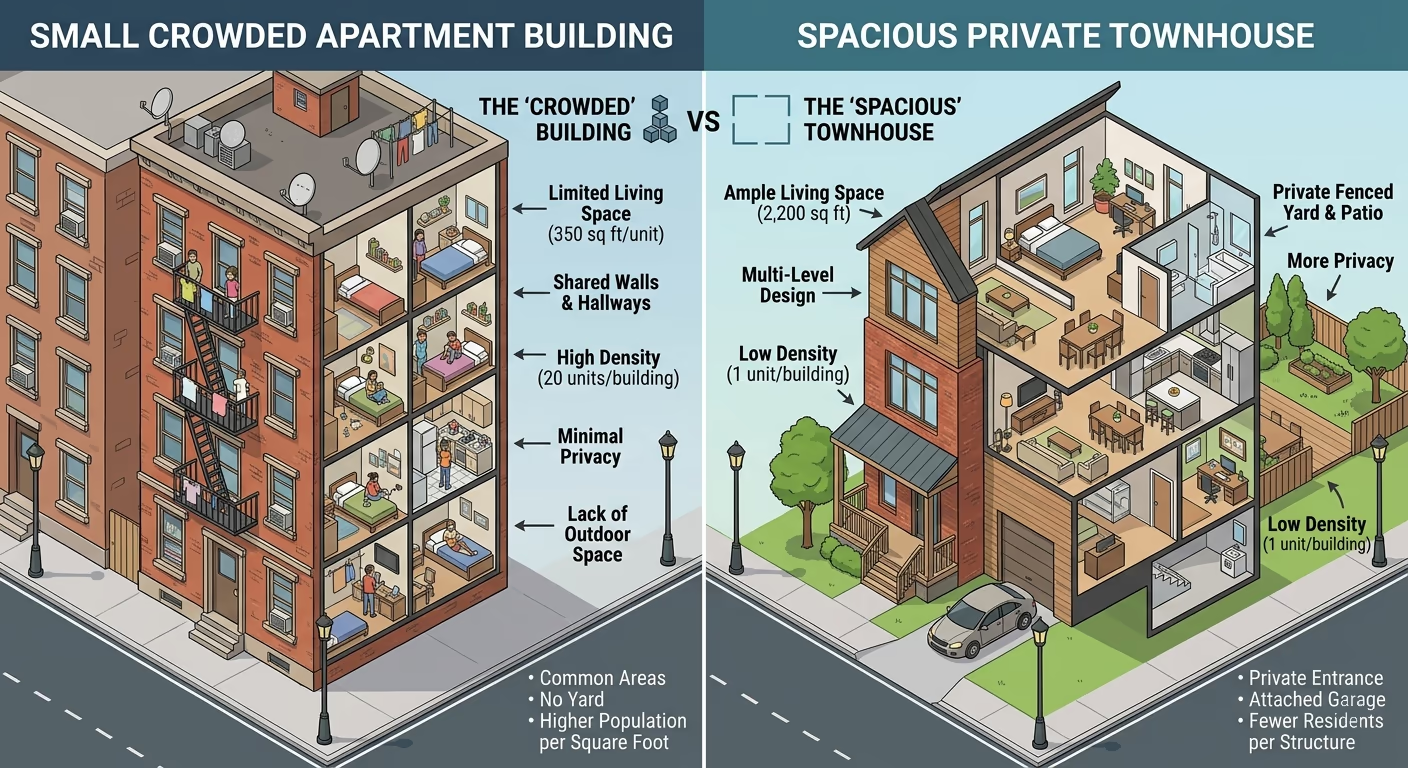
The easiest way to picture this setup is to imagine renting a small room in a very busy communal building. You all share the same front door, the same plumbing, and the same electricity. If your neighbor decides to throw a massive party and uses all the hot water, your morning shower is going to be freezing cold.
In the digital world, this means you are actively sharing the server resources like memory and processing power with all those other accounts. If another website on your exact same server suddenly goes viral and gets massive website traffic, they will eat up all the processing power available. As a direct result, your personal website might slow down to a crawl, or even crash completely, even though you did absolutely nothing wrong.
However, this communal setup is incredibly cheap. Because the company is splitting the cost of running that computer among hundreds of people, they can offer you a rock-bottom monthly price. It is also very easy to manage. The provider handles all the technical maintenance, updates, and security patches behind the scenes. You just log in and start building your pages.
Understanding the Power of VPS Hosting
Now, let us move up a level to the next tier in the Shared Hosting vs. VPS Hosting journey. VPS Hosting stands for Virtual Private Server. While you are still technically sharing a physical computer with other people, the environment is entirely different from the crowded apartment.
Using our previous real estate analogy, this powerful option is like owning a modern townhouse. You still share a property line with your neighbors, but you have your own front door, your own dedicated plumbing, and your own private driveway. What your neighbors do inside their house has absolutly no impact on your daily life.
To make this work digitally, the provider uses a special piece of software called a hypervisor. This software creates solid virtual walls inside the main server, carving out a private, isolated space just for you. You are guaranteed a specific amount of server resources. If you pay for 4GB of RAM and 2 CPU cores, those are yours to keep forever. No one else can touch them, even if their website goes totally viral.
This strict isolation makes your website highly stable and much faster. It also gives you total control. If you want to install custom software or change deep server settings, you have the root access required to do so. But with this great power comes a higher price tag and a steeper learning curve.
The Pros and Cons of Shared Hosting
Every single tool in the digital world has specific strengths and weaknesses. When weighing Shared Hosting vs. VPS Hosting, it helps to look at the benefits and drawbacks of the most comon starting point. Shared Hosting is the undisputed king of beginners, designed to remove all technical barriers so you can focus entirely on writing content and designing your layout.
The Main Advantages:
It is incredibly affordable, sometimes costing less than a cup of coffee per month.
It is extremely easy to set up with one-click installers for popular platforms like WordPress.
There is zero technical maintenance required since the host handles all hardware and software updates.
Providers usually include a free domain name and basic email accounts for your very first year.
The Main Disadvantages:
The dreaded bad neighbor effect can throttle your speeds unexpectedly and ruin your user experience.
You have very limited control over backend server settings and cannot install custom software.
Security risks are slightly higher if another site on your server gets hacked due to poor passwords.
It simply cannot handle sudden, massive spikes in daily visitors without crashing or limiting your reach.
The Pros and Cons of VPS Hosting
On the other side of the Shared Hosting vs. VPS Hosting debate, we have the private environment. VPS Hosting is built for serious webmasters who need raw power, total stability, and the complete freedom to customize their backend architecture. It requires more investment, both in money and in time.
The Main Advantages:
Guaranteed server resources mean your website performance is always fast and highly reliable.
Complete isolation protects you from other users' traffic spikes and major security flaws.
Full root access allows you to install any custom application or unique operating system you desire.
It is highly scalable, meaning you can add more RAM or storage instantly with just a few clicks.
The Main Disadvantages:
It is significantly more expensive than basic entry-level plans found in the shared category.
It requires a solid understending of server management and command lines to operate smoothly.
Unmanaged plans mean you are entirely responsible for all security updates and daily backups.
The setup process takes much longer and lacks the simple beginner interfaces that new users love.
The Battle of Performance and Speed
When we talk about the overall success of a modern website, speed is absolutely crucial. Search engines heavily penalize websites that take too long to load on mobile phones or desktop computers. If your pages take more than three seconds to appear, the majority of your visitors will simply click the back button and visit a competitor instead.
In the Shared Hosting environment, speed is always a massive gamble. You might have a blazing fast website on a quiet Monday, but if your server neighbors run heavy promotional campaigns on a busy Tuesday, your loading times will plummet instantly. You have zero control over this variable, making it incredibly frustrating when trying to build a professional brand.
With VPS Hosting, your speed is highly consistent. Because your memory and processing units are fenced off from everyone else, your website will load at the exact same fast speed every single time a visitor arrives. This consistency is crucial for optimizing your website performance, building deep trust with your audience, and climbing the search engine rankings.

Security: Protecting Your Digital Property
Security is another massive factor you must consider when evaluating Shared Hosting vs. VPS Hosting. Cybercriminals are constantly scanning the web for vulnerabilities, and your web hosting setup plays a huge role in keeping them out.
When you live in the crowded digital apartment building, you share an IP address with hundreds of strangers. If one of those strangers engages in shady activities, like sending out massive amounts of spam emails, that shared IP address might get blacklisted by search engines. Even worse, if a hacker finds a deep vulnerability in your neighbor's outdated software, they might be able to cross over and infect your files too.
A virtual private server drastically reduces these specific risks. You are assigned your very own dedicated IP address right from the start. Your virtual walls are completely solid. A hacker could completely destroy a neighboring virtual server on the exact same physical machine, and your precious files would remain untouched and perfectly safe. However, you must remember that with unmanaged VPS Hosting plans, you are the one responsible for configuring the firewalls and keeping the core software updated to prevent attacks.
How to Know When It Is Time to Upgrade
Many new website owners wonder when they should make the leap from a basic plan to a virtual private setup. The transition does not have to happen overnight. In fact, most successful blogs and stores start on the cheapest Shared Hosting plan available and only upgrade to VPS Hosting when they absolutely have to.
You will know it is time to switch when your website starts showing frequent errors during busy hours. If your users complain that the checkout page is taking too long to load, or if your host sends you an email warning you that you are using too many server resources, it is time to move. Another clear sign is if you are trying to install a specific piece of software to run your business, but your basic plan blocks the installation due to restricted permissions.
Migrating your site might sound scary, but most premium providers will actually do all the heavy lifting for you. They have dedicated technical teams that will transfer your files from your old crowded apartment to your new spacious townhouse without your website ever going offline.
Making the Final Decision
So, how do you actually resolve the Shared Hosting vs. VPS Hosting dilemma for your needs today? It all comes down to your current size, your technical comfort level, and your available budget.
You should definitely start with Shared Hosting if you are launching a brand new personal blog, a small portfolio site, or a local business page that only expects a few hundred visitors a month. It is the smartest financial move while you are still trying to figure out your digital strategy. You do not need a massive engine for a lightweight car.
On the other hand, you should seriously consider upgrading to VPS Hosting if you are running an active online store processing daily payments, an established news platform with thousands of daily readers, or a complex application that requires custom software. If your website is your primary source of income, investing in guaranteed server resources and isolated security is not just a luxury; it is an absolute requirement for professional success.
Final Thoughts
Building a digital presence is an ongoing process of growth, learning, and constant adaptation. The wonderful thing about web technology is that nothing is ever set in stone. Almost every major web hosting provider makes it incredibly easy to upgrade your account as your audience grows.
If you are just starting out today, do not overthink it too much. Grab an affordable, beginner-friendly Shared Hosting plan, get your beautiful design online, and focus all your energy on creating amazing content for your visitors. When the day finally comes that your website traffic spikes and your website performance starts to dip, you will know exactly what to do. You will simply pack your digital bags, move out of the communal building, and settle comfortably into your powerful, private new townhouse.",