
Why Your Business Needs Zero-Knowledge Cloud Storage in 2026
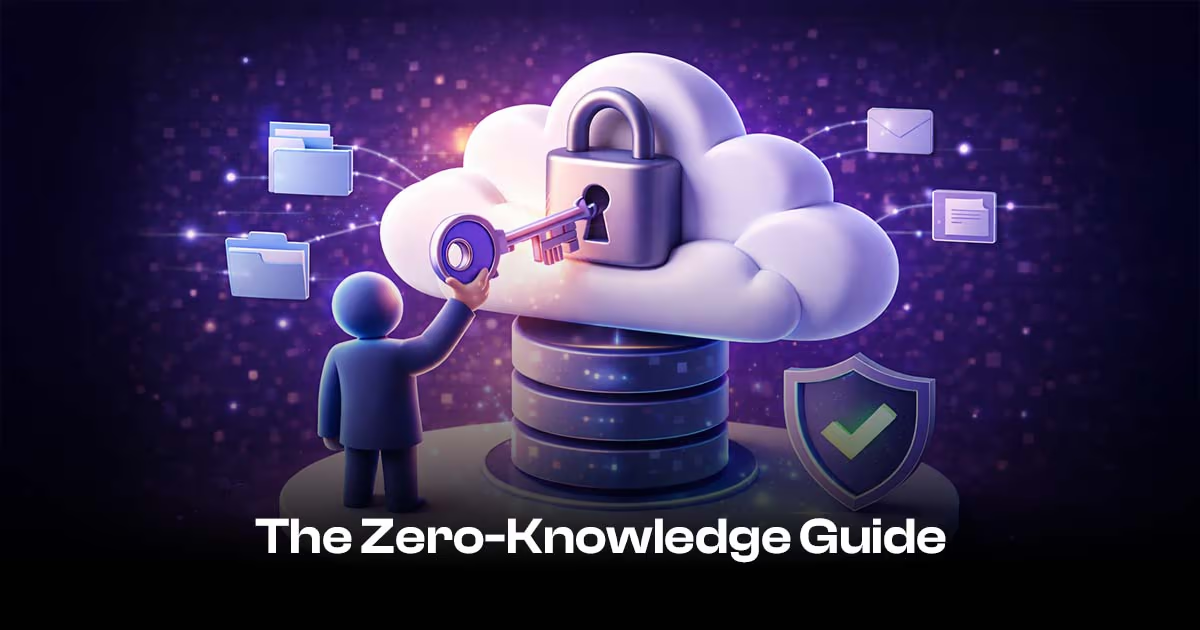
Digital Data Security for Startups begins with one fundamental question: who actually has the keys to your files? In 2026, most entrepreneurs assume that because their data is in “the cloud,” it is automatically safe. However, the reality of modern cyber threats paints a very different picture. While traditional storage providers offer convenience, they often retain the ability to access your information. This creates a critical vulnerability that every growing business must address to protect its intellectual property.

The Invisible Risk of Traditional Cloud Storage
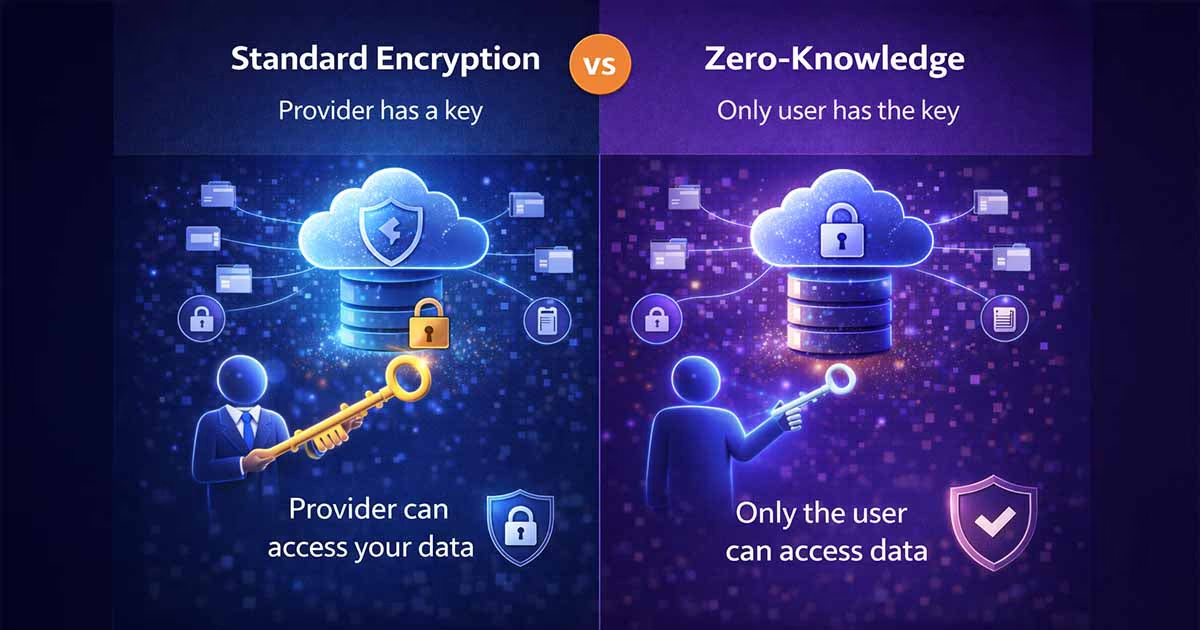
The digital landscape has shifted, and hackers are no longer the only concern. When you use a standard cloud service, your data is often encrypted during transit and at rest, but the provider holds the master keys. This means that if the provider’s internal systems are compromised, or if they face a legal subpoena, your most sensitive business plans could be exposed without your consent.
For a startup, this lack of total control is a silent killer. It isn’t just about a potential leak; it’s about the loss of “Digital Sovereignty.” If you don’t own your encryption keys, you don’t truly own your data. This is why understanding the mechanics of how your information is stored is the first step toward building a resilient business.
Provider Type | Encryption Key Holder | Risk Level | Access Privacy |
Standard Public Cloud | The Service Provider | Moderate to High | Low / Can be Scanned |
Zero-Knowledge Cloud | You (The User) | Very Low | Absolute / Private |
What Exactly is Zero-Knowledge Encryption?
To simplify a complex topic, Zero-Knowledge encryption is a security architecture where the service provider has exactly “zero knowledge” of the data you store on their servers. The encryption process happens locally on your device before the data even begins its journey to the cloud.
Think of it like a high-security vault. In a traditional bank, the manager might have a spare key to your deposit box. In a Zero-Knowledge system, you are the only person in the world with the key. Even if a technician at the storage company opens your “digital folder,” they will only see a chaotic mess of scrambled characters that are impossible to decipher without your unique private key.
Pros and Cons: Zero-Knowledge Architecture
Pros | Cons |
|---|---|
|
|
Digital Data Security for Startups: Practical Implementation
Building a secure workspace doesn’t require a degree in computer science. It requires a shift in mindset. As you scale, your data becomes more attractive to competitors and bad actors. Implementing a private storage solution early on ensures that security is baked into your company culture rather than being an afterthought.
Choosing the Right Tools
When evaluating a provider for your Digital Data Security for Startups strategy, look for these three non-negotiables:
End-to-End Encryption (E2EE): Ensure the encryption starts on your laptop and ends only when you open the file again.
Open Source Roots: Providers that allow their code to be audited by the community are generally more trustworthy.
Swiss or EU Jurisdiction: Locations with strong privacy laws offer an extra layer of legal protection.
Conclusion: Taking Control of Your Digital Future
The move toward private, encrypted storage is not just a technical trend; it is a necessity for the modern economy. By choosing Zero-Knowledge systems, you are telling your clients, investors, and team members that you value their privacy as much as your own innovation. Protecting your startup’s data today is the best way to ensure you still have a business to grow tomorrow.