
MailerLite Vs Benchmark Email Review
Disclosure: Some links in this article may be affiliate links. If you purchase through them, we may earn a commission at no extra cost to you. Our reviews remain independent and are based on research, product information, pricing, features, and practical value for users.
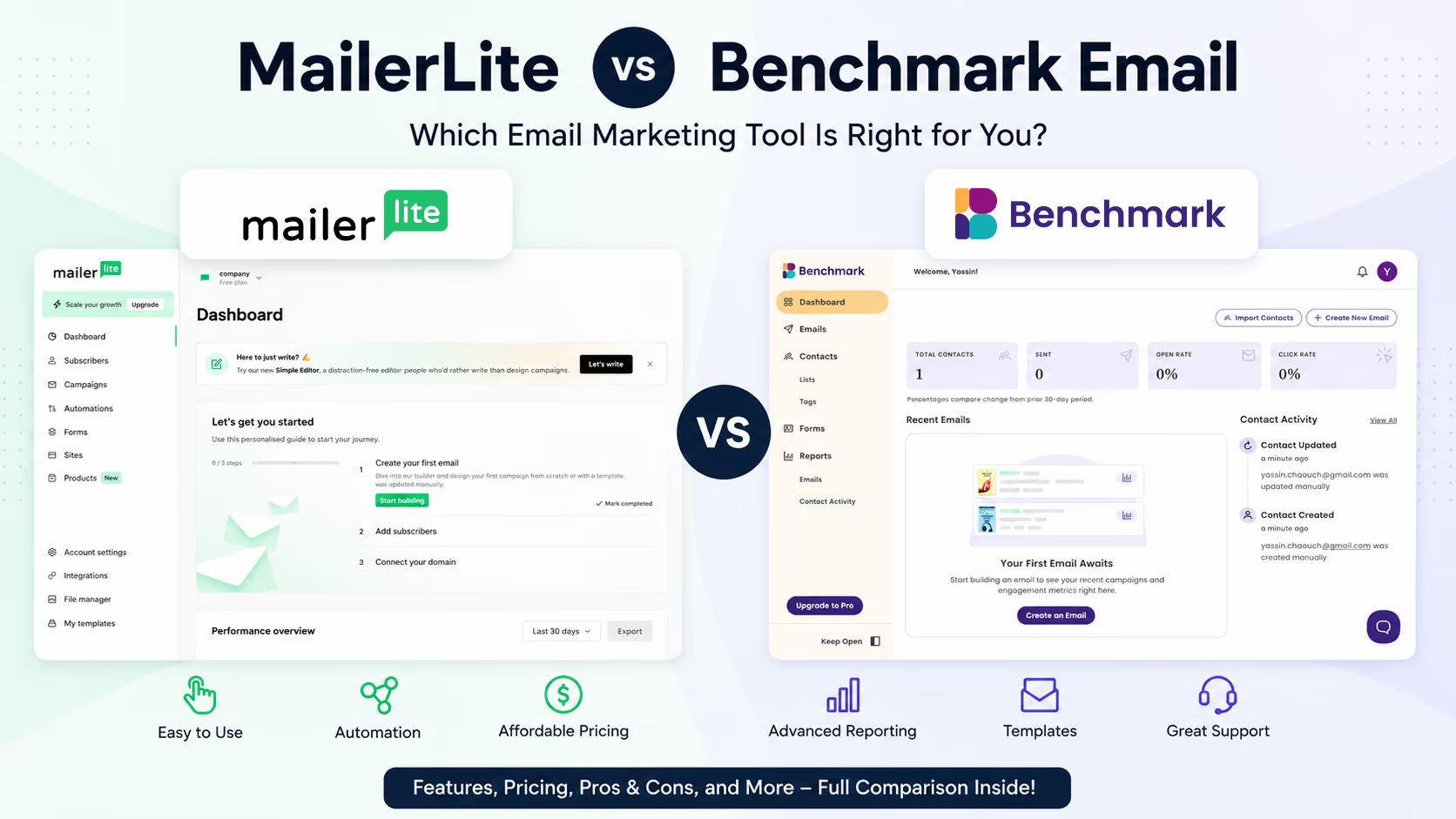
Choosing between MailerLite and Benchmark Email is really a decision about how much email marketing power you need.
Both tools help you create email campaigns, manage contacts, build signup forms, and track performance. Both also offer a free plan with 500 contacts. But they are not trying to solve the problem in exactly the same way.
MailerLite feels more like a lightweight marketing suite. It gives you email campaigns, automations, landing pages, websites, forms, ecommerce related tools, digital product selling, paid newsletter subscriptions, and more room to grow. It is usually the better fit for creators, bloggers, small businesses, course sellers, newsletter operators, and lean teams that want one affordable tool for audience growth.
Benchmark Email feels more focused on simple email campaign creation. Its newer positioning is built around speed, clean design, easy sending, contact organization, forms, reporting, and real human support. It is a good fit for small businesses, nonprofits, local companies, and marketing generalists who want to send good looking campaigns without getting buried in a complex platform.
Our early recommendation is simple. Choose MailerLite if you want more growth tools and better long term feature value. Choose Benchmark Email if your main priority is a simple email editor, straightforward contact management, and support access without needing a full marketing system.
In this MailerLite vs Benchmark Email review, we compare features, pricing, ease of use, automation, templates, integrations, support, drawbacks, security, user reviews, alternatives, and overall value.
Quick comparison summary
MailerLite is the stronger overall platform for most people who want more than basic email sending. Benchmark Email is more appealing if you want a simpler, campaign focused tool and do not need advanced landing pages, websites, monetization, or deeper automation.
Buying factor | MailerLite | Benchmark Email |
|---|---|---|
Best for | Creators, small businesses, ecommerce beginners, bloggers, newsletter owners, agencies, and teams that want email plus growth tools | Small businesses, nonprofits, local teams, and marketers who want a simple way to build and send campaigns |
Free plan | Yes, up to 500 subscribers and 12,000 monthly email sends | Yes, up to 500 contacts and 2,500 monthly email sends |
Starting price | Growing Business starts from $10 per month on monthly billing, with annual billing discounts available | Public pages show Pro pricing by contact level, with the homepage listing Pro from $19 per month and the pricing page varying by selected tier |
Main strength | More complete marketing toolkit for the money | Simple email creation and clean campaign workflow |
Main weakness | Free plan support becomes limited after the 14 day premium trial, and some advanced features require higher plans | Less clearly positioned for advanced automation, landing pages, websites, and monetization tools |
Ease of use | Very beginner friendly, but with more tools to learn as you grow | Very simple for basic campaign sending |
Automation | Stronger for practical workflows, ecommerce triggers, templates, and multi step sequences | Useful automation material exists, but current public pricing emphasizes core email, forms, contacts, and reporting more than deep workflow building |
Integrations | Stronger visible ecosystem, including Stripe, Shopify, WooCommerce, WordPress, Zapier, Make, API, and newer AI related developer options | API and integration partner options are available, but the public integration ecosystem feels less central than MailerLite |
Support | Paid plans get direct support. Advanced includes live chat. Free users mainly rely on trial support, help center, and community after the trial | Public pages position chat and email support as included, with Enterprise adding phone support and account management |
Best value for | Users who want email, automation, landing pages, forms, websites, and monetization in one place | Users who mostly need reliable email campaigns, basic list management, forms, reports, and accessible support |
What each tool is
What is MailerLite?

MailerLite is an email marketing platform built for people who want to grow and communicate with an audience without using a complicated enterprise tool.
In practical terms, it helps you send newsletters, build automations, create landing pages, collect subscribers with forms and popups, build simple websites, sell digital products, run paid newsletters, and track campaign performance.
The main audience is creators, small businesses, bloggers, ecommerce stores, authors, coaches, course sellers, agencies, and lean marketing teams. It is not the deepest marketing automation system on the market, but it offers a strong balance of usability, features, and price.
MailerLite is especially attractive when you want one tool to handle the basics of audience growth. For example, a creator can build a landing page, collect email subscribers, send a welcome sequence, sell a digital download, and run a weekly newsletter from the same account.
Explore MailerLiteWhat is Benchmark Email?

Benchmark Email is an email marketing platform focused on making campaign creation simple.
It helps users design emails, manage lists and tags, collect contacts through forms, personalize campaigns, use AI assisted text and images, and review campaign performance. Its newer public positioning is very focused on removing clutter and helping busy marketers send email campaigns faster.
The main audience is small businesses, nonprofits, local service companies, teams with limited marketing time, and users who want a cleaner alternative to heavier platforms.
Benchmark Email is best when you do not want a large marketing suite. If you mainly need to send newsletters, announcements, promotions, and updates to a contact list, Benchmark Email can feel refreshingly direct.
Explore Benchmark EmailWho each option is best for
User type | Better choice | Why |
|---|---|---|
Beginner newsletter creator | MailerLite | The free plan gives more monthly sends, and the platform includes landing pages, forms, automations, and simple monetization tools |
Local business sending simple updates | Benchmark Email | The editor, forms, contact tools, and reports are easy to understand without learning a larger marketing system |
Small ecommerce store | MailerLite | Better visible support for ecommerce integrations, automation triggers, sales tracking, and product related workflows |
Nonprofit with simple communication needs | Benchmark Email | The simple campaign workflow and support access can be more important than advanced automation |
Creator selling digital products | MailerLite | MailerLite includes digital products, bookings, paid newsletters, landing pages, and automations in the same ecosystem |
Agency managing client campaigns | MailerLite | It offers more growth tools, templates, segmentation, and plan options for broader client needs |
Team needing multiple users | Depends | MailerLite includes more seats on higher plans, while Benchmark Email adds paid users on Pro and custom users on Enterprise |
Advanced automation team | Neither as first choice | ActiveCampaign, Klaviyo, HubSpot, or Brevo may be better if deep automation, CRM, scoring, or multichannel journeys matter |
MailerLite may be more than you need if you only send a simple monthly newsletter and never use landing pages, automations, or forms beyond the basics.
Benchmark Email may not be enough if your strategy depends on advanced automations, ecommerce journeys, landing pages, website building, digital product selling, or a broader creator business workflow.
Feature comparison
Core email features
Both platforms cover the essentials.
MailerLite includes email campaigns, a drag and drop editor, templates, subscriber management, forms, popups, segmentation, landing pages, websites, and reporting. Its feature set feels broader because email is only one part of the platform.
Benchmark Email includes a drag and drop email builder, templates, blank layouts, saved blocks, stock images, AI generated images, email previews, test emails, contact lists, tags, personalization, forms, and reporting. Its core email workflow is clean and direct.
For basic newsletters, both tools are capable. For users who want the cleanest campaign flow, Benchmark Email is very approachable. For users who want email connected to landing pages, automations, websites, and selling tools, MailerLite is stronger.
Winner for basic email sending: Benchmark Email, if simplicity is the main priority.
Winner for broader marketing use: MailerLite.
Automation and workflows
This is one of the biggest differences.
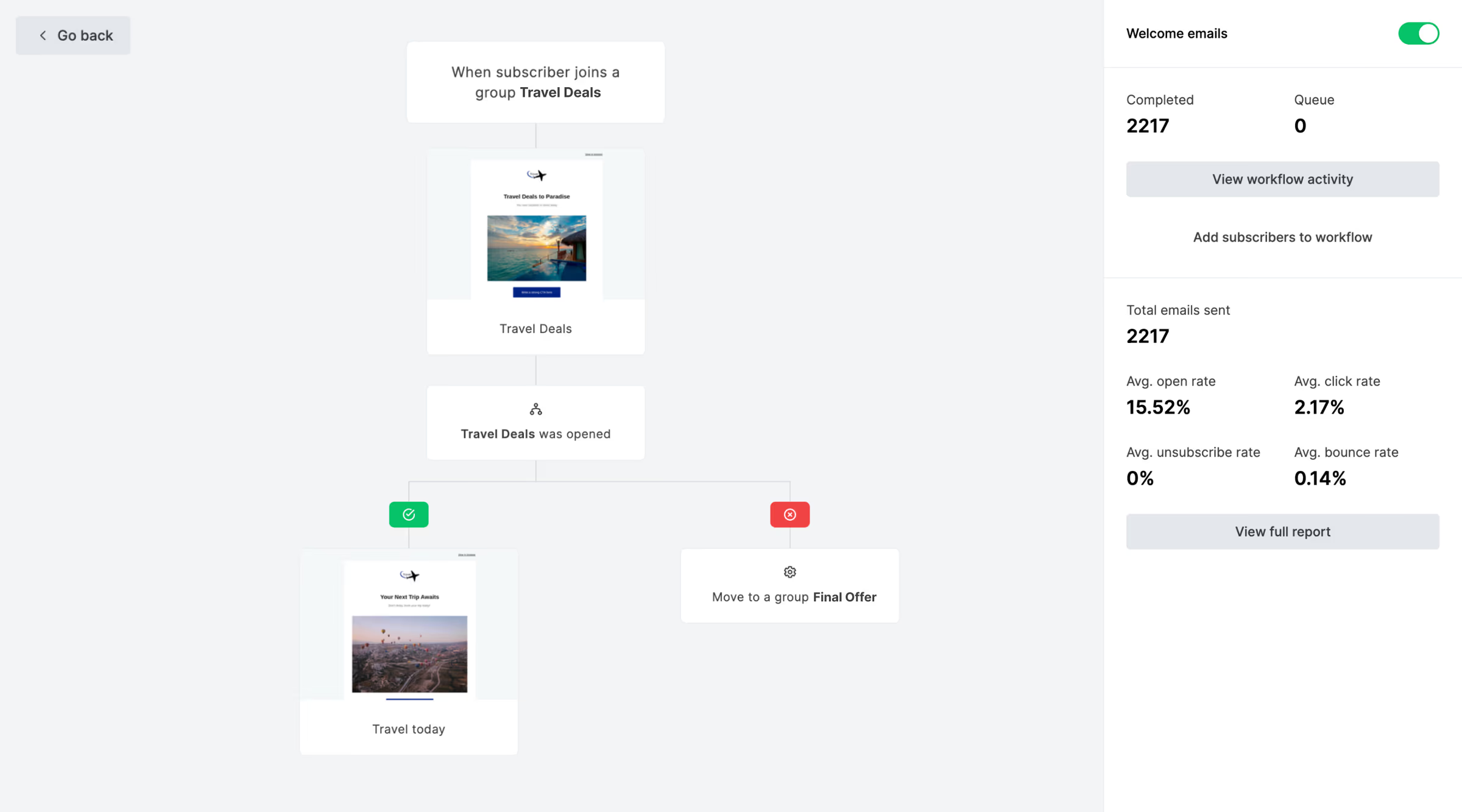
MailerLite has a clear automation builder, automation templates, workflow steps, ecommerce triggers, multiple automation triggers on higher capabilities, and practical options for welcome sequences, abandoned cart flows, event reminders, product promotions, and subscriber journeys.
The automation builder is not as advanced as ActiveCampaign or HubSpot, but it is easier for non technical users. For many small businesses, that is the sweet spot. You can build useful workflows without needing a marketing operations specialist.
Benchmark Email has public automation material, including automation sequences and templates such as welcome series and abandoned cart style flows. However, the current public pricing table for the newer Benchmark Email experience places more visible emphasis on email editor, contacts, signup forms, personalization, and reporting. Because Benchmark has also been moving from a classic platform to a newer rebuilt experience, buyers who need automation should verify exactly which automation features are available in the account version they plan to use.
Winner: MailerLite.
It is the safer choice if automation is an important buying reason.
Templates and design tools
MailerLite offers clean email templates, landing page templates, website templates, popup templates, and a flexible editor that most beginners can use quickly. Its designs tend to feel modern and simple rather than highly elaborate.
Benchmark Email is also strong for fast design. It offers ready made templates, blank layouts, predefined content blocks, saved blocks, stock images, AI generated images, an email preview tool, and an email audit checklist. That audit checklist is useful because it can catch common mistakes before sending, such as missing links or image issues.
If your team sends frequent campaigns and wants a focused email design process, Benchmark Email is pleasant to use. If you want templates across email, landing pages, websites, and forms, MailerLite gives you more variety across the full funnel.
Winner for email design only: Benchmark Email is very competitive.
Winner for full campaign assets: MailerLite.
Analytics and reporting
MailerLite includes campaign reports, comparative reporting, custom date range reports, list growth reporting, subscriber profiles, ecommerce sales tracking, automation reports, and click maps depending on plan and feature availability.
Benchmark Email includes reports, a contact activity feed, performance overview, email reports, link activity, and engagement timeline. Its reporting is easy to understand and fits users who want clear feedback without heavy analytics setup.
Neither tool should be confused with a full business intelligence system. For most small teams, both are enough to answer practical questions such as who opened, what links were clicked, which campaign performed better, and which contacts are engaged.
Winner: MailerLite for deeper marketing context.
Benchmark Email is better for: Simpler reporting.
AI features
MailerLite includes an AI writing assistant on higher plans and has been adding newer AI related options around marketing content and developer workflows.
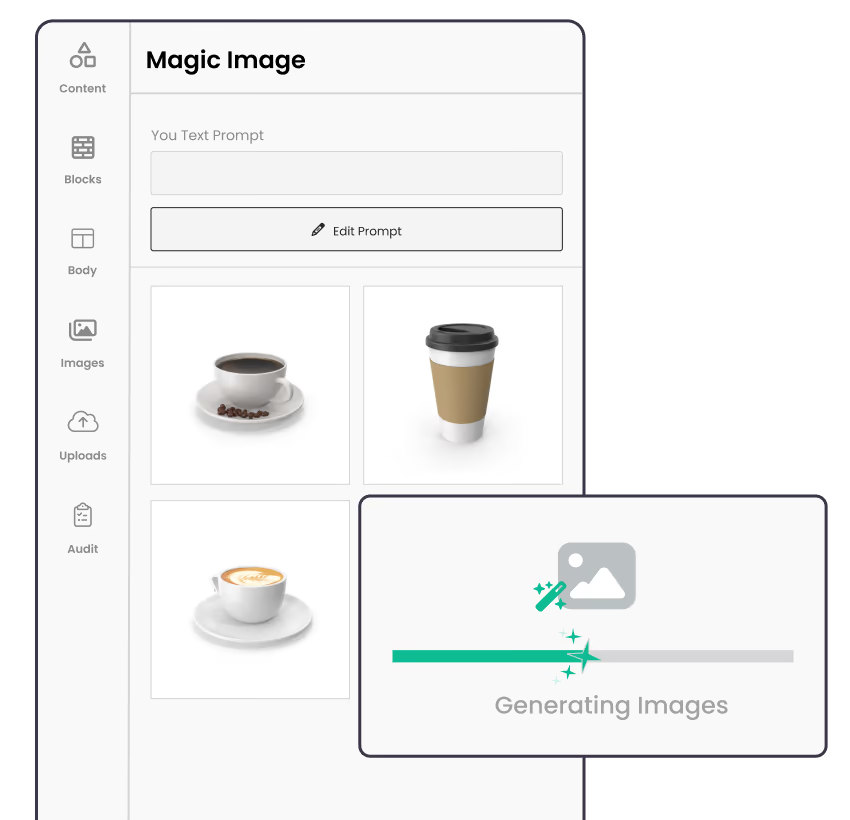
Benchmark Email includes Smart Text for rewriting, summarizing, changing tone, and improving copy. It also offers AI generated images in its email design workflow.
Benchmark Email makes AI feel especially accessible inside the email builder. MailerLite’s AI is useful, but some AI features sit behind higher plan access.
Winner: Benchmark Email for simple AI help inside campaign creation.
MailerLite is better for: Users who want AI as part of a wider marketing workflow.
Collaboration and user access
MailerLite’s Free plan includes 1 user seat. Growing Business includes 3 seats. Advanced and Enterprise support unlimited users. This makes MailerLite more attractive for teams that expect multiple people to work inside the account.
Benchmark Email’s Free plan includes 1 user. Paid plans include 1 user and allow additional users for a monthly fee, with a maximum user limit on Pro and custom options on Enterprise.
This matters more than it first appears. A low monthly plan can become less attractive if every teammate adds another charge.
Winner: MailerLite for teams that need several users.
Benchmark Email is better for: Solo users or very small teams that do not mind paying for extra seats as needed.
Customization and control
MailerLite gives more control across the wider marketing journey. You can build landing pages, websites, forms, popups, automations, digital product flows, and paid newsletter experiences.
Benchmark Email gives enough control for email layout, campaign personalization, tags, forms, and reports. But it is not as broad as MailerLite if you want a complete marketing funnel inside one platform.
Winner: MailerLite.
Mobile experience
Both platforms support mobile friendly email design. Benchmark Email highlights mobile first design and email preview. MailerLite also supports responsive newsletters and offers an iPad Subscribe App for collecting subscribers offline at events or in physical locations.
Neither platform is mainly sold as a mobile app based marketing system. We would treat mobile as a design and preview consideration rather than the main reason to choose either tool.
Winner: Tie, with a small MailerLite advantage for offline subscriber collection.
Scalability
MailerLite scales from a free plan to Growing Business, Advanced, and Enterprise. It is suitable for creators and businesses that grow from a small list to a much larger audience. Large senders can use Enterprise options such as dedicated support, onboarding, deliverability consultation, and dedicated IP options.
Benchmark Email scales from Free to Pro and Enterprise. Pro covers larger contact levels, while Enterprise is aimed at accounts above 100,000 contacts and adds dedicated account management, health checks, and phone support.
The practical difference is that MailerLite scales by giving you more platform depth as you upgrade. Benchmark Email scales by keeping the core email workflow simple while increasing contact and send capacity.
Winner: MailerLite for growing marketing operations.
Benchmark Email is better for: Growing email send volume with simpler needs.
Feature comparison table
Feature area | MailerLite | Benchmark Email | Better choice |
|---|---|---|---|
Email campaigns | Strong campaign builder with templates and segmentation | Strong simple campaign builder with templates, saved blocks, previews, and audit checklist | Tie |
Automation | Clear workflow builder with templates and ecommerce triggers | Automation material exists, but buyers should verify current availability in the newer platform | MailerLite |
Landing pages | Included, with limits on Free and more access on paid plans | Not as central in the current public positioning | MailerLite |
Websites | Included, with one website on Free and more on paid plans | Not a primary feature | MailerLite |
Signup forms | Forms and popups included | Forms included with custom fields and list or tag syncing | Tie |
Digital products and paid newsletters | Available, with limits depending on plan | Not a main strength | MailerLite |
AI writing | Available on higher plans | Smart Text available in the email workflow | Benchmark Email for simple campaign AI |
AI images | Not as visibly central in public feature positioning | AI generated images included in the email design feature set | Benchmark Email |
Reporting | Campaign, subscriber, automation, ecommerce, and comparative reporting depending on plan | Performance overview, reports, link activity, engagement timeline, and contact activity feed | MailerLite for depth, Benchmark Email for simplicity |
Integrations | Strong visible ecosystem with ecommerce, payment, automation, CMS, API, and developer options | API and partner options, but less visible ecosystem depth | MailerLite |
Team access | Higher plans include more or unlimited users | Additional users on Pro cost extra | MailerLite |
Enterprise support | Custom plans, dedicated success manager, onboarding, deliverability help | Custom plans, dedicated account management, monthly health checks, phone support | Tie |
Pricing and plans comparison
Pricing is where MailerLite looks more attractive for many buyers, but there are important details.
MailerLite’s Free plan supports up to 500 subscribers and 12,000 monthly email sends. That is generous for a small newsletter, especially if your list is under 500 but you send often.
Benchmark Email’s Free plan also supports 500 contacts, but it allows up to 2,500 monthly sends. That is enough for occasional newsletters, but it is easier to hit the ceiling if you send weekly campaigns to the full list.
MailerLite’s Growing Business plan starts from $10 per month on monthly billing, with annual billing discounts available. Advanced starts from $20 per month. Pricing scales with subscribers.
Benchmark Email’s public pages show Pro pricing based on contact level. Its homepage lists Pro starting from $19 per month, while the pricing page view can show a different monthly amount depending on the selected contact level. Because of that, we would verify the exact checkout price at your intended contact count before deciding.
Pricing comparison table
Plan detail | MailerLite | Benchmark Email |
|---|---|---|
Free plan | $0 for up to 500 subscribers | $0 for up to 500 contacts |
Free monthly sends | 12,000 | 2,500 |
Free users | 1 user seat | 1 user |
Lowest paid plan | Growing Business from $10 per month on monthly billing, with annual discount available | Pro pricing varies by contact level. Public pages should be checked at checkout |
Higher paid plans | Advanced from $20 per month, Enterprise custom | Enterprise custom for larger accounts |
Billing model | Primarily subscriber based | Primarily contact based with monthly send limits tied to contact limit on paid plans |
Paid send limits | Growing Business and Advanced list unlimited monthly emails in the current plan table | Paid plans can send up to 10 times the contact limit each month |
Extra users | Growing includes 3 seats. Advanced and Enterprise include unlimited users | Paid plans include 1 user. Extra users cost additional monthly fees on Pro |
Annual discount | Annual billing discount available | Annual billing is available, but users should verify exact current savings at checkout |
Nonprofit discount | MailerLite publicly lists a nonprofit discount | Discount details should be confirmed directly |
| Check MailerLite Pricing | Check Benchmark Email Pricing |
|---|
Hidden costs and cost jumps
MailerLite’s main cost jump comes from list growth. Once you pass 500 subscribers on the free plan, you need a paid plan to keep sending campaigns and running automations. On paid plans, subscriber count drives the bill.
Another cost factor is feature access. If you need live chat, smart sending, enhanced automations, custom HTML, preference center, unlimited users, or unlimited digital products and bookings, you may need Advanced rather than Growing Business.
Benchmark Email’s cost jump comes from contacts, send volume, and team users. The free plan is useful, but the 2,500 monthly send cap is much tighter than MailerLite’s free send allowance. On Pro, additional users cost extra, so teams should calculate the real monthly cost, not just the base plan.
Best value by user type
User need | Best value | Reason |
|---|---|---|
Free newsletter under 500 contacts | MailerLite | More monthly sends and more growth tools on the free plan |
Simple email campaigns with support | Benchmark Email | Support access and simple workflow may matter more than advanced features |
Creator building an audience | MailerLite | Landing pages, forms, automation, websites, digital products, and paid newsletters are more useful |
Small ecommerce store | MailerLite | Better visible ecommerce integrations and automation workflows |
Team with multiple users | MailerLite | Advanced and Enterprise include unlimited users |
Business sending occasional newsletters | Benchmark Email | The platform is simple and does not push users into a larger marketing setup |
Ease of use and user experience
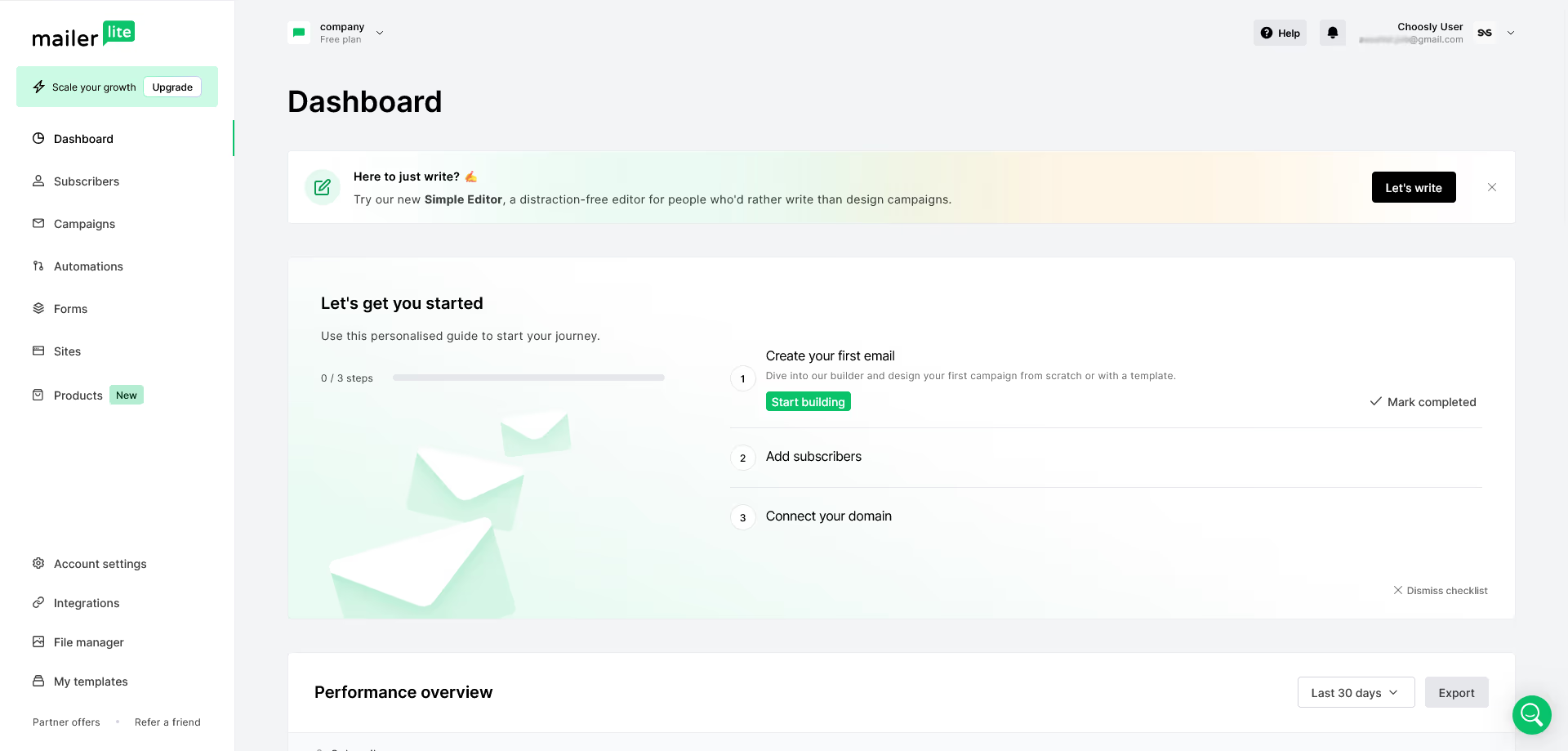
MailerLite is easy to use, but it has more areas to explore. A beginner can create a newsletter quickly, but the full platform includes subscribers, groups, segments, forms, popups, automations, landing pages, websites, products, bookings, and reporting. That is powerful, but it means there is more to learn over time.
The dashboard feels modern and clean. The editor is beginner friendly. Automation building is visual enough for non technical users. The main learning curve comes when you start combining tools, such as connecting a form to a landing page, adding subscribers to a group, triggering an automation, and tracking conversions.
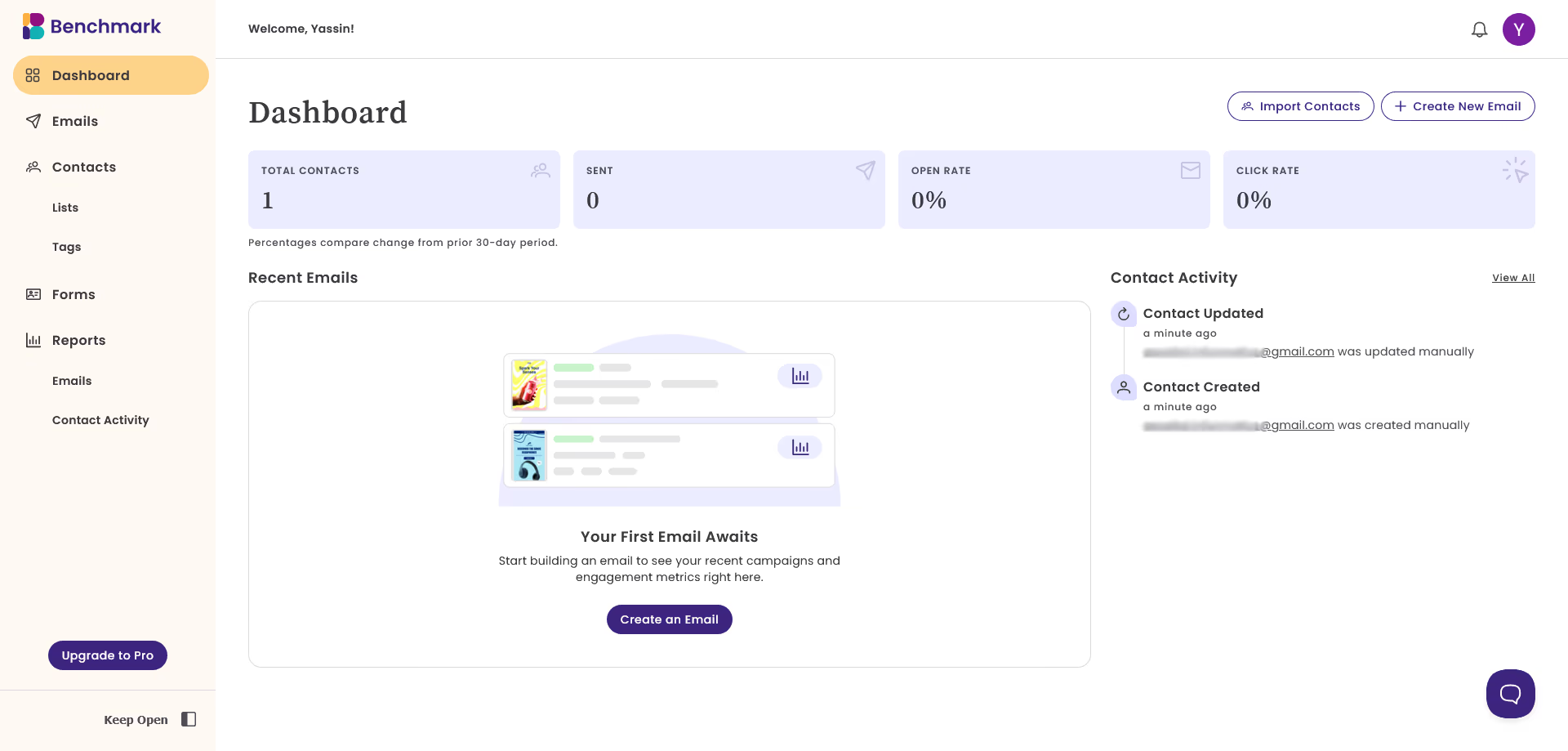
Benchmark Email has a simpler daily workflow. Build the email, choose the audience, send or schedule, then check the report. The editor is designed to reduce friction, and the platform does not feel as broad as MailerLite. That can be a strength if you are a business owner or marketing generalist who just wants to send campaigns.
For beginners, Benchmark Email may feel easier on day one. For people who want to grow into more marketing features, MailerLite offers more room without switching platforms.
Winner for fastest learning curve: Benchmark Email.
Winner for long term flexibility: MailerLite.
Performance and reliability
For email marketing tools, performance is not only about page speed. It includes editor stability, sending reliability, deliverability support, reporting accuracy, and how well the platform handles list growth.
MailerLite has a strong reputation among small businesses and creators for being stable, accessible, and good value. User reviews often praise its ease of use, support, and practical automation features. Some users mention occasional slowness, formatting limits, account approval friction, or restrictions related to compliance checks.
Benchmark Email is often praised for being easy to use, quick to set up, and straightforward for campaign sending. Users like the editor and templates, although some reviewers mention limited template customization, occasional editor issues, or a need for more advanced features.
We would not choose either platform based only on deliverability claims. Deliverability depends heavily on your list quality, authentication, content, sending history, complaint rates, and domain reputation. Both tools provide features and guidance that can support good sending practices, but no platform can guarantee inbox placement for every sender.
For serious senders, we would test with a small list, authenticate the sending domain, monitor bounces and spam complaints, and compare campaign results over several sends before moving the entire email program.
Integrations and ecosystem
MailerLite has the stronger visible integration ecosystem. It prominently supports connections with tools such as Stripe, Shopify, WooCommerce, WordPress, Zapier, Make, and developer API options. That makes it easier to connect email marketing to ecommerce, content sites, lead capture pages, payment flows, and automation tools.
Benchmark Email also offers API access and integration partner options. Its signup forms can also work with common website setups through embed code. Still, integrations feel less central to the buying story than they do with MailerLite.
This matters if your email tool needs to fit into a larger workflow. For example, a Shopify store owner may want purchase based segments and ecommerce automations. A course creator may want payment, landing page, and welcome sequence connections. A blogger may want WordPress forms and automated RSS campaigns.
Winner: MailerLite.
Before buying either tool, check your existing stack. Make sure your ecommerce platform, website builder, CRM, payment processor, webinar tool, lead form tool, and analytics setup are supported in the way you need.
Customer support and learning resources
MailerLite offers a large help center, tutorials, academy content, community resources, and direct support depending on plan. During the 14 day premium trial, new users can access premium support. After that, direct email and chat support depend on the paid plan. Growing Business includes 24/7 email support. Advanced includes 24/7 live chat and email support.
Benchmark Email puts support closer to the center of its value proposition. Public pages position chat and email support as included, and Enterprise adds phone support, dedicated account management, and monthly health checks.
That gives Benchmark Email an advantage for users who want help with basic email campaigns and do not want support to feel reserved only for higher plans. MailerLite still has strong resources, but free users should understand that direct support becomes more limited after the trial period.
Winner for self guided learning: MailerLite.
Winner for support positioning on simpler plans: Benchmark Email.
Security, privacy, and trust
Security matters because email marketing platforms store subscriber data, campaign history, engagement data, signup forms, and sometimes purchase related information.
MailerLite provides stronger public trust documentation. It lists GDPR related controls, a Data Processing Addendum, ISO/IEC 27001:2022 certification, encrypted payment handling through compliant payment vendors, and EU based data center information.
Benchmark Email’s enterprise information lists GDPR and CCPA compliance, TLS encryption, TrustArc dispute resolution, continuous attack surface monitoring, dedicated IP options, and deliverability monitoring. However, strict compliance teams should confirm current legal and data transfer details directly, especially because some public compliance wording in the email marketing industry can lag behind regulatory changes.
For most small businesses, both tools offer enough trust signals to be considered legitimate email marketing platforms. For regulated industries, healthcare, finance, education, public sector work, or European data transfer concerns, ask for the latest DPA, subprocessors list, data location details, retention policies, and security documentation before signing.
Winner for public security documentation: MailerLite.
User reviews and real experiences
User reviews show a clear pattern.
MailerLite is commonly praised for ease of use, value for money, clean design, helpful support, practical automation, and being friendly for beginners. Reviewers often describe it as a good fit for creators, small businesses, consultants, and teams that want useful features without enterprise complexity.
Common complaints about MailerLite include account approval friction, occasional slowness, formatting limitations, template flexibility issues, and the fact that some advanced features require higher plans.
Benchmark Email is commonly praised for ease of use, a clean editor, simple campaign creation, templates, and support. It is often seen as a tool that helps users send emails without a heavy learning curve.
Common complaints about Benchmark Email include limited design customization, some users finding it expensive at certain tiers, and a feature set that may feel lighter than competitors if you need advanced marketing automation.
Our read on the review patterns is this:
MailerLite has broader appeal and stronger value signals.
Benchmark Email has strong simplicity and support signals.
Pros and cons
Tool | Pros | Cons |
|---|---|---|
MailerLite | Generous free send allowance, strong ease of use, landing pages, websites, forms, popups, automations, ecommerce integrations, digital products, paid newsletters, good value for creators and small businesses | Free plan direct support is limited after the trial, 500 subscriber free cap may feel tight, advanced features require higher plans, account approval can be strict, not as deep as enterprise automation tools |
Benchmark Email | Very simple campaign workflow, easy email editor, useful templates and content blocks, AI text and image tools, forms, reports, contact activity feed, support positioned as accessible, good for straightforward sending | Free send limit is much lower than MailerLite, pricing should be checked carefully by contact level, extra users cost more on Pro, less complete for landing pages, websites, monetization, and advanced automation |
Real use cases
Choose MailerLite for a creator newsletter
Imagine you are a creator starting a weekly newsletter. You need a landing page, signup form, welcome email, regular broadcasts, and maybe a paid newsletter or digital product later.
MailerLite is the better choice because it supports the full creator workflow. You can start free, build your list, create automations, and add monetization when the audience grows.
Choose Benchmark Email for a local business newsletter
Imagine you run a local gym, restaurant, clinic, or community organization. You send monthly updates, seasonal promotions, event announcements, and occasional customer notices.
Benchmark Email may be the better choice because it keeps the workflow simple. You do not need a website builder or complex automations. You need a clean email editor, contact lists, forms, reports, and help when something goes wrong.
Choose MailerLite for a small ecommerce brand
If you sell through Shopify or WooCommerce and want signup forms, email automations, segmentation, abandoned cart style journeys, and sales tracking, MailerLite is the stronger fit.
It is not as ecommerce focused as Klaviyo or Omnisend, but it gives smaller stores a more affordable and easier starting point.
Choose Benchmark Email for fast internal marketing execution
If your team has one marketing generalist who sends emails on behalf of the company, Benchmark Email can be appealing. It avoids the feeling of a large platform and focuses on practical campaign sending.
This is useful when your team values speed over feature depth.
Consider neither for advanced CRM automation
If you need lead scoring, sales pipelines, complex branching journeys, website event tracking, SMS, CRM automation, and detailed lifecycle marketing, neither tool is the obvious first choice.
ActiveCampaign, HubSpot, Brevo, Klaviyo, or Omnisend may be more appropriate depending on your business model.
What makes each tool different
MailerLite is optimized for affordable audience growth.
That is the key difference. It is not just an email sender. It is a practical toolkit for capturing subscribers, nurturing them, publishing simple pages, running automations, and selling digital products or paid subscriptions.
Benchmark Email is optimized for simple campaign execution.
It is for people who want email marketing to feel lighter. The platform does not try as hard to become your website builder, creator commerce tool, or full automation engine. That can be a limitation, but it can also be exactly what some users want.
In short:
MailerLite helps you build a small marketing system.
Benchmark Email helps you send email campaigns with less friction.
Possible drawbacks
MailerLite drawbacks
MailerLite’s free plan is useful, but the 500 subscriber cap means growing lists will reach paid status quickly. The free plan also becomes more self service after the initial premium trial.
Some advanced features are reserved for Advanced, including live chat support, smart sending, enhanced automations, custom HTML, preference center, unlimited users, and unlimited digital products or bookings.
MailerLite is also not a full CRM. It can handle subscriber data, groups, segments, and workflows, but it is not designed to replace a sales CRM with pipelines, deals, and advanced revenue attribution.
Compliance checks can also frustrate some users. Strict approval helps protect deliverability, but it may feel slow or unclear if you are trying to launch quickly.
Benchmark Email drawbacks
Benchmark Email’s free plan has a much lower monthly send limit than MailerLite. If you send weekly to 500 contacts, you can use up the free allowance quickly.
Pricing also deserves careful review. Public pages may show different pricing cues depending on where and how the pricing is viewed. Always confirm the final price at checkout for your contact count, billing frequency, and user needs.
Benchmark Email is also less compelling if you want a complete growth stack. Landing pages, websites, creator monetization, and advanced workflow depth are stronger reasons to choose MailerLite or another competitor.
Finally, some users may outgrow Benchmark Email if they move from simple campaigns to complex automation strategy.
Which one offers better value?
MailerLite offers better value for most users who want more than basic email campaigns.
The free plan gives more monthly sends. The paid plans include a broader toolset. The platform can replace separate tools for landing pages, basic websites, forms, popups, automation, simple digital products, and paid newsletters.
Benchmark Email offers good value when simplicity and support matter more than feature depth. It may be worth paying for if your team does not want a larger platform and would rather have a focused email campaign tool that feels easy to use.
The value question depends on what you will actually use.
If you only send a monthly newsletter, Benchmark Email may feel cleaner.
If you want to build and monetize an audience, MailerLite gives you more for the money.
If you need advanced automation, neither is necessarily the best value. A more specialized tool may cost more but save time and unlock workflows these tools are not built to handle deeply.
Final verdict
MailerLite is the better overall choice in this comparison for most creators, small businesses, ecommerce beginners, newsletter publishers, and budget conscious teams.
It has a stronger free plan for active senders, more complete automation, better landing page and website tools, stronger visible integrations, more flexible team access on higher plans, and more room to grow into monetization.
Benchmark Email is still a good choice, but for a narrower type of user. We would choose it when the goal is simple email campaign creation, not building a broader marketing system. It is easy to use, focused, and practical for teams that want to send polished emails without learning a more feature rich platform.
There is no need to force one universal winner. The right choice depends on whether you want a broader marketing toolkit or a simpler campaign sender.
Clear recommendation
Choose MailerLite if you want email marketing plus automations, landing pages, signup forms, websites, ecommerce integrations, digital products, paid newsletters, stronger free sending limits, and better long term value for audience growth.
Choose Benchmark Email if you need a simple email campaign platform with an easy editor, contact management, forms, clear reporting, AI assisted content tools, and support access without a heavy learning curve.
Consider an alternative if you need advanced CRM automation, ecommerce revenue attribution, SMS journeys, lead scoring, complex segmentation, or enterprise grade lifecycle marketing.
| Explore MailerLite | Explore Benchmark Email |
|---|