
Omnisend vs MailerLite: Which Should You Choose?
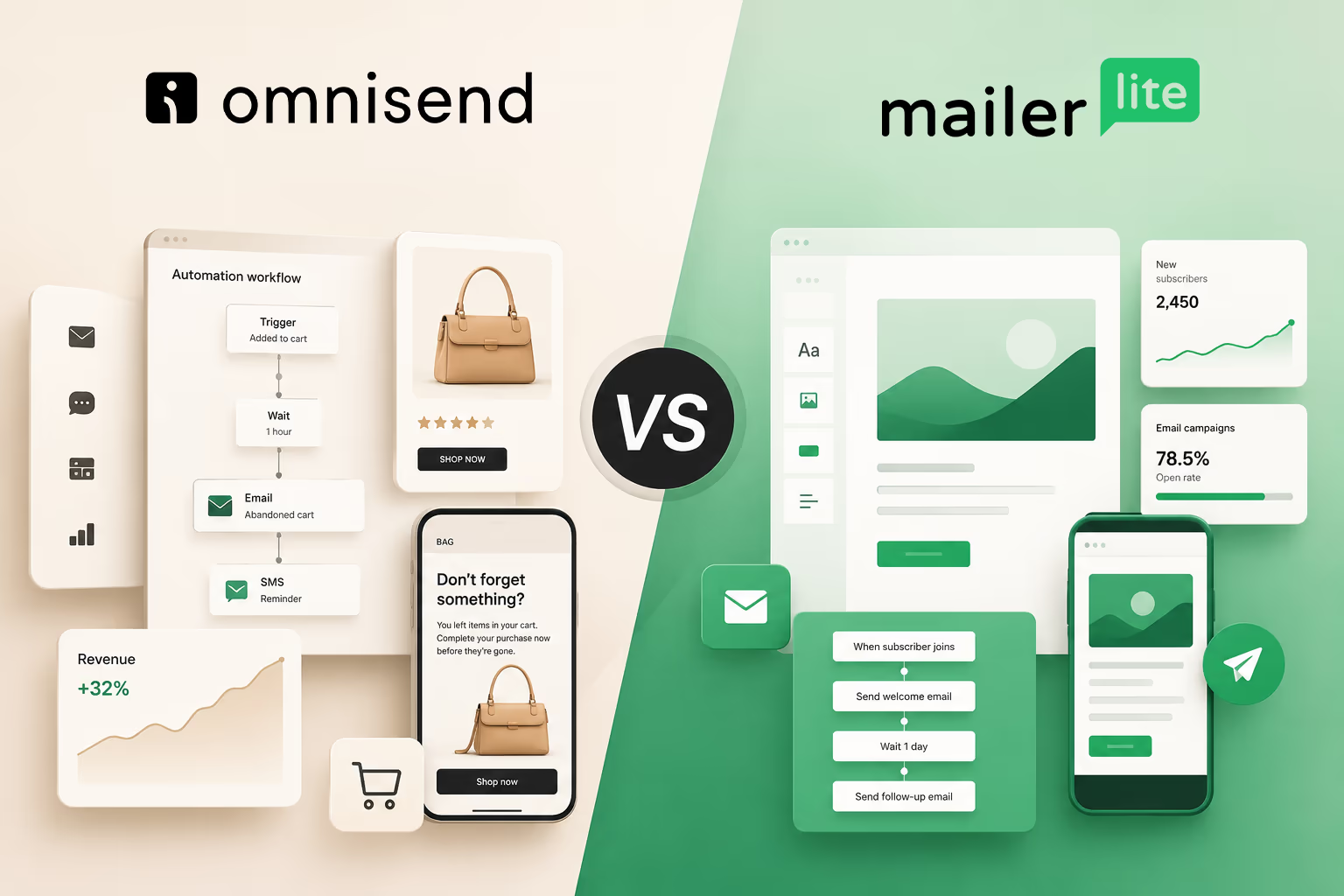
Choosing between Omnisend and MailerLite is really a question about what kind of marketing you want to run.
If you are running an online store and your emails are tied to carts, orders, products, discounts, SMS messages, and customer purchase behavior, Omnisend will usually make more sense. It is built around ecommerce marketing and gives stores a more sales focused toolkit.
If you are a creator, blogger, freelancer, educator, coach, nonprofit, or small business that mainly wants newsletters, landing pages, simple automations, signup forms, and a clean interface, MailerLite is usually the easier and more affordable choice.
Both platforms can send email campaigns. Both support automations. Both have free plans. But they are not trying to solve the exact same problem.
In this Omnisend vs MailerLite review, we compare features, pricing, ease of use, integrations, support, drawbacks, security, user feedback, alternatives, and overall value. The goal is not to force one universal winner. The goal is to help you choose the tool that fits your actual workflow.
Quick comparison summary
Omnisend is best viewed as an ecommerce marketing platform. It combines email, SMS, web push notifications, ecommerce segmentation, forms, automation workflows, and revenue reporting. It is especially useful when customer purchase behavior matters.
MailerLite is best viewed as a simple and affordable email marketing platform for a wider audience. It is strong for newsletters, landing pages, websites, signup forms, automations, digital products, and small business email marketing.
Buying factor | Omnisend | MailerLite |
|---|---|---|
Best for | Ecommerce stores that want email, SMS, push notifications, and revenue focused automation | Creators, bloggers, small businesses, newsletters, landing pages, and simple automations |
Free plan | Yes. Up to 500 emails per month and up to 250 contacts | Yes. Up to 500 subscribers and 12,000 emails per month |
Starting paid price | Standard starts at $16 per month before temporary starter discounts | Growing Business starts at $10 per month, or less with annual billing |
Main strength | Ecommerce automation across email, SMS, and web push | Clean interface, generous free email allowance, and strong value for simple email marketing |
Main weakness | Free plan is small, and costs rise as billable contacts grow | Less powerful for advanced ecommerce journeys and multichannel store automation |
Ease of use | Good, especially for ecommerce users who connect a store | Excellent for beginners and non technical users |
Automation features | Stronger for cart abandonment, browse abandonment, order behavior, SMS, and push | Good for newsletters, onboarding, lead magnets, simple funnels, and subscriber journeys |
Integrations | Strong ecommerce ecosystem with Shopify, WooCommerce, BigCommerce, Wix, APIs, and many app connections | Good broad ecosystem with Shopify, WooCommerce, WordPress, Stripe, Zapier, Make, and API access |
Support | 24 hours a day and 7 days a week support on all plans, with account expert access at higher monthly spend | Support varies by plan. Free users get direct support during the initial trial period, paid plans add stronger support access |
Best value for | Online stores that need sales automation and multichannel messaging | Budget conscious users who want reliable newsletters, forms, landing pages, and basic automation |
What each tool is
What is Omnisend?
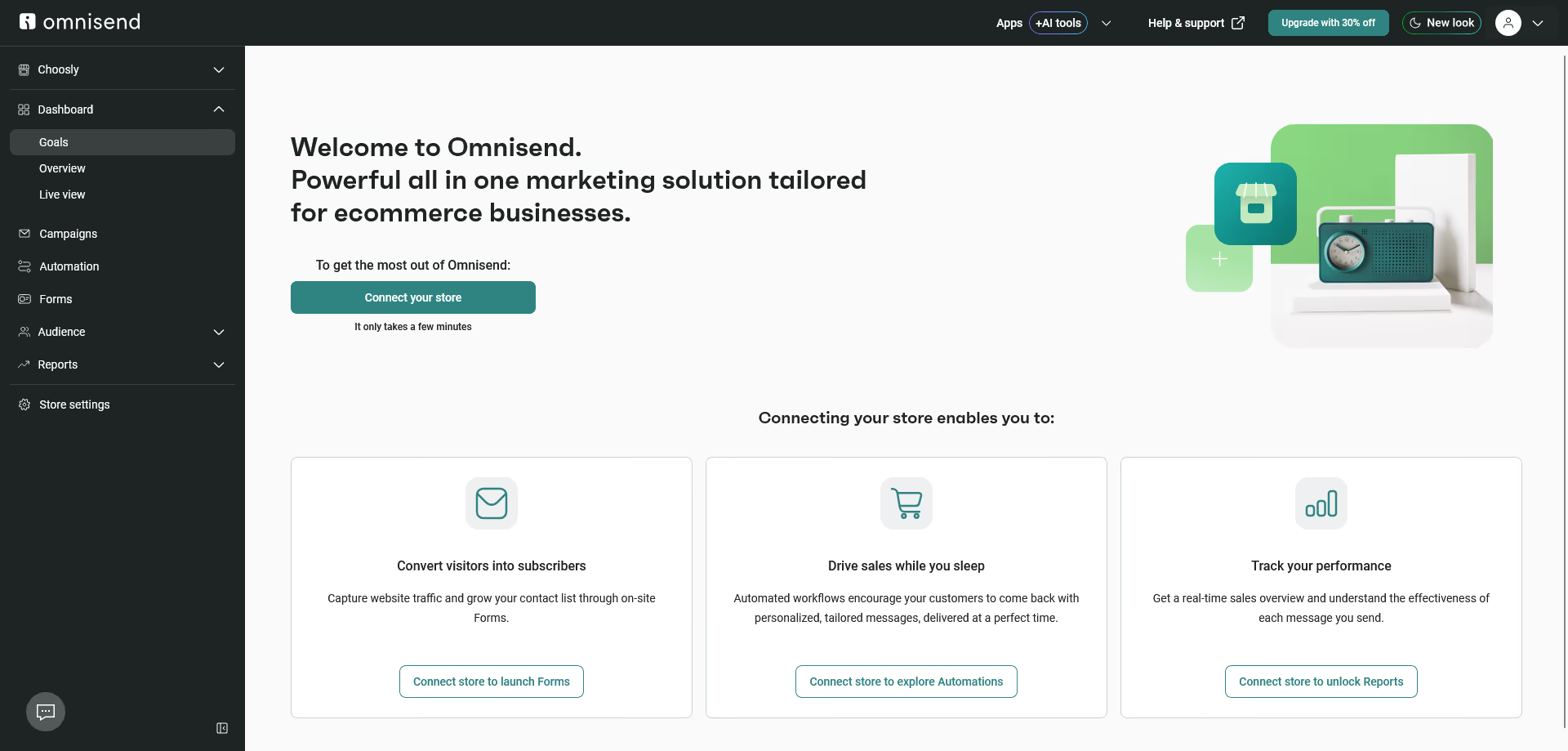
Omnisend is an email and SMS marketing platform built mainly for ecommerce brands.
It helps online stores send newsletters, promotional campaigns, automated cart recovery messages, post purchase emails, product recommendations, SMS campaigns, push notifications, signup forms, and segmented campaigns based on customer behavior.
The practical value is that Omnisend can use store data. For example, a Shopify store can build automations based on abandoned carts, viewed products, completed purchases, order history, or customer engagement. That makes it more useful for stores than a generic newsletter tool.
Omnisend is best for ecommerce teams that want marketing tied directly to revenue.
 Explore Omnisend
What is MailerLite?
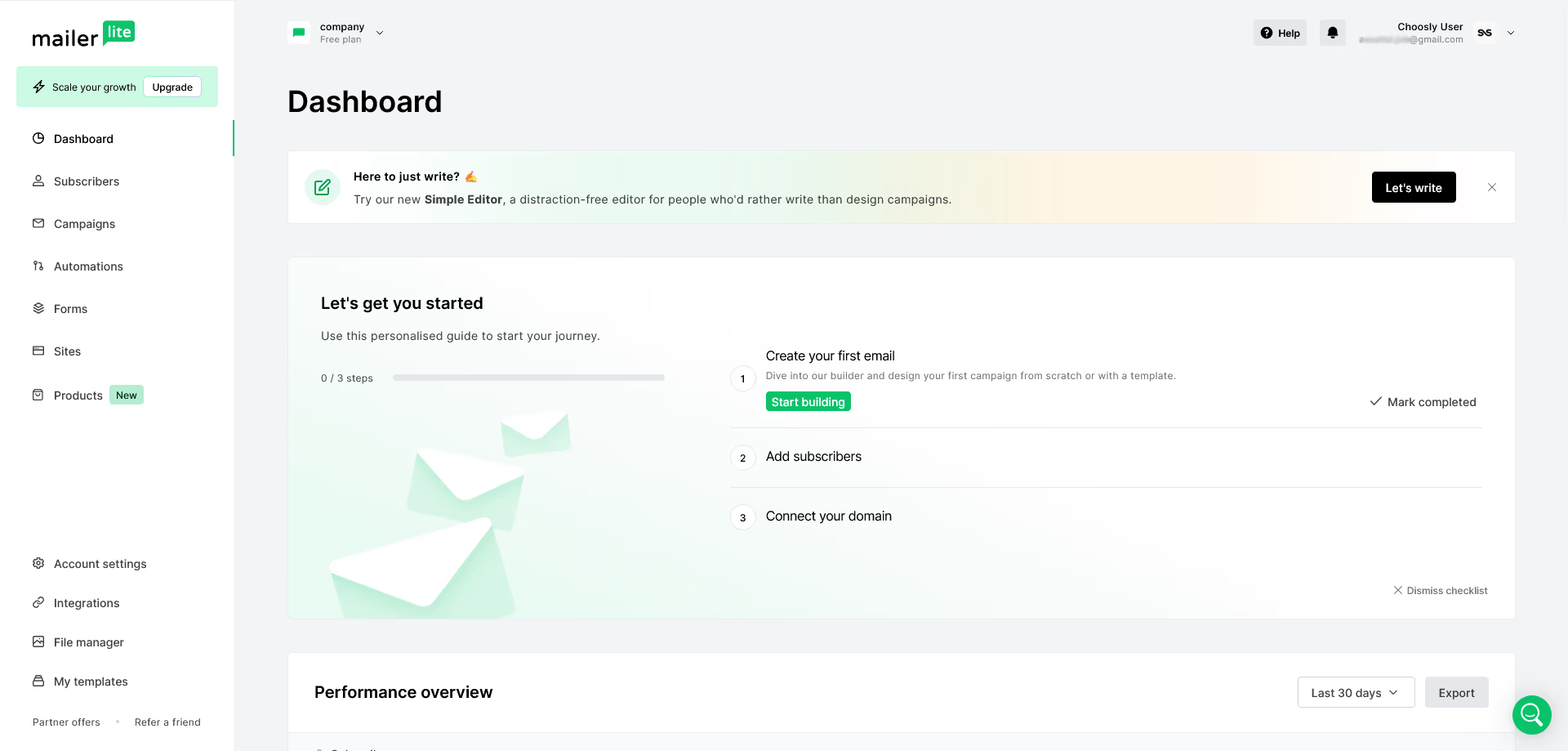
MailerLite is an email marketing platform for creators, small businesses, bloggers, educators, agencies, nonprofits, and simple ecommerce use cases.
It helps users create newsletters, automations, landing pages, websites, signup forms, popups, surveys, quizzes, and digital product offers. It is designed to feel simple rather than heavy.
The practical value is that a beginner can create a signup form, publish a landing page, send a newsletter, and build a basic welcome automation without feeling buried in advanced marketing software.
MailerLite is best for people who want an easy email marketing platform that does not feel bloated.
 Explore MailerLite
Who each option is best for
User type | Best choice | Why |
|---|---|---|
Shopify store | Omnisend | It is built for ecommerce data, product blocks, cart recovery, SMS, push, and revenue reporting |
WooCommerce store | Omnisend for deeper ecommerce automation, MailerLite for simpler email needs | Both connect with WooCommerce, but Omnisend is more focused on store behavior and sales automation |
Blogger or newsletter creator | MailerLite | It is simpler, cheaper to start, and better suited to regular content emails |
Coach, consultant, or course creator | MailerLite | Landing pages, forms, simple automations, digital products, and paid newsletter tools fit this audience well |
Small ecommerce brand with SMS goals | Omnisend | Email, SMS, and push can work together in the same customer journey |
Budget conscious startup | MailerLite | The free plan gives more email sending room, and paid plans start lower |
Agency managing ecommerce clients | Omnisend | It has ecommerce reporting, multi store workflows, partner focused features, and store specific access controls |
Agency managing newsletters and creator clients | MailerLite | The interface is easier for clients to understand, and the pricing is simpler for smaller lists |
Advanced lifecycle marketing team | Omnisend or a stronger alternative like Klaviyo or ActiveCampaign | Omnisend is stronger than MailerLite for ecommerce lifecycle work, but very advanced teams may still need deeper CRM or predictive tools |
Enterprise team | Depends | MailerLite has Enterprise options for large subscriber bases, while Omnisend has custom and higher spend support options for ecommerce brands |
You may not need Omnisend if you only send a weekly newsletter and do not care about carts, products, SMS, or store revenue attribution.
You may not need MailerLite if your store already needs automated cart recovery, product recommendations, purchase based segmentation, SMS, and deeper ecommerce reporting.
Feature comparison
Feature area | Winner | Reason |
|---|---|---|
Core email marketing | Tie | Both can create and send campaigns, but MailerLite feels simpler while Omnisend is more ecommerce focused |
Ecommerce automation | Omnisend | It is designed around carts, orders, products, customer behavior, SMS, and push notifications |
Newsletter publishing | MailerLite | It is cleaner for content driven email programs and easier for beginners |
Landing pages and websites | MailerLite | It has stronger built in tools for landing pages, websites, and simple lead capture funnels |
SMS and push notifications | Omnisend | SMS and web push are central to the platform |
AI tools | Omnisend for ecommerce, MailerLite for simple writing and AI assistant workflows | Omnisend leans into product recommendations, segments, forms, and campaign AI. MailerLite offers useful AI writing, Smart Sending, and MCP based assistant access |
Reporting | Omnisend for stores, MailerLite for simple campaign tracking | Omnisend is stronger when revenue and product performance matter |
Collaboration | Tie | Both support team access and permissions, although plan limits and controls differ |
Value for beginners | MailerLite | The free plan and entry paid plan are more forgiving for small lists |
Value for ecommerce growth | Omnisend | The higher cost can be justified when store automations recover revenue |
Core features
Both tools handle the essentials of email marketing.
You can build campaigns, manage subscribers, segment audiences, create signup forms, and track performance. For a basic newsletter, either tool can work.
The difference is what happens after the basics.
Omnisend adds ecommerce context. It is better when your campaigns need product recommendations, discount codes, purchase history, cart behavior, SMS follow ups, and revenue reports.
MailerLite adds simplicity and broader publishing tools. It is better when your campaigns are built around content, lead magnets, newsletters, landing pages, surveys, simple websites, or creator products.
Our view:
Choose Omnisend if email is part of your store revenue system.
Choose MailerLite if email is part of your audience building system.
Automation and workflows
Omnisend
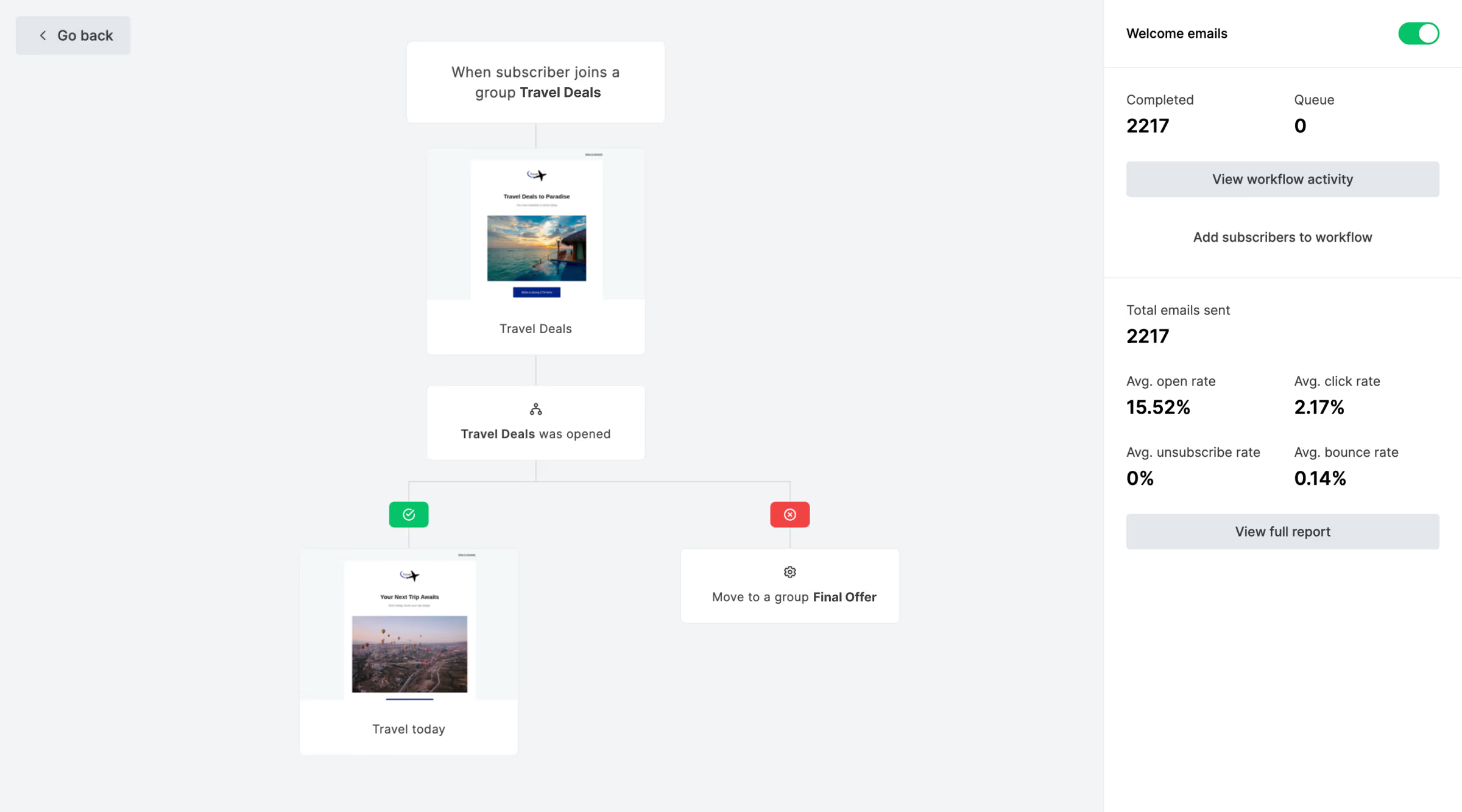
Mailerlite
Automation is one of the biggest differences in this comparison.
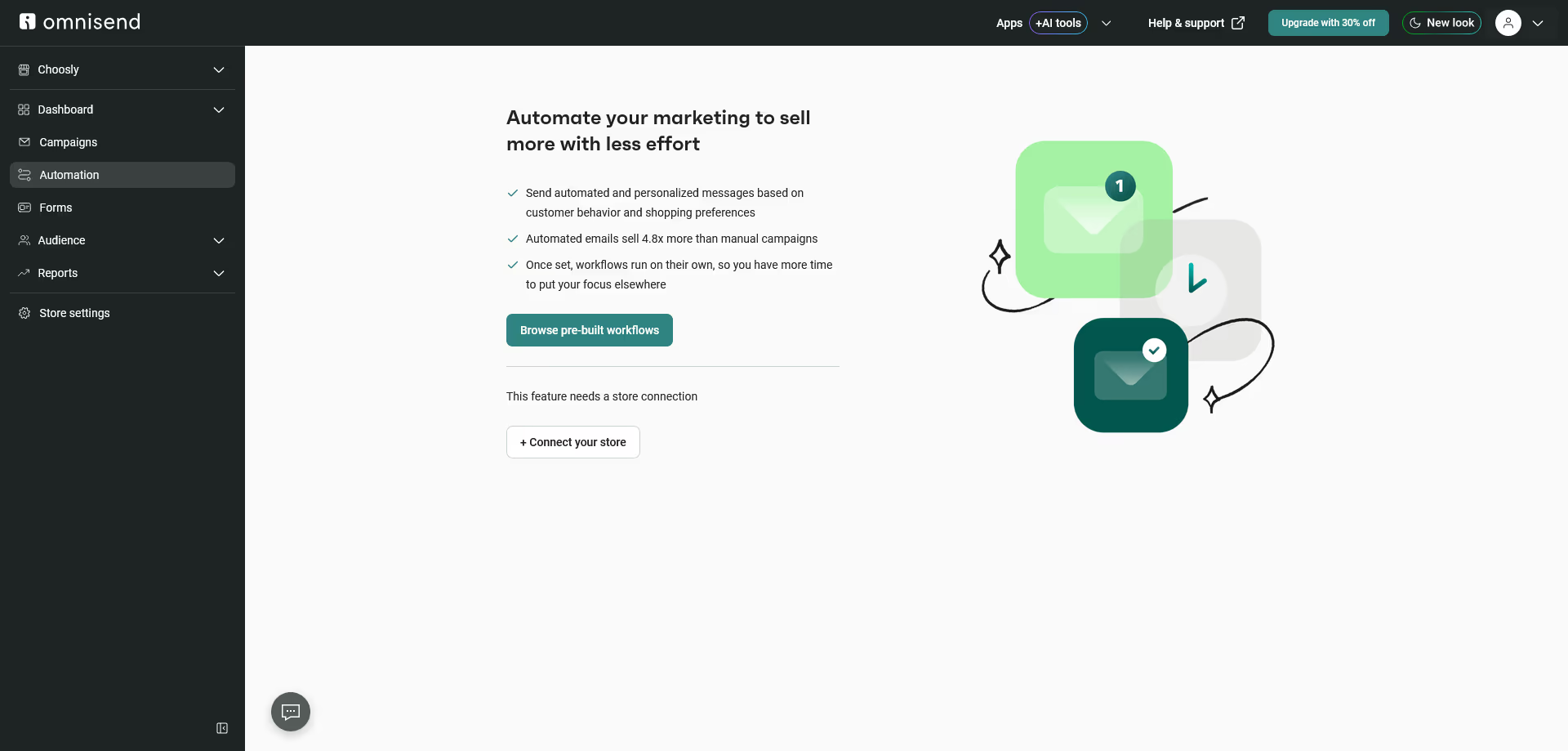
Omnisend is stronger for ecommerce workflows. It can support automations such as welcome series, abandoned cart, browse abandonment, order confirmation, shipping updates, post purchase follow ups, birthday offers, win back campaigns, and re engagement campaigns. The important part is that these flows can use store behavior.
For example, an online clothing store could create a workflow like this:
A customer views a product but does not buy.
Omnisend sends an email with the product.
If the customer still does not buy, Omnisend can send an SMS.
If the customer buys, the workflow can stop and move them into a post purchase sequence.
MailerLite can also build useful automations, but it is better for simpler subscriber journeys. A creator could use MailerLite to send a lead magnet, follow up with a welcome sequence, tag subscribers based on clicks, and invite them to buy a digital product or join a paid newsletter.
That is powerful enough for many businesses. But it is not as naturally suited to deep ecommerce lifecycle automation.
Winner:
Omnisend for ecommerce automation.
MailerLite for simpler automations that are easier to understand.
Templates and design tools
MailerLite has one of the cleaner editing experiences in the email marketing category. Its drag and drop editor is easy to learn, and the overall design process feels light. It is a good fit for users who do not want to spend hours learning a campaign builder.
Omnisend also has a drag and drop builder, templates, forms, and ecommerce content blocks. Its advantage is not just visual design. It is the ability to work with store products, recommendations, and revenue focused content.
If you are designing a beautiful newsletter, MailerLite feels smoother.
If you are designing a product sale email, Omnisend feels more practical.
Winner:
MailerLite for general newsletter design.
Omnisend for ecommerce campaign design.
Analytics and reporting
Omnisend is stronger for ecommerce reporting because it connects campaign activity to sales outcomes. That matters when you want to know which emails generated revenue, which products were ordered, and how automations perform across email, SMS, and push.
MailerLite gives small teams the reporting most beginners need. You can track opens, clicks, subscribers, campaign performance, landing page results, and automation activity. For creators and small businesses, that is often enough.
The difference is depth. MailerLite helps you understand email engagement. Omnisend helps ecommerce teams understand email and SMS revenue contribution.
Winner:
Omnisend for ecommerce analytics.
MailerLite for simple reporting.
AI features
Both platforms now include AI features, but they use AI in different ways.
Omnisend is pushing AI into ecommerce marketing. Its public materials show AI for email copy, product recommendations, form creation, segment building, campaign insights, and account interaction through MCP style workflows.
That is useful if you want AI to help with ecommerce actions such as creating a segment, generating a product focused email, or improving forms.
MailerLite uses AI in a lighter way. It offers an AI writing assistant, Smart Sending on higher plans, and MCP server access so users can connect an AI assistant to campaign, subscriber, automation, and reporting tasks.
That is useful if you want help writing content, reviewing campaign performance, or managing email tasks through natural language.
Winner:
Omnisend for ecommerce AI.
MailerLite for simple content support and AI assisted workflows.
Collaboration and permissions
Both tools support team based work.
Omnisend supports multiple users and role based access. This is especially useful for ecommerce teams, agencies, contractors, designers, and analysts who should not all have the same access level. It also has store level access controls for multi store setups.
MailerLite also supports team access, and its plan structure makes user limits clear. The free plan has one user, the Growing Business plan has three users, and the Advanced plan includes unlimited users. MailerLite also supports user permissions, which helps teams limit access to billing, exports, reports, or account management.
Winner:
Tie.
Omnisend is better for ecommerce teams and multi store access. MailerLite is clearer and simpler for small teams.
Customization
Omnisend gives ecommerce users more control over store related personalization. You can personalize campaigns with customer data, purchase behavior, product blocks, dynamic content, and segments.
MailerLite gives content creators and small teams enough customization without making the platform feel complex. You can customize templates, landing pages, signup forms, websites, automations, groups, and subscriber journeys.
Winner:
Omnisend for ecommerce personalization.
MailerLite for simple marketing assets.
Mobile experience
Both tools support responsive email creation and previews, but the practical difference is how much mobile editing matters to your workflow.
Omnisend has recently improved mobile editing in its email builder, which is useful for ecommerce brands where most customers may open campaigns on phones.
MailerLite is also good for creating mobile friendly emails and landing pages, especially because its editor is simple and uncluttered.
Winner:
Tie for most users.
Omnisend has an edge for ecommerce teams that need to fine tune promotional emails for mobile shoppers.
Scalability
Omnisend scales better for ecommerce operations because its pricing, automations, SMS, push notifications, segments, and reports are designed around growing stores.
MailerLite scales well for newsletters, creators, and small businesses, but very advanced marketing teams may outgrow its automation and reporting depth. Large subscriber bases may also need the Advanced or Enterprise plan.
Winner:
Omnisend for ecommerce scale.
MailerLite for audience and newsletter scale.
Platform specific tools
Omnisend has platform specific strength for ecommerce. This includes store integrations, product data, cart recovery, purchase based segmentation, SMS campaigns, web push, and revenue reporting.
MailerLite has platform specific strength for publishing and audience growth. This includes landing pages, websites, signup forms, popups, surveys, quizzes, digital products, bookings, and paid newsletter subscriptions.
This is one of the clearest differences in the whole review.
Omnisend is optimized for selling products.
MailerLite is optimized for growing and communicating with an audience.
Pricing and plans comparison
Pricing is not just about the lowest monthly number. You need to look at contacts, subscribers, monthly email sends, SMS costs, plan restrictions, support access, branding, users, and whether your list growth automatically increases your bill.
Omnisend pricing is based heavily on billable contacts and plan type. The free plan allows up to 500 emails per month and 250 contacts. Standard starts at $16 per month before temporary starter discounts and includes email sending based on list size. Pro starts at $59 per month and is aimed at high volume senders. SMS is charged separately under newer pricing for users who subscribe after the recent SMS pricing change.
MailerLite pricing is based on subscribers and plan type. The free plan supports up to 500 subscribers and 12,000 monthly emails. Growing Business starts at $10 per month with unlimited monthly emails and three user seats. Advanced starts at $20 per month with unlimited users, live chat and email support, Smart Sending, enhanced automations, custom HTML editor, and more advanced features. Annual billing can reduce the monthly equivalent.
Plan area | Omnisend | MailerLite |
|---|---|---|
Free plan | $0 per month. Up to 500 emails per month and 250 contacts | $0 per month. Up to 500 subscribers and 12,000 emails per month |
Entry paid plan | Standard starts at $16 per month before temporary starter discounts | Growing Business starts at $10 per month, or $9 per month with annual billing |
Higher paid plan | Pro starts at $59 per month before discount, and supports unlimited email sends under fair use rules | Advanced starts at $20 per month, or $18 per month with annual billing |
Enterprise or custom option | Custom options are available for larger needs | Enterprise is available for larger subscriber bases and custom needs |
Email send limits | Free is 500 emails. Standard is based on list size. Pro allows unlimited emails under fair use | Free is 12,000 emails. Paid marketing plans include unlimited monthly emails |
SMS cost | SMS is available and may be charged separately by country and volume | MailerLite has separate transactional and SMS related services, but it is not as centered on SMS marketing as Omnisend |
User seats | Supports multiple team members and roles | Free has one user, Growing Business has three users, Advanced includes unlimited users |
Support impact | 24 hours a day and 7 days a week support on all plans, with account expert access at higher monthly spend | Support access improves on paid plans, with live chat and email support on Advanced |
Cost risk | Bill can rise as billable contacts grow and SMS usage increases | Bill rises as subscriber count grows and advanced features require higher plans |
| Check Omnisend Pricing | Check MailerLite Pricing |
|---|
Disclosure: Some links in this article may be affiliate links. If you purchase through them, we may earn a commission at no extra cost to you. Our reviews remain independent and are based on research, product information, pricing, features, and practical value for users.
Hidden cost considerations
Omnisend can become more expensive as your billable contact count grows. Even if you do not manually import new contacts, forms, checkout opt ins, and store integrations can increase your contact count. SMS also adds cost, and rates vary by country and sending volume.
MailerLite is usually cheaper at the entry level, but some useful features are not on the free plan. For example, advanced automations, Smart Sending, custom HTML, and more advanced support require higher tiers. The free plan is generous for email volume but limited by subscriber count and support duration.
Best value plans
For a new ecommerce store, Omnisend Standard is often the best starting point once the free plan is too small. It gives access to ecommerce automation without jumping straight to Pro.
For a high volume ecommerce sender, Omnisend Pro may make sense because unlimited email sends and advanced reporting can matter more as the list grows.
For a creator or small business, MailerLite Free is one of the better starting points because 12,000 monthly emails gives room to test newsletters and automations.
For a growing newsletter, MailerLite Growing Business is usually the best value. It removes more restrictions, offers unlimited monthly emails, and keeps pricing accessible.
For teams that need live chat, unlimited users, advanced automations, Smart Sending, and custom HTML, MailerLite Advanced is the better plan to evaluate.
Ease of use and user experience
MailerLite is easier for beginners.
The dashboard is clean. The editor is straightforward. The setup process is not intimidating. Most users can understand the flow from subscribers to forms to campaigns to automations without needing a long training period.
That matters if the person managing email is also the founder, content creator, assistant, coach, blogger, or store owner.
Omnisend is also easier than many advanced ecommerce marketing platforms, but it has more ecommerce context. You need to think about store connections, customer data, carts, products, segments, email credits, SMS, push notifications, and revenue reporting.
That extra depth is useful, but it adds complexity.
For daily use, we would summarize it like this:
MailerLite feels like a clean email workspace.
Omnisend feels like an ecommerce growth dashboard.
Winner:
MailerLite for beginners.
Omnisend for store owners who want more ecommerce control.
Performance and reliability
Email marketing performance depends on more than the software you choose.
Authentication, list quality, domain reputation, consent, engagement, content, sending frequency, bounce rate, spam complaints, and warm up all affect deliverability. A good platform cannot save a poor list or careless sending strategy.
Omnisend provides deliverability guidance and ecommerce performance reporting. It is particularly useful when you want to connect email performance to revenue, orders, products, and customer behavior.
MailerLite also provides deliverability guidance and is widely liked for simple campaign sending. Its user feedback often highlights reliable email creation, easy setup, and clean reporting.
We would not declare a universal deliverability winner based only on public information. Deliverability varies too much by sender behavior. What we can say is this:
Omnisend gives ecommerce teams stronger sales performance visibility.
MailerLite gives small teams a smoother path to launching campaigns consistently.
For many readers, consistency will matter more than theoretical power. A simple tool you use every week is better than an advanced tool you barely understand.
Integrations and ecosystem
Omnisend has a strong ecommerce integration ecosystem. It supports major store platforms and offers many app connections, plus API access for custom workflows. It is especially relevant if your stack includes Shopify, WooCommerce, BigCommerce, Wix, loyalty apps, review tools, popups, ads, subscriptions, and ecommerce analytics.
MailerLite has a broader small business ecosystem. It connects with tools such as Shopify, WooCommerce, WordPress, Stripe, Zapier, Make, Canva, and other platforms. It also has API access for custom integrations.
The difference is not simply the number of integrations. It is the type of data each platform is best at using.
Omnisend is better at using ecommerce data for customer journeys.
MailerLite is better at fitting into general creator and small business workflows.
Before choosing either platform, check whether your exact stack is supported. This matters more than a general integration count. A single missing integration can create hours of manual work.
Customer support and learning resources
Omnisend has a support advantage for free users because it offers 24 hours a day and 7 days a week support even on the free plan. It also offers account expert access for customers who reach a higher monthly spend. That can be valuable for ecommerce stores that need help with migration, automation setup, campaign planning, or performance review.
MailerLite offers strong learning resources, including help articles, tutorials, live learning sessions, and academy style education. Support access depends more on the plan. Free users get direct support during the initial premium trial window, while paid plans unlock stronger email and live chat support options.
For beginners, MailerLite documentation and tutorials are easy to follow.
For ecommerce teams that may need hands on help, Omnisend support availability is a real advantage.
Winner:
Omnisend for direct support access across plans.
MailerLite for approachable learning resources and beginner education.
Security, privacy, and trust
Both platforms publish privacy and data processing materials, and both provide features that help businesses manage email marketing compliance responsibilities.
MailerLite has a stronger public trust signal because it states ISO and IEC 27001:2022 certification and describes its information security management system. It also provides GDPR related materials, a data processing addendum, and privacy documentation.
Omnisend provides GDPR guidance, a data processing agreement, user roles, account permissions, and security related account controls such as two factor authentication. It also gives teams the ability to manage user roles and store level access.
For most small businesses, either platform can be used responsibly if you follow proper consent practices, authenticate your domain, protect account access, and avoid uploading unpermissioned lists.
For larger organizations with formal vendor reviews, MailerLite may be easier to evaluate from a security documentation perspective because its public trust page is more explicit. Omnisend may still be suitable, but buyers should review its legal, privacy, account security, and data processing materials before committing.
User reviews and real experiences
User reviews show a clear pattern.
Omnisend users often praise ease of use, Shopify integration, customer support, automation, email and SMS workflows, and ecommerce reporting. The most common criticism is that design flexibility can feel limited and costs can rise as lists grow.
MailerLite users often praise the clean interface, beginner friendly workflow, drag and drop editor, affordability, customer support, and overall simplicity. The most common criticism is that it could be stronger in advanced automation, CRM depth, and some higher end marketing features.
These patterns match our own comparison.
Omnisend is liked by users who need ecommerce marketing without the full complexity of enterprise tools.
MailerLite is liked by users who want email marketing to feel simple, affordable, and manageable.
Pros and cons
Tool | Pros | Cons |
|---|---|---|
Omnisend | Strong ecommerce automation, email and SMS in one platform, web push support, product based personalization, revenue focused reporting, support on all plans, useful store integrations | Free plan is limited, pricing rises with billable contacts, SMS can add cost, template customization may feel limited, not ideal for simple newsletters, native product reviews were discontinued |
MailerLite | Very easy to use, generous free email allowance, affordable entry price, clean editor, good landing pages and websites, useful automations for small teams, digital product and paid newsletter features | Less powerful for advanced ecommerce automation, support access depends on plan, advanced features require higher tiers, weaker fit for stores that rely heavily on SMS and product behavior |
Real use cases
Choose Omnisend for a Shopify store with abandoned carts
A store selling skincare products wants to recover abandoned carts, recommend related products, send SMS reminders, and measure sales from each automation.
Omnisend is the better choice because the whole platform is designed around that kind of ecommerce journey.
Choose MailerLite for a creator newsletter
A writer wants to publish a weekly newsletter, collect subscribers through landing pages, send a welcome sequence, and later sell a digital guide.
MailerLite is the better choice because it is simpler, cheaper, and includes the audience building tools this user needs.
Choose Omnisend for a growing brand with email and SMS
A fashion brand wants to run product launches, cart recovery, customer win back campaigns, birthday offers, and SMS promotions.
Omnisend is the better choice because it combines channels and ecommerce data in one place.
Choose MailerLite for a local service business
A yoga studio wants to collect leads, send class updates, build a simple landing page, and automate welcome emails.
MailerLite is the better choice because it solves the problem without adding unnecessary ecommerce complexity.
Choose Omnisend for an agency managing ecommerce clients
An agency running campaigns for multiple stores needs reporting, store access controls, product data, and ecommerce workflows.
Omnisend is the better choice because its structure fits store based marketing.
Choose MailerLite for an agency managing creators and newsletters
An agency helping coaches, educators, and bloggers needs a platform clients can learn quickly.
MailerLite is the better choice because the interface is less intimidating and the pricing is easier to explain.
What makes each tool different

The biggest difference is positioning.
Omnisend is not just an email newsletter app. It is an ecommerce marketing platform. Its best features make sense when a customer is browsing products, leaving carts, placing orders, receiving SMS messages, and returning for another purchase.
MailerLite is not trying to be a full ecommerce lifecycle platform. It is a simple email marketing and audience growth tool. Its best features make sense when someone is building a list, sending newsletters, publishing landing pages, creating signup forms, automating basic journeys, or selling simple digital products.
That distinction matters because the wrong tool can feel either too limited or too heavy.
MailerLite can feel too basic for a store that wants deep customer journeys.
Omnisend can feel unnecessary for a creator who only wants to send useful emails every week.
Possible drawbacks
Omnisend drawbacks
The free plan is not generous compared with MailerLite. With 250 contacts and 500 monthly emails, it is mainly a testing plan rather than a long term free email program.
Costs can rise as your store grows. Omnisend counts billable contacts, and contacts can increase through forms, checkout, and integrations.
SMS adds another layer of cost. If you plan to use SMS heavily, you need to calculate that separately.
The platform is ecommerce centered. If you do not run a store, several features may feel irrelevant.
The native Product Reviews feature is no longer available, so stores that need reviews must use third party review apps.
MailerLite drawbacks
MailerLite is not as strong for advanced ecommerce automation. It can work with stores, but it is not as deeply focused on product behavior, cart events, SMS, and revenue flows as Omnisend.
Some important features require higher plans. Smart Sending, advanced automations, custom HTML, unlimited users, and live chat support are not all available on the entry level experience.
The free plan has a 500 subscriber cap. The email allowance is generous, but list size can push users to a paid plan sooner than expected.
Advanced marketers may eventually want deeper CRM, lifecycle automation, lead scoring, or predictive segmentation than MailerLite provides.
Which one offers better value?
MailerLite offers better value for most beginners, creators, bloggers, newsletters, and small businesses.
The free plan gives more room to send emails, the entry paid plan is cheaper, and the platform includes useful tools for landing pages, websites, signup forms, automation, and digital products. If your goal is to grow an audience and send good emails consistently, MailerLite is hard to beat on value.
Omnisend offers better value for ecommerce stores that can turn automations into revenue.
A store recovering abandoned carts, sending SMS reminders, segmenting customers by purchase behavior, and tracking revenue from automations may easily justify the higher cost. The value is not in the cheapest monthly price. It is in the revenue workflows that MailerLite does not handle as deeply.
So the better value depends on what you are trying to grow.
If you are growing an audience, MailerLite is usually better value.
If you are growing an ecommerce store, Omnisend is usually better value.
Final verdict
Omnisend vs MailerLite is not a close comparison if you know your use case.
Omnisend is the better tool for ecommerce brands that need email, SMS, push notifications, cart recovery, product recommendations, purchase based segmentation, and revenue reporting.
MailerLite is the better tool for creators, newsletters, bloggers, service businesses, educators, nonprofits, and small businesses that want a clean, affordable, beginner friendly email marketing platform.
We would choose Omnisend for a serious online store.
We would choose MailerLite for a creator, content business, local business, or early stage project.
The only gray area is simple ecommerce. If you run a small store and only need occasional newsletters, MailerLite can be enough. But once abandoned carts, SMS, product recommendations, and revenue attribution matter, Omnisend becomes the more practical choice.
Clear recommendation
Choose Omnisend if you want ecommerce focused email and SMS marketing, abandoned cart automation, web push notifications, product based personalization, Shopify or WooCommerce workflows, and reporting tied to sales.
Choose MailerLite if you need a simple, affordable email marketing platform for newsletters, landing pages, signup forms, basic automations, websites, digital products, paid newsletters, and audience growth.
Consider an alternative if you need advanced CRM automation, enterprise lifecycle marketing, predictive ecommerce analytics, deep sales pipeline management, or a full customer platform beyond email marketing.
| Explore Omnisend | Explore MailerLite |
|---|