
Omnisend Review: Is It Worth It?
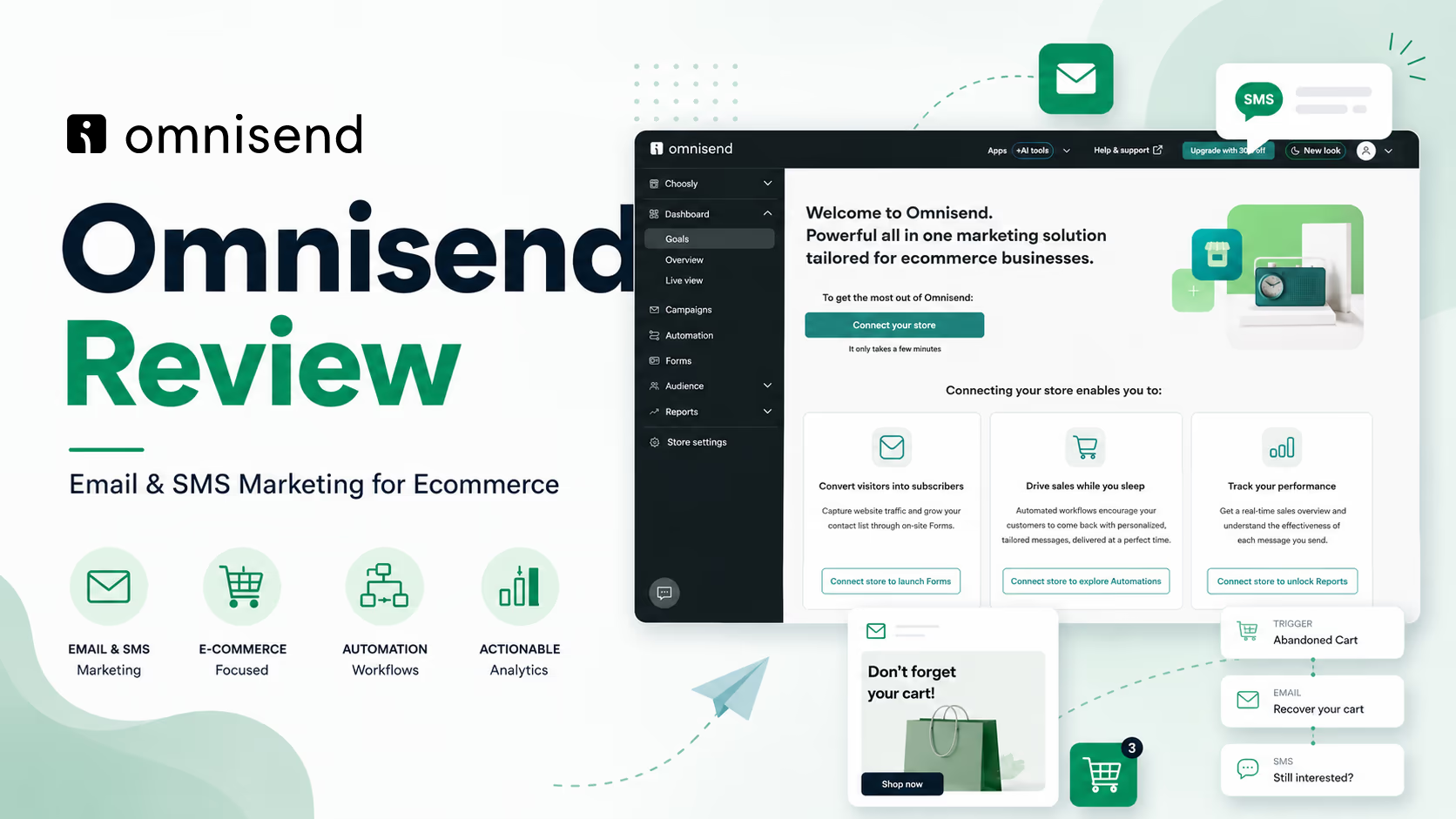
Choosing the right email marketing platform is not only about sending newsletters. For an online store, the better question is whether the tool can help recover abandoned carts, welcome new shoppers, bring back inactive customers, and show what is actually driving sales.
That is where Omnisend gets attention.
In this Omnisend review, we look at the platform from a practical buyer point of view. We cover what it does well, where it may feel limited, how its pricing works, and who should consider it before choosing a tool like Klaviyo, Mailchimp, or ActiveCampaign.
Our view is simple: Omnisend is one of the stronger options for ecommerce brands that want email, SMS, automation, forms, segmentation, and reporting in one place. It is not perfect for every business, but for online stores, it offers a lot of useful tools without feeling overly complex.
What Is Omnisend?
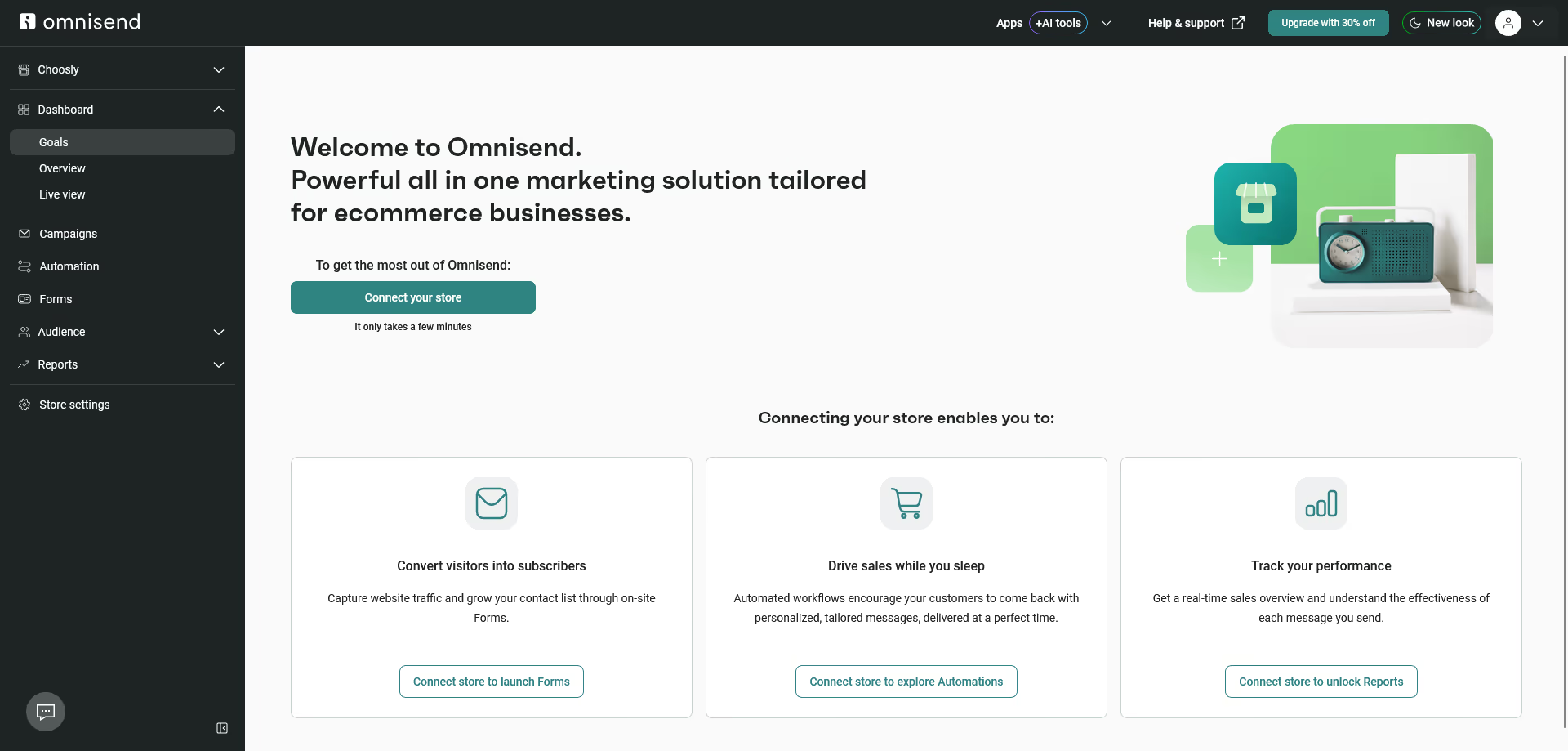
Omnisend is an email and SMS marketing platform built mainly for ecommerce businesses.
It helps online stores create campaigns, automate customer journeys, collect subscribers, segment audiences, and track revenue from marketing messages. The platform supports email campaigns, SMS campaigns, web push notifications, signup forms, popups, automation workflows, product recommendations, and reporting.
The big idea behind Omnisend is to help ecommerce brands communicate with shoppers based on behavior. For example, a customer who abandons a cart can receive an email first, then a text message later if they still have not completed the purchase. A returning customer can receive a product recommendation based on browsing or purchase history. A new subscriber can enter a welcome series automatically.
This makes Omnisend more focused than a general newsletter tool. It is designed around online shopping behavior, not just basic email sending.
Who Is Omnisend Best For?
Omnisend is best for ecommerce businesses that want to grow through owned marketing channels.
It fits especially well for:
Shopify stores that want simple email and SMS automation
WooCommerce and BigCommerce stores that need ecommerce focused workflows
Small stores moving beyond basic newsletters
Growing brands that need better segmentation and abandoned cart recovery
Teams that want email, SMS, push notifications, and forms in one platform
Merchants who want useful automation without needing a complex setup
Omnisend may not be the best choice for every business. A blogger, service provider, SaaS company, coach, or B2B sales team may not need all of its ecommerce features. In those cases, a more general email marketing platform could be enough.
For online stores, though, Omnisend makes more sense because many features are built around customer activity, purchases, cart behavior, and revenue tracking.
Key Omnisend Features
Omnisend includes a wide set of tools, but the most important ones are email marketing, SMS marketing, automation, segmentation, signup forms, ecommerce integrations, and reporting.
Email Campaign Builder
Omnisend lets users create promotional emails, newsletters, product updates, sale announcements, and automated emails through a visual builder.
The builder is designed for store owners and marketers who do not want to code. You can add product blocks, images, buttons, discount codes, text sections, and branding elements. This is useful for campaigns like:
New product launches
Seasonal sales
Flash promotions
Back in stock alerts
Customer win back emails
Product education emails
A practical example would be a clothing store sending a weekend sale email with product images, a discount code, and a direct button to shop the collection.
The editor is not the most advanced design tool on the market, but it is easy to use and works well for most ecommerce campaigns.
SMS Marketing
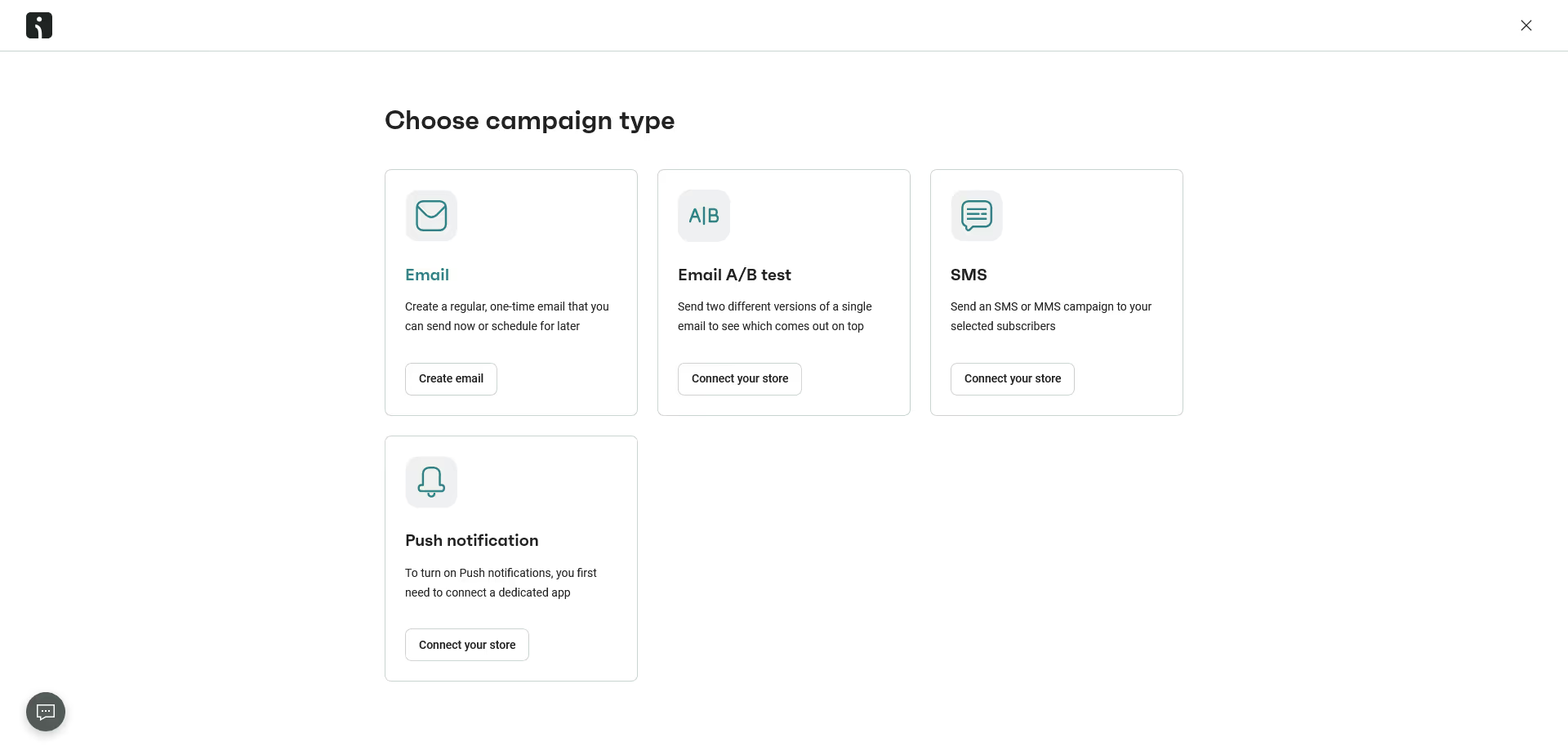
Omnisend supports SMS marketing, which is useful for urgent or high intent messages.
SMS can work well for:
Abandoned cart reminders
Limited time offers
Order related updates
VIP customer promotions
Product launch alerts
The important thing to remember is that SMS costs can vary by country and volume. Omnisend shows SMS pricing starting at $0.007 per message on the latest Pro plan, but the exact cost depends on the destination and sending volume.
We would not treat SMS as a replacement for email. It is better as a selective channel for important messages where speed matters.
Web Push Notifications
Omnisend also includes web push notifications. These are short browser based messages that can reach subscribers even when they are not reading email.
Push notifications can be helpful for:
Flash sales
Cart recovery
Price drop alerts
New collection announcements
Short reminders
This is a useful extra channel, especially because not every customer checks email at the right moment. Still, push notifications should be used carefully. Too many messages can feel intrusive.
Marketing Automation
Automation is one of the strongest parts of Omnisend.
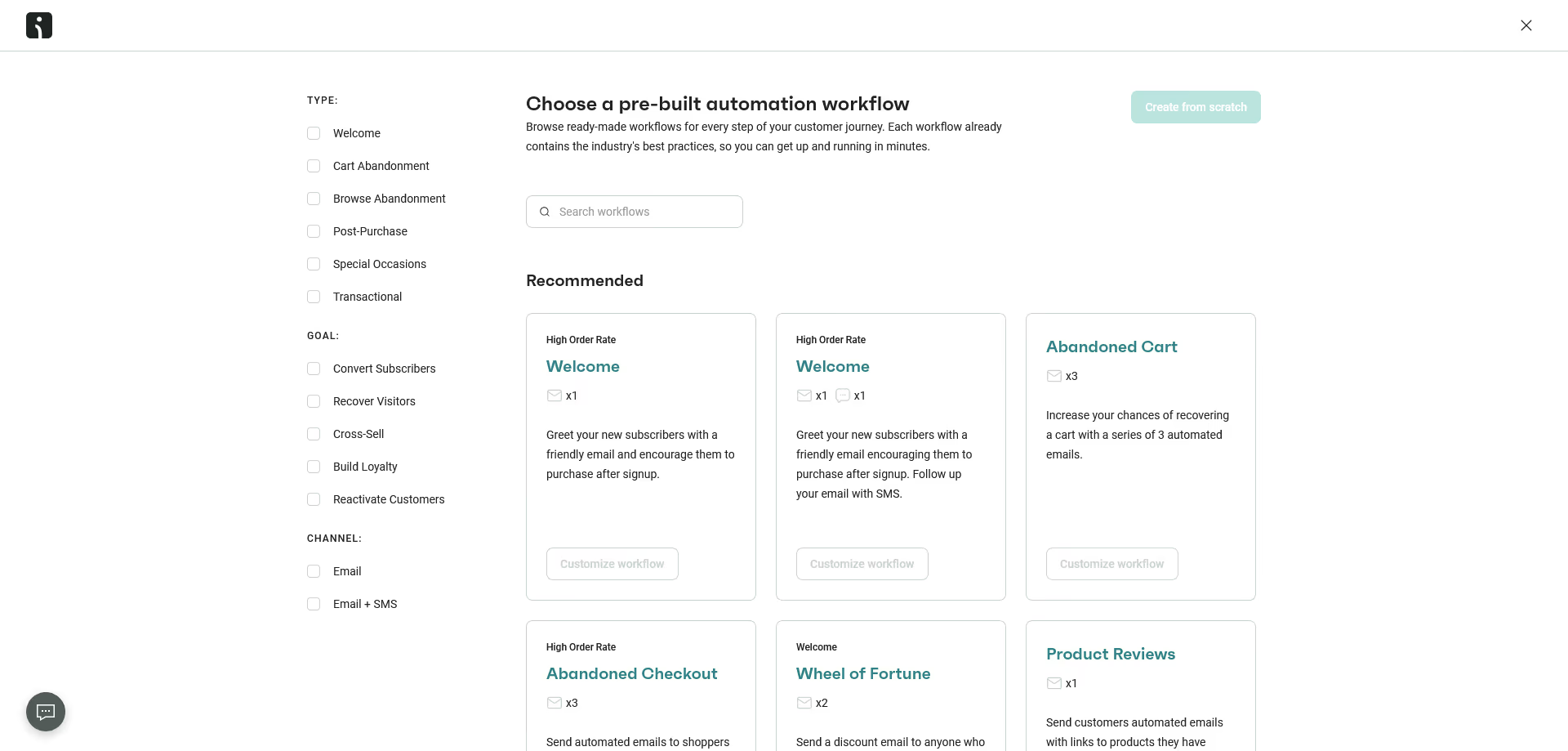
The platform includes ready made workflows for common ecommerce situations, including welcome emails, abandoned cart recovery, post purchase follow ups, order and shipping messages, and customer reactivation.
A simple abandoned cart workflow might look like this:
A shopper adds a product to cart but leaves the store. Omnisend sends an email after a short delay. If the shopper does not buy, the workflow can send another message later. A store can also add SMS or push notifications depending on the customer consent and the campaign strategy.
This is where Omnisend becomes more valuable than a basic email tool. Instead of manually sending every message, store owners can create flows that run automatically based on customer behavior.
Segmentation
Omnisend offers segmentation based on shopping behavior, engagement, profile data, browsing activity, and customer lifecycle stage.
This means you can target groups such as:
First time buyers
Repeat customers
VIP customers
Cart abandoners
Inactive subscribers
Customers who viewed a product but did not buy
Customers who bought from a specific category
Good segmentation helps avoid sending the same message to everyone. For example, a loyal customer should not receive the same first purchase discount as a new visitor. A customer who recently bought running shoes may be more interested in socks, sportswear, or care products than a generic storewide email.
Omnisend also includes AI assisted segmentation features, which can help users create audiences using plain language prompts.
Signup Forms and Popups
Omnisend includes signup forms, popups, teasers, exit intent forms, and SMS opt in collection tools.
These tools help stores grow email and SMS lists without needing a separate popup app. Users can create forms for discount offers, newsletter signups, product updates, or VIP lists.
A common use case is a popup offering a discount to first time visitors in exchange for an email address. Another use case is collecting phone numbers for SMS alerts during a product launch.
Forms can include consent collection, which matters for compliance and customer trust.
Reporting and Revenue Tracking
Omnisend includes reporting tools that show campaign performance, workflow results, sales attribution, email engagement, SMS performance, and product level results.
For ecommerce teams, this is important because open rates and clicks do not tell the full story. Store owners need to know whether campaigns are actually helping generate revenue.
Omnisend reports can help answer questions like:
Which campaign generated the most sales?
Which automation workflow is recovering revenue?
Which products are being ordered through email?
Are SMS campaigns worth the extra cost?
Which customer segments are responding best?
The reporting is clear enough for most small and mid size teams. Larger teams with complex analytics needs may still want additional reporting tools.
Ecommerce Integrations
Omnisend has native integrations with major ecommerce platforms, including Shopify, WooCommerce, BigCommerce, Wix, WordPress, and others. It also supports custom platform connections through API setup.
For Shopify, WooCommerce, and BigCommerce users, this is one of the main reasons to consider Omnisend. The platform can sync customer, product, and order data, which powers automation and segmentation.
This matters because ecommerce marketing depends heavily on real store behavior. Without order and product data, automations are much less useful.
Omnisend Pricing and Plans
Omnisend pricing is based mainly on contact count and plan level. The platform offers a Free plan, Standard plan, Pro plan, and Custom plan.
At the time of writing, the Free plan costs $0 per month and includes all features, but sending is limited to 500 emails per month and up to 250 contacts. Standard starts at $16 per month before promotional discounts. Pro starts at $59 per month before promotional discounts. Omnisend also shows a starter discount where users can pay 3 months upfront and save 30 percent, but discounts can change.
Exact pricing can change depending on contact count, billing choices, SMS usage, and country specific SMS rates.
The Free plan is generous because it gives access to the full feature set, not just a stripped down version. However, the sending limit is low. It is good for testing, learning, and setting up early workflows, but most active stores will outgrow it quickly.
The Standard plan is the most practical starting point for many ecommerce brands. It gives more room to send email campaigns and run automations while keeping the cost reasonable.
The Pro plan makes more sense when a business sends frequently, has a larger list, wants stronger reporting, or plans to use SMS as a serious revenue channel.
Check Omnisend PricingDisclosure: Some links in this article may be affiliate links. If you purchase through them, we may earn a commission at no extra cost to you. Our reviews remain independent and are based on research, product information, pricing, features, and practical value for users.
Pros and Cons
Real Use Cases
Omnisend is most useful when a store wants to turn customer behavior into automated marketing.
Abandoned Cart Recovery
This is one of the clearest use cases.
A customer adds an item to cart but leaves before buying. Omnisend can send an email reminder, wait, then send another message. If the store has SMS consent, it can add a text reminder too.
This type of workflow can help recover sales that might otherwise be lost.
Welcome Series for New Subscribers
When a visitor joins the email list, Omnisend can automatically send a welcome sequence.
A simple welcome series might include:
A thank you message with a discount
A brand story email
A best selling products email
A reminder before the discount expires
This helps turn a new subscriber into a first time buyer without manual follow up.
Post Purchase Follow Up
After a customer buys, Omnisend can send order related messages, product care tips, review requests, or cross sell suggestions.
For example, a skincare brand could send usage instructions after purchase, then recommend a matching product later.
Customer Reactivation
Omnisend can segment inactive customers and send a win back campaign.
A store might target customers who have not purchased in 90 days with a personalized offer, product recommendation, or reminder of new arrivals.
VIP Customer Campaigns
Stores can create segments for repeat buyers or high value customers.
These customers can receive early access to product drops, exclusive discounts, loyalty reminders, or personal thank you messages.
User Experience
Omnisend feels built for busy ecommerce teams.
The interface is generally clean, and the main tools are easy to find. The automation builder is visual, which helps users understand how messages, delays, and conditions work together. The campaign builder is simple enough for beginners, while segmentation gives more experienced marketers room to create targeted campaigns.
For a small store owner, the biggest benefit is that Omnisend does not require starting from a blank page. The platform includes ready made ecommerce workflows and templates, so users can launch faster.
For a marketing team, the benefit is having email, SMS, push notifications, forms, customer data, and reporting under one roof. This reduces the need to connect several separate tools for basic ecommerce marketing.
The learning curve is manageable. Beginners may need time to understand automation logic, consent rules, and segmentation, but the platform is not overly technical.
What Makes Omnisend Different?
The main difference is its ecommerce focus.
Many email tools can send newsletters. Omnisend is more focused on helping online stores respond to shopping behavior.
Its strength comes from combining:
Email campaigns
SMS campaigns
Web push notifications
Ecommerce automation
Product and order data
Customer segmentation
Signup forms
Revenue reporting
This combination makes it useful for stores that want more than basic email. For example, a store can collect a subscriber, track browsing behavior, trigger an abandoned cart workflow, recommend products, send SMS reminders, and measure revenue from the same system.
Another difference is that the Free plan gives access to all features. That is helpful for users who want to test automation and segmentation before paying, even though the sending limits are small.
Possible Drawbacks
Omnisend is strong, but it is not perfect.
The first drawback is that it is clearly designed for ecommerce. If your business does not sell products online, you may not benefit from many of its best features.
The second drawback is pricing growth. Like most email marketing tools, the cost increases as your contact list grows. This is normal, but it means stores should clean inactive contacts regularly and avoid paying for people who never engage.
The third drawback is SMS cost complexity. SMS can be powerful, but pricing varies by country and volume. A store using SMS heavily should check expected monthly sending costs before relying on it.
The fourth drawback is that some advanced marketers may want deeper custom reporting, more flexible design control, or more advanced experimentation tools. Omnisend covers the needs of many small and mid size ecommerce teams, but enterprise teams may still compare it carefully with more advanced platforms.
Omnisend Compared With Alternatives
Omnisend is often compared with Klaviyo, Mailchimp, and ActiveCampaign.
If you run a serious ecommerce store and want strong behavior based marketing, Omnisend and Klaviyo are likely the closest comparison.
If you only need simple newsletters, Mailchimp may be enough.
If you need complex CRM style automation, ActiveCampaign may be worth considering.
For many small and growing online stores, Omnisend offers a practical middle ground. It is easier to approach than some advanced platforms but more ecommerce ready than many basic email tools.
Omnisend Pricing Value
From a value perspective, Omnisend is attractive because the Free plan lets users test the full platform. This is useful for stores that want to explore automations, forms, segmentation, and reports before committing to a paid plan.
The Standard plan is likely the best fit for many growing stores. It gives more sending room and enough features for regular email campaigns and automated flows.
The Pro plan is best when email volume is high, SMS is important, or the team needs more advanced reporting and AI powered personalization.
The main thing to watch is list quality. Paying for a large list is only worth it if subscribers engage and buy. A smaller clean list can be more profitable than a large inactive one.
Who Should Use Omnisend?
We would recommend Omnisend for:
Ecommerce stores that want to improve email and SMS marketing
Shopify, WooCommerce, and BigCommerce users
Brands that want abandoned cart, welcome, and post purchase automations
Teams that want segmentation based on purchase behavior
Stores that want a practical platform without heavy technical setup
Businesses that want to test all features before upgrading
Omnisend is especially useful when a store has enough traffic and customer activity to benefit from automation. If your store is getting regular visitors, carts, purchases, and repeat buyers, Omnisend can help organize those moments into better marketing journeys.
Who May Not Need Omnisend?
Omnisend may not be necessary for:
Personal bloggers
Local service businesses with no ecommerce store
B2B sales teams that need CRM pipelines
Businesses that only send a simple monthly newsletter
Very small stores with little traffic and no regular sales yet
Teams that need highly custom enterprise analytics
If your main need is basic email broadcasting, Omnisend may feel like more tool than you need. But if your goal is ecommerce growth through automated email and SMS, it becomes much more relevant.
Final Verdict
Omnisend is a strong email and SMS marketing platform for ecommerce businesses. It combines the tools most online stores need, including email campaigns, SMS, push notifications, forms, automation workflows, segmentation, product based personalization, and revenue reporting.
Its biggest strengths are ecommerce automation, practical segmentation, strong platform integrations, and the ability to manage multiple marketing channels in one place. The Free plan is useful for testing, and the paid plans give growing stores a clear path to scale.
Its main weaknesses are that it is less useful outside ecommerce, SMS costs need careful planning, and pricing grows with your contact list. Advanced teams may also want to compare reporting and customization depth against higher end alternatives.
Overall, our Omnisend review verdict is positive. We think Omnisend is worth considering if you run an online store and want a balanced, ecommerce focused marketing platform that can help you send better campaigns, recover more carts, and build stronger customer relationships.
Clear Recommendation
Use Omnisend if your business sells products online and you want email, SMS, automation, forms, segmentation, and reporting in one easy to manage platform.
Start with the Free plan if you want to test the features. Move to Standard when your store needs more sending capacity. Consider Pro if you send high volume campaigns, rely on SMS, or need advanced reporting and personalization.
If your business is not ecommerce, or if you only need simple newsletters, compare Omnisend with lighter email marketing tools before paying.
For ecommerce brands that are serious about customer retention, Omnisend is a practical and trustworthy choice.
Explore Omnisend