
Best Cybersecurity Software for Small Businesses 2026
Choosing the best cybersecurity software for a small business is no longer optional. Small companies are now common targets because attackers know many of them have limited IT support, weak passwords, unprotected laptops, and old software.
The good news is that small businesses do not need a huge security team to stay protected. The right small business cybersecurity software can block malware, stop phishing attacks, protect company devices, secure remote workers, and help recover data after an incident.
But not every tool is right for every business. Some products are simple business antivirus tools. Some are advanced endpoint protection software. Some focus on backup, secure remote access, or cloud security software.
In this review, we compare the best options in simple language. We focus on tools that are useful, realistic, and practical for small businesses in 2026.
Quick Picks: Best Cybersecurity Software for Small Business
Best overall: Microsoft Defender for Business
Best easy endpoint protection: Bitdefender GravityZone Small Business Security
Best for managed security: Sophos Endpoint with MDR
Best lightweight protection: ESET PROTECT
Best premium endpoint security: CrowdStrike Falcon Go
Best for remote teams: NordLayer
Best for backup and recovery: Acronis Cyber Protect
How We Chose the Best Tools
When reviewing business cybersecurity software, we looked at what small companies actually need.
A small business usually does not want a complicated system that needs a full-time security engineer. It needs software that is easy to install, easy to manage, and strong enough to protect real business data.
We looked at:
Ease of use, device protection, ransomware protection, phishing defense, remote work security, cloud management, backup options, support, pricing value, and room to grow.
We also considered whether each product works well for businesses with limited IT skills. A good tool should protect the company without creating extra confusion.
CISA recommends important security steps for small and medium-sized businesses, including backups, logging, and stronger cyber practices. That is why this list includes more than a basic antivirus. A real security setup should protect devices, users, cloud apps, and data recovery.
1. Microsoft Defender for Business
Best for: Small businesses using Microsoft 365
Main strength: Strong endpoint protection at a fair price
Good fit for: Offices, service businesses, agencies, and Microsoft-based teams
Microsoft Defender for Business is one of the best choices for companies already using Microsoft 365.
It is designed for small and medium-sized businesses with up to 300 users. Microsoft says it includes endpoint detection and response, automated investigation and remediation, automatic attack disruption, and protection for Windows, macOS, Android, and iOS devices.
This makes it one of the strongest endpoint protection software choices for small teams. It gives small businesses access to features that used to feel only available to larger companies.
We like Microsoft Defender for Business because it fits naturally into a Microsoft environment. If your team already uses Microsoft 365, Outlook, Teams, and Windows laptops, this tool can be easier to manage than adding a totally separate security system.
It also protects against major threats like malware, phishing, and ransomware. Microsoft’s own documentation describes Defender for Business as protection for small and medium businesses against ransomware, malware, phishing, and other threats on devices.
The main downside is that it is best when your business already uses Microsoft. If your company mostly uses Google Workspace or has a very mixed setup, another tool may feel more flexible.
Our verdict: Microsoft Defender for Business is our top pick for the best cybersecurity software for small businesses if your team already uses Microsoft 365.
2. Bitdefender GravityZone Small Business Security
Best for: Easy endpoint protection
Main strength: Strong malware, phishing, and ransomware defense
Good fit for: Small businesses that want a simple setup and central control
Bitdefender GravityZone Small Business Security is built for small businesses that want powerful protection without a complex dashboard.
Bitdefender describes GravityZone Small Business Security as easy-to-manage protection against phishing, ransomware, and other threats. It is designed for small businesses that want enterprise-level security at a competitive investment.
This is one of the best ransomware protection software options for smaller teams because it focuses on common threats that hit small companies every day.
The central management console is also useful. Instead of checking every device one by one, a business owner or IT manager can monitor protected devices from one place.
Bitdefender is a strong fit for local offices, online stores, small healthcare clinics, law firms, marketing agencies, and accounting teams. These businesses often handle sensitive customer data but do not always have a large IT department.
We also like that Bitdefender can grow with the business. The platform supports expansion with more endpoints, features, and upgrades as the company grows.
The downside is that some advanced features may require choosing the right plan or add-ons. Small businesses should check which features are included before buying.
Our verdict: Bitdefender GravityZone is one of the best small business cybersecurity software tools for companies that want strong security with less daily work.
3. Sophos Endpoint with MDR
Best for: Small businesses that want expert help
Main strength: Managed detection and response
Good fit for: Teams without a dedicated security department
Sophos Endpoint is a strong choice for small businesses that want more than basic antivirus.
Sophos offers endpoint detection and response tools that protect endpoints and servers from advanced attacks in the office, remote locations, or cloud environments. It also focuses on stopping more threats upfront to reduce security workload.
The biggest reason to consider Sophos is its MDR option. MDR means managed detection and response. In simple words, security experts help monitor, investigate, and respond to threats for you.
Sophos describes MDR as a fully managed, 24/7 service delivered by experts who detect and respond to cyberattacks that technology alone may not prevent.
That is very useful for a small business. Many companies do not have someone watching alerts at night or on weekends. With MDR, the business gets more support without building a full internal security team.
Sophos can be a good fit for finance firms, medical offices, consultants, and growing companies that need stronger protection but do not want to manage everything alone.
The downside is pricing. Sophos may require a quote or partner discussion, so it may not feel as simple as buying a basic online subscription.
Our verdict: Sophos Endpoint with MDR is one of the best cybersecurity tools for small businesses that want expert monitoring and stronger response support.
4. ESET PROTECT
Best for: Lightweight security
Main strength: Balanced protection without slowing devices
Good fit for: Small offices, professional services, and older laptops
ESET PROTECT is a good choice for small businesses that want reliable protection with a lighter feel.
ESET says its PROTECT platform helps defend organizations against ransomware, phishing, zero-day threats, and targeted attacks. The company also describes its approach as multilayered and prevention-first.
This makes ESET a strong option for companies that want business cybersecurity software but do not want heavy software that slows down daily work.
We like ESET for teams that need steady protection but prefer a clean, controlled setup. It is a good match for accountants, designers, consultants, and small offices where employees rely on their computers all day.
ESET may feel a little more technical than some beginner tools, but it is still manageable for a small company with a tech-savvy owner or outside IT helper.
It is especially useful if your team wants a balance between protection and performance.
Our verdict: ESET PROTECT is a strong pick for small businesses that want lightweight endpoint protection software with ransomware and phishing defense.
5. CrowdStrike Falcon Go
Best for: Premium endpoint security
Main strength: Modern protection from a major security brand
Good fit for: Small businesses that want stronger device protection
CrowdStrike Falcon Go is a premium option for small businesses that want modern endpoint protection.
CrowdStrike lists Falcon Go, Falcon Pro, and Falcon Enterprise as security bundles. Its pricing page shows Falcon Go as one of the entry bundles and highlights next-generation antivirus, device control, and mobile device protection in its higher listed bundles.
CrowdStrike is often known for enterprise security, but Falcon Go makes the brand more accessible for smaller teams.
We like it for businesses that want strong protection for laptops, desktops, and mobile devices. Device control can be especially useful because USB drives and unmanaged devices can create security risks.
CrowdStrike may not be the cheapest choice. Very small teams with basic needs may find Bitdefender or Microsoft Defender easier to justify. But for companies that handle sensitive data, the extra protection may be worth it.
Our verdict: CrowdStrike Falcon Go is a strong premium option for small businesses that want advanced endpoint protection software from a well-known cybersecurity vendor.
6. NordLayer
Best for: Remote and hybrid teams
Main strength: Secure business access and network protection
Good fit for: Remote teams, agencies, SaaS companies, and consultants
Not every cybersecurity product is an antivirus. Small businesses also need to protect how employees connect to company apps and files.
NordLayer is a good option for remote and hybrid teams. NordLayer describes itself as a network security platform for business and says its platform is built to block threats like malware, phishing, and insider risks out of the box.
This makes it useful for companies with employees working from home, coworking spaces, hotels, or coffee shops.
NordLayer can help with secure access, business VPN needs, and safer connections to company resources. It is not a full replacement for endpoint protection, but it works well beside tools like Microsoft Defender, Bitdefender, or Sophos.
We like NordLayer for companies that use many cloud apps. If your team works in Google Workspace, Microsoft 365, Slack, project management tools, and CRM systems, access security becomes very important.
This is where cloud security software and network security tools matter. They help protect not only the device, but also the way employees connect to business data.
Our verdict: NordLayer is a smart choice for remote teams that need secure access and simple cloud-friendly protection.
7. Acronis Cyber Protect
Best for: Backup and recovery
Main strength: Cybersecurity plus data protection
Good fit for: Businesses that cannot afford to lose files
Acronis Cyber Protect is different from many tools on this list because it combines cybersecurity with backup, disaster recovery, and endpoint management.
Acronis describes Cyber Protect Cloud as an integrated solution that includes backup, disaster recovery, cybersecurity, and endpoint management. It also lists security areas like EDR, MDR, data loss prevention, email security, and Microsoft 365 email archiving.
This matters because prevention is only one part of cybersecurity. A small business also needs a way to recover.
If files are deleted, a laptop is stolen, or ransomware locks important data, backups can save the business from major downtime. CISA also recommends backing up business data because recovery is faster and less stressful when critical information is protected.
Acronis is a strong choice for businesses that store contracts, client files, invoices, employee records, or project data.
The downside is that it may feel broader than a simple antivirus tool. But for many companies, that is a benefit. It gives both protection and recovery in one place.
Our verdict: Acronis Cyber Protect is one of the best options for small businesses that want cybersecurity and backup together.
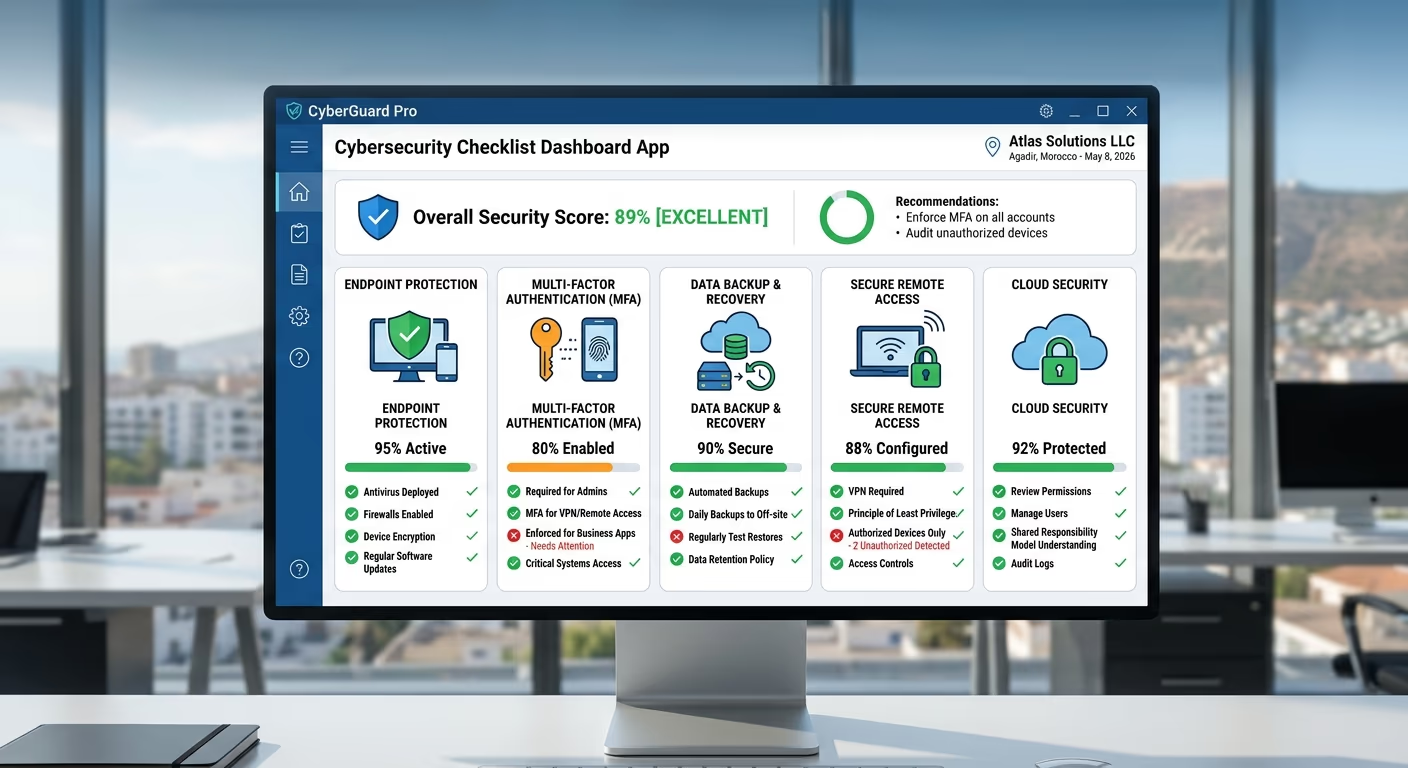
What Cybersecurity Software Does a Small Business Need?
A small business does not need to buy every tool at once. That can get expensive and confusing.
A better approach is to build a simple security stack.
Start with endpoint protection software for laptops and desktops. This protects the devices employees use every day.
Add ransomware protection software to reduce the risk of locked or stolen files.
Use multi-factor authentication for important accounts. The U.S. Small Business Administration says MFA helps verify identity by requiring more than a username and password.
Use backup and recovery software so your business can restore files after an incident.
Add secure access or cloud security software if your team works remotely or uses many online tools.
This setup gives most small businesses a strong foundation without making security feel overwhelming.
Final Verdict: Best Cybersecurity Software for Small Business
For most Microsoft-based teams, Microsoft Defender for Business is the best overall choice. It is affordable, powerful, and built for small and medium-sized businesses.
For companies that want easy all-around protection, Bitdefender GravityZone Small Business Security is our top dedicated endpoint pick. It is simple, strong, and built for small business needs.
For teams that want expert help, Sophos Endpoint with MDR is a great option. For premium endpoint security, CrowdStrike Falcon Go is worth considering. For remote teams, NordLayer adds useful access protection. For backup and recovery, Acronis Cyber Protect is hard to ignore.
The best cybersecurity software for a small business is not always the most expensive product. It is the one your team can actually use, manage, and trust.
In 2026, the right small business cybersecurity software should protect devices, block phishing, reduce ransomware risk, support cloud tools, and help your company recover quickly when something goes wrong.
Choose the tool that fits your team today, but also think about where your business will be in the next year. Good cybersecurity should grow with you, not slow you down.