
Proton VPN Review: Privacy First VPN Tested
Disclosure: Some links in this article may be affiliate links. If you purchase through them, we may earn a commission at no extra cost to you. Our reviews remain independent and are based on research, product information, pricing, features, and practical value for users.
In this Proton VPN review, we look at one of the most trusted names in the privacy space and ask a practical question: is Proton VPN actually worth using?
For many people, a VPN is no longer just a tool for tech experts. It is something you may use on public WiFi, while traveling, while streaming, or when you simply do not want your internet provider, advertisers, or websites to track everything you do online.
Proton VPN comes from the same company behind Proton Mail, and that matters. Proton has built its reputation around privacy, encryption, open source software, and user trust. That does not automatically make Proton VPN perfect, but it does make it one of the more serious VPN options on the market.
After reviewing the current official Proton VPN information, we think Proton VPN is strongest for people who care about privacy, transparency, and a free plan that does not feel like a trap. It is less ideal for users who only want the cheapest VPN possible or who need unlimited device connections on one account.
What Is Proton VPN?
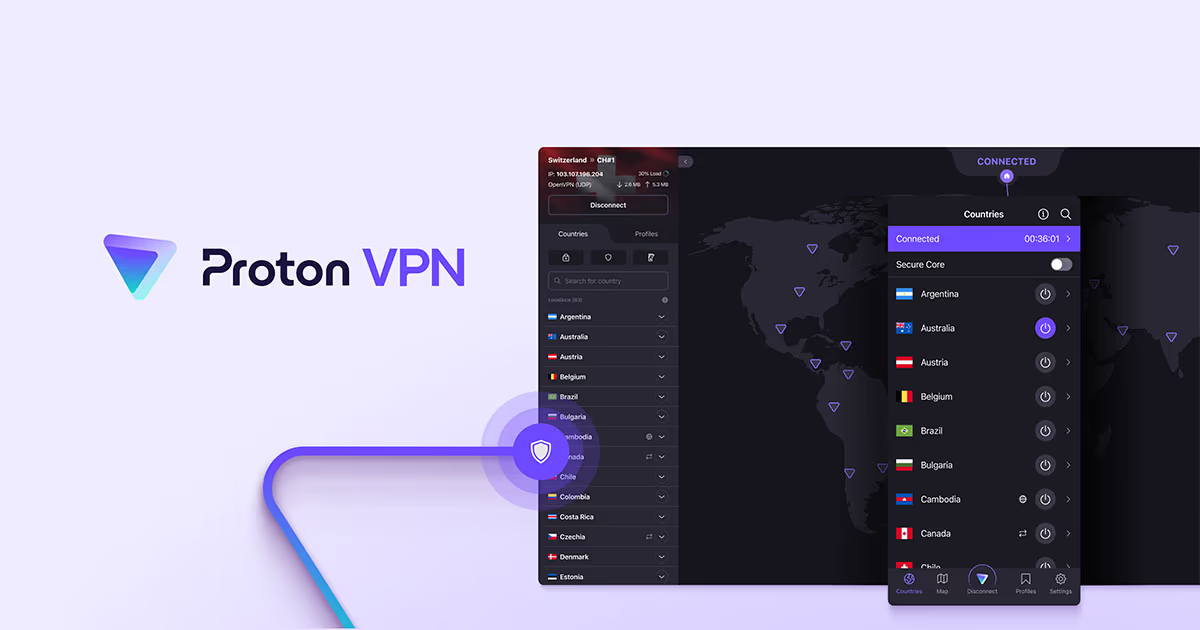
Proton VPN is a virtual private network service that encrypts your internet connection and routes it through VPN servers. In simple terms, it helps hide your real IP address and makes it harder for websites, advertisers, internet providers, and some network owners to monitor your browsing activity.
It is available on major platforms, including Windows, macOS, Android, iPhone, iPad, Linux, Chrome, Firefox, Chromebook, Apple TV, Android TV, and Fire TV.
The service offers a free plan and paid plans. The free plan is one of Proton VPN’s biggest selling points because it includes unlimited data, no ads, and the same core privacy approach as the paid plans. The paid plans unlock faster speeds, more server locations, streaming support, P2P support, NetShield, Secure Core, and more advanced features.
Who Is Proton VPN Best For?
Proton VPN is best for users who want a VPN that takes privacy seriously.
It is a strong fit for:
People who use public WiFi in airports, cafes, hotels, schools, or shared offices
Users who want a no logs VPN with independent audits
Anyone who wants a free VPN without data limits
Travelers who need secure access to the internet on multiple devices
Streamers who want paid VPN access to popular platforms
People who already use Proton Mail, Proton Pass, Proton Drive, or Proton Calendar
Users who prefer open source security software
It may not be the best fit for:
Users who want unlimited device connections
People who only care about the lowest possible price
Casual users who do not need advanced privacy features
Anyone expecting a VPN to make them fully anonymous online
A VPN improves privacy, but it does not make unsafe browsing safe. It also does not replace good passwords, two factor authentication, browser privacy settings, or common sense.

Key Features
Strong Privacy Foundation
The biggest reason to consider Proton VPN is privacy.
Proton says it follows a strict no logs policy. That means it does not keep records of the websites you visit, your traffic content, your real IP address, your session lengths, or your location based browsing activity.
This is important because a VPN provider sits between you and the internet. If a VPN keeps detailed logs, it can become another company tracking you. Proton’s value is that its privacy promise is central to the product, not an extra feature added later.
Open Source Apps
Proton VPN apps are open source, which means the code can be inspected. This does not matter to every everyday user, but it matters for trust.
With closed source apps, users mostly have to trust marketing claims. With open source apps, security researchers and the wider community can examine how the software works.
That does not mean every bug will be found instantly, but it is a stronger transparency model than most VPN users get.
Independent Audits
Proton VPN has published independent audit information related to its no logs policy and app security. The latest no logs audit update Proton published was in September 2025.
This gives Proton VPN more credibility than providers that simply claim they do not log activity without making audit results available.
Audits are not magic. They show what was reviewed at a specific time. Still, regular independent reviews are a meaningful trust signal.
Swiss Privacy Jurisdiction
Proton is based in Switzerland, which is often seen as a privacy friendly jurisdiction. Proton also states that Swiss law does not force VPN providers to keep user connection logs.
For privacy conscious users, jurisdiction matters because VPN companies must operate under the laws of their home country. Switzerland gives Proton VPN a stronger privacy story than some providers based in more aggressive surveillance environments.
Secure Core
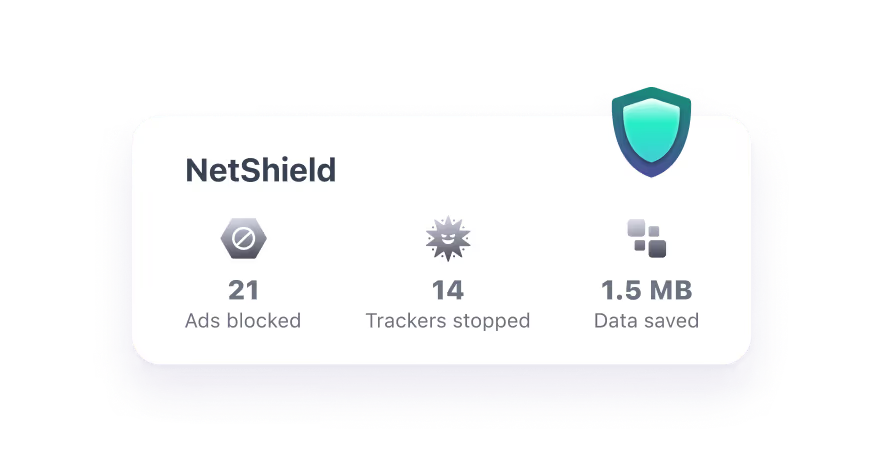
Secure Core is one of Proton VPN’s more advanced tools. It routes your traffic through privacy friendly server locations before sending it to the final destination server.
In plain English, Secure Core adds another layer between you and the website or service you are visiting.
This is not something every user needs all the time. It may also reduce speed because traffic takes a longer route. But for journalists, activists, researchers, or users in higher risk environments, it is a valuable feature.
NetShield Ad Blocker
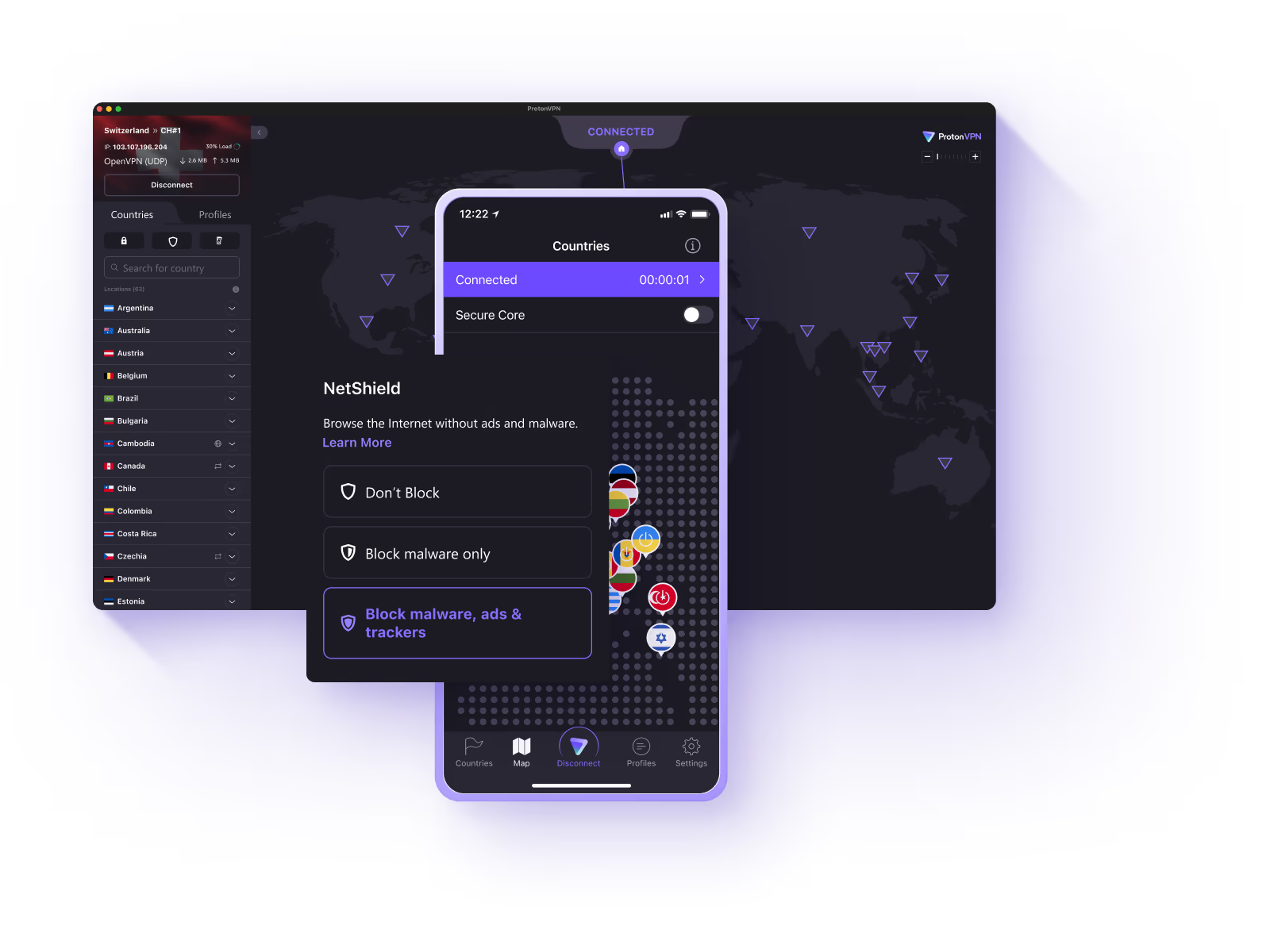
NetShield is Proton VPN’s DNS filtering feature. It can block ads, trackers, and some malware domains.
This is useful because many websites load trackers in the background. Blocking those requests can improve privacy and sometimes make pages feel cleaner or faster.
NetShield is not a full antivirus tool, and it should not be treated as one. But as part of a VPN package, it is a helpful extra layer.
Kill Switch And Always On VPN
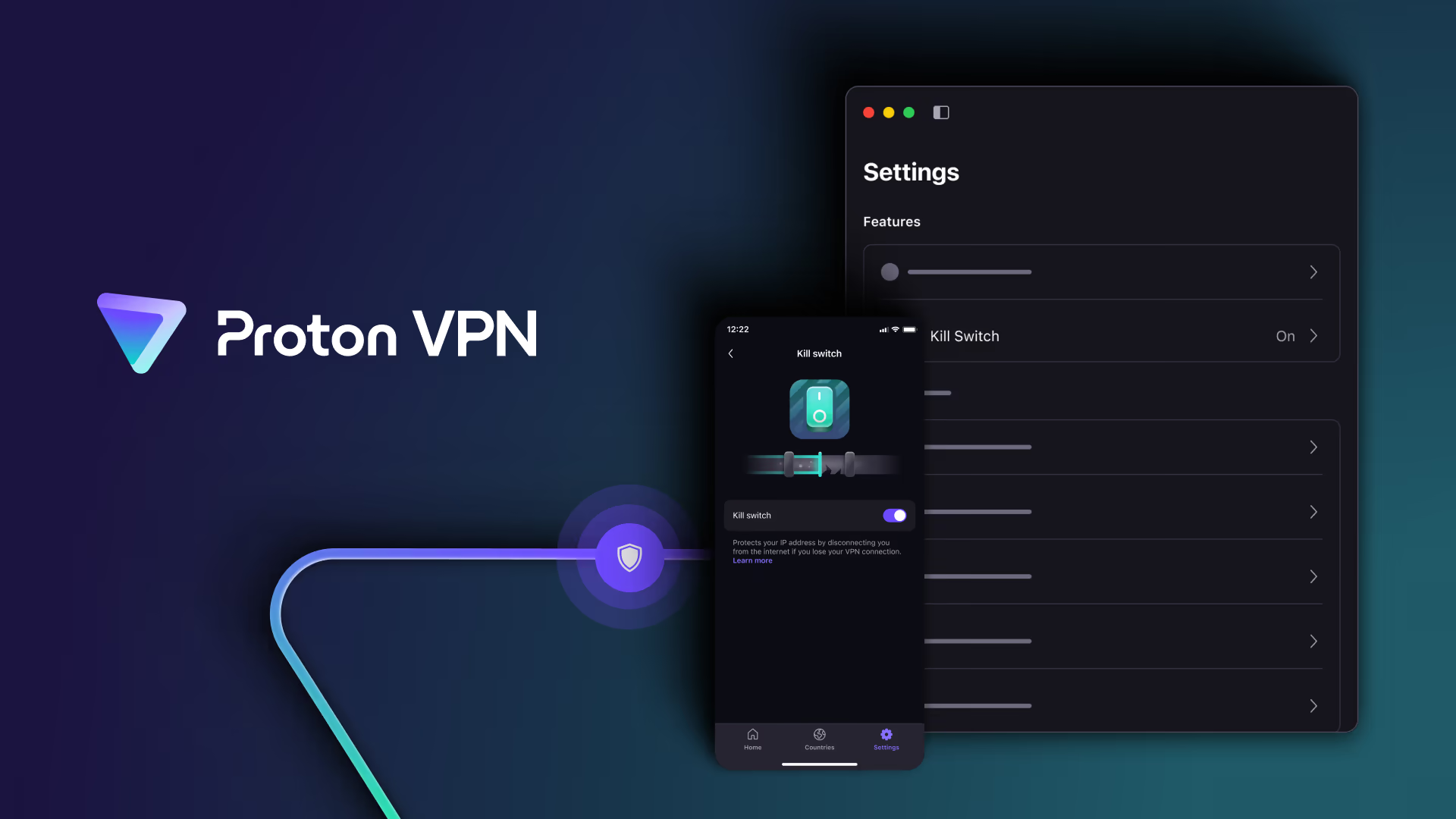
A kill switch helps protect your real IP address if the VPN connection drops. Instead of quietly switching back to your normal internet connection, the app can block traffic until the VPN is restored.
Always on VPN tries to reconnect automatically when the VPN connection is interrupted.
These features are especially useful on public WiFi or mobile connections where networks can be unstable.
DNS Leak Protection
DNS requests can reveal the websites you are trying to visit. Proton VPN routes DNS queries through the encrypted VPN tunnel to help prevent those requests from leaking outside the VPN connection.
This is one of those features most users never think about, but it matters for real privacy.
VPN Accelerator
Proton VPN includes VPN Accelerator technology, which Proton says can improve VPN speeds significantly in some situations.
In real life, speed still depends on your location, internet provider, chosen server, server load, device, and protocol. No VPN can guarantee perfect speed everywhere. Still, Proton VPN is clearly designed for performance, not just privacy.
Streaming Support
Paid Proton VPN plans support streaming on popular services such as Netflix, Hulu, Disney Plus, Prime Video, and others.
The free plan does not guarantee streaming access. Proton says it does not block streaming on the free plan, but guaranteed streaming support is only part of paid plans.
That distinction matters. If your main reason for buying a VPN is streaming, you should look at Proton VPN Plus or Proton Unlimited rather than relying on the free plan.
P2P And Torrenting
Proton VPN supports P2P and BitTorrent on paid plans through suitable servers.
This is useful for users who share files legally and want to protect their IP address while doing so. As always, a VPN should not be used to break copyright law or violate service terms.
Multi Device Support
The free plan secures one device at a time.
Paid Proton VPN plans allow up to 10 simultaneous device connections. For most individuals and many small households, that is enough. You can protect a laptop, phone, tablet, streaming device, and browser extension under one account.
However, some competitors offer unlimited device connections, so Proton VPN is not the most generous option in this specific area.
Pricing And Plans
Proton VPN has a free plan and several paid VPN Plus options. Based on the pricing image provided, the current offer focuses on three paid terms: 2 year, 1 year, and 1 month.
Pricing can change by country, currency, promotion, account status, and billing period. At the time of this update, the current USD prices shown below match the offer details from the provided pricing image.
Plan | Current price | Discount | Billing detail | Best for |
|---|---|---|---|---|
Proton VPN Free | $0.00 per month | None | No payment required | Basic privacy, public WiFi protection, and testing Proton VPN |
VPN Plus, 2 year plan | $2.99 per month | 70% off | Billed at $71.76 for the first 24 months, then renews at $83.88 every 12 months | Best overall value for long term users |
VPN Plus, 1 year plan | $3.49 per month | 65% off | Billed at $41.88 for the first 12 months, then renews at $83.88 every 12 months | Strong balance between savings and commitment |
VPN Plus, 1 month plan | $4.99 per month | 50% off | Billed at $4.99 every month | Best for short term flexibility |
The offer image also shows estimated savings of $168 on the 2 year plan, $78 on the 1 year plan, and $5 on the 1 month plan.
All three paid plans include a 30 day money back guarantee.
Which Plan Should You Choose?
For most readers, the 2 year plan is the best deal. It has the lowest monthly rate and the biggest total discount.
The 1 year plan is a good middle option if you want a lower upfront payment while still getting meaningful savings.
The 1 month plan makes sense if you want to try Proton VPN for a short period without a long commitment.
Proton VPN Free is still a strong option if you only need basic privacy and want to test the service before upgrading.
Check Proton VPN PricingPros And Cons
Pros | Cons |
|---|---|
|
|
Real Use Cases
Using Public WiFi Safely
Imagine you are working from a cafe or airport. Public WiFi may be convenient, but it is not always safe. A VPN encrypts your connection so the network owner or other people on the same network have a harder time watching your traffic.
For this use case, Proton VPN Free may be enough if you only need to protect one device. If you travel with a phone, laptop, and tablet, VPN Plus is more practical.
Keeping Your Internet Provider Out Of Your Browsing
Without a VPN, your internet provider can often see the domains you connect to. A VPN helps reduce that visibility by routing traffic through encrypted VPN servers.
This does not mean Proton VPN can erase all tracking. Websites can still use cookies, accounts, browser fingerprinting, and other methods. But it does give you more privacy from your internet provider and local network.
Streaming While Traveling
If you travel often, you may want access to your normal streaming libraries from another location. Proton VPN paid plans support streaming on major platforms.
This is one of the reasons VPN Plus is better than the free plan for entertainment. The free plan is built more for privacy than reliable streaming.
Torrenting And File Sharing
Paid Proton VPN plans support P2P file sharing. This helps protect your IP address when using BitTorrent for legal downloads.
For example, if you download open source software, public domain media, or large legal files through P2P, Proton VPN can add a useful privacy layer.
Protecting Multiple Devices
A paid plan covers up to 10 devices at once. That is enough for most users who want protection on a phone, laptop, desktop, tablet, browser, and streaming device.
Families with many devices may prefer a VPN with unlimited device connections, but most individuals will be fine with Proton’s limit.
Privacy For Higher Risk Users
Journalists, activists, researchers, and users in restrictive environments may benefit from features like Secure Core, Tor over VPN, kill switch, and audited no logs claims.
No VPN can remove every risk. But Proton VPN is one of the better choices for people who care about serious privacy rather than just entertainment.
User Experience
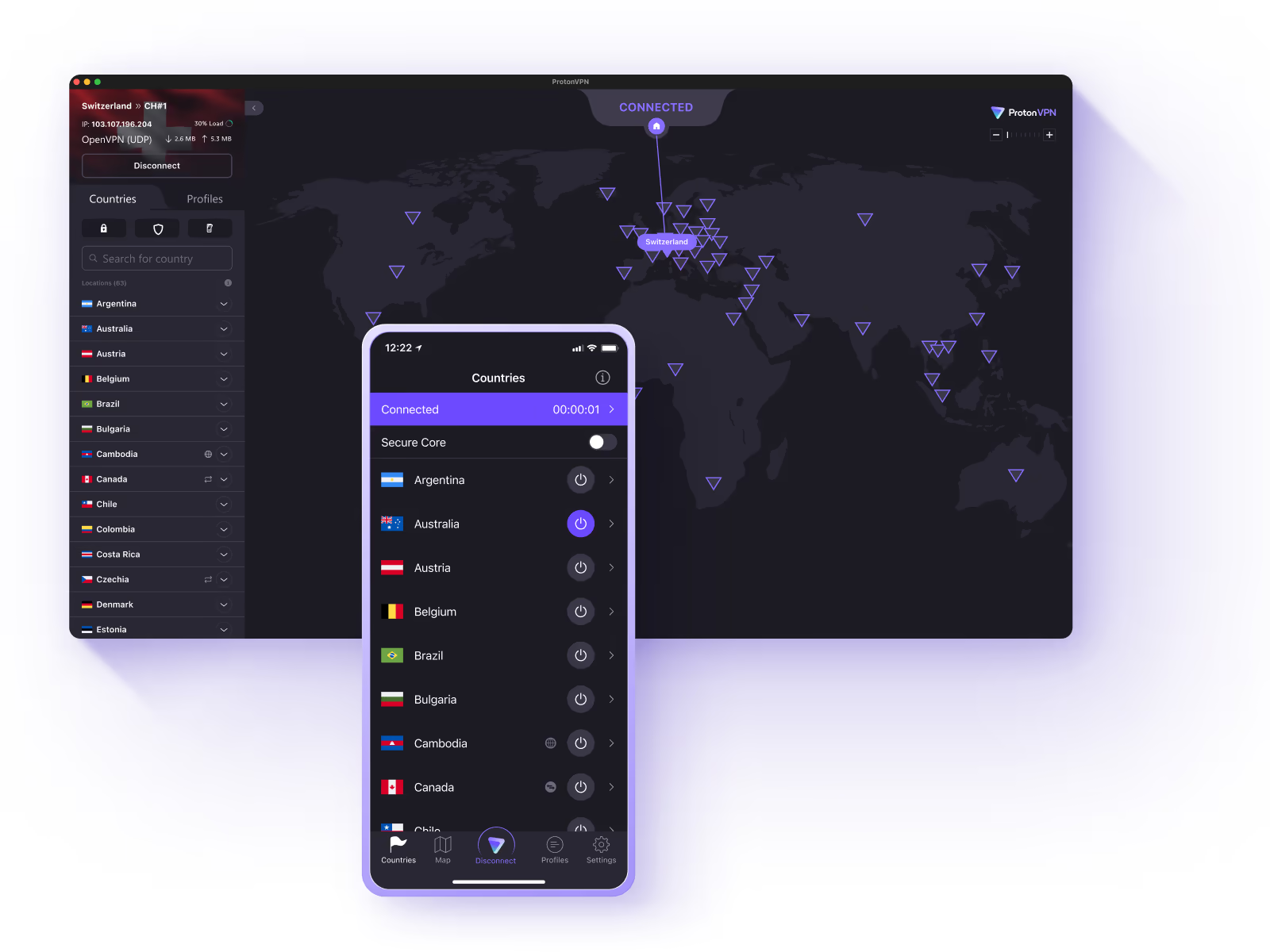
Proton VPN is easy enough for beginners, but it still gives advanced users enough control.
The basic flow is simple. You install the app, sign in, and connect. The Quick Connect option chooses a suitable server automatically, which is ideal for users who do not want to think about server lists or protocols.
If you want more control, you can choose a country, server type, or feature based connection. For example, you may pick a streaming friendly paid server, a P2P server, or Secure Core.
The apps feel clean and modern. Proton does not overload the interface with aggressive upsells in the way some free VPNs do. That makes the free plan feel more trustworthy.
The main learning curve comes from advanced features. Secure Core, Tor over VPN, protocols, port forwarding, split tunneling, and NetShield settings may be confusing at first. Most people can ignore those until they need them.
What Makes Proton VPN Different?
The biggest difference is that Proton VPN does not feel like a typical free VPN.
Many free VPNs limit data, show ads, sell user data, track activity, or push users aggressively toward paid upgrades. Proton VPN’s free plan is different because it is funded by paid users and built around privacy.
The second major difference is transparency. Proton VPN offers open source apps and independent audits. That matters in a VPN market where trust is often hard to judge.
The third difference is the Proton ecosystem. If you use Proton Mail, Proton Pass, Proton Drive, or Proton Calendar, Proton VPN fits naturally into the same privacy focused account.
The fourth difference is Secure Core. Many VPNs offer multi hop style features, but Proton’s approach is closely tied to its privacy mission and infrastructure choices.
Possible Drawbacks
Proton VPN is strong, but it is not perfect.
The free plan is generous, but it is still limited. You only get one active device, medium speed, and limited server location control. If you want to choose from the full global network, stream reliably, or torrent, you need a paid plan.
The paid plan is fairly priced for what it offers, but it is not always the cheapest VPN. Some competitors run very aggressive discounts, especially on long term plans.
The 10 device limit is fine for most people, but it is not as flexible as unlimited device VPNs. If you have a large family or many devices, this may matter.
Advanced privacy features can also be overkill for casual users. If all you want is a simple VPN to change location occasionally, Proton VPN may feel more serious than necessary.
Finally, like every VPN, Proton VPN can slow your connection. This is normal. Encryption and rerouting take extra work. Speed will depend on your location, server choice, device, and internet provider.
Comparison With Alternatives
Proton VPN Vs NordVPN
NordVPN is often seen as a strong all around VPN with fast speeds, many features, and a very polished app experience. It is a good option for users who want a mainstream VPN with a large marketing presence and many security tools.
Proton VPN feels more privacy centered. Its free plan is better for users who do not want to pay right away, and its open source approach gives it a transparency advantage.
Choose Proton VPN if privacy, open source apps, and a strong free plan matter most.
Choose NordVPN if you want a very popular paid VPN with a broad feature set and frequent bundled deals.
Proton VPN Vs Surfshark
Surfshark is popular because it usually offers unlimited device connections. That makes it attractive for large households.
Proton VPN allows up to 10 devices on paid plans, which is enough for many users but not unlimited.
Choose Proton VPN if you prefer a privacy first provider with open source apps and an excellent free plan.
Choose Surfshark if unlimited device connections are your top priority.
Proton VPN Vs ExpressVPN
ExpressVPN is known for simplicity, polished apps, and strong ease of use. It is often a good choice for users who want a VPN that feels very straightforward.
Proton VPN gives you more privacy focused transparency, a free plan, and a broader Proton ecosystem.
Choose Proton VPN if you want more privacy tools and better free access.
Choose ExpressVPN if you value a simple premium experience and do not need a free plan.
Is Proton VPN Safe?
Yes, Proton VPN appears to be one of the safer VPN choices for most users.
It uses strong encryption, supports secure VPN protocols such as WireGuard and OpenVPN, offers kill switch protection, includes DNS leak protection, and follows a strict no logs policy.
Its open source apps and independent audits make it more trustworthy than many VPN services that rely only on marketing claims.
That said, safe does not mean perfect. You still need secure passwords, account protection, browser privacy settings, and careful online habits.
Is Proton VPN Good For Streaming?
Yes, but we recommend a paid plan for streaming.
Proton VPN Plus and Proton Unlimited are the right choices if you want to stream through VPN servers. Proton says paid plans support major streaming services, including Netflix, Hulu, Disney Plus, Prime Video, and others.
The free plan is not the right option if streaming is your main goal. It may work sometimes, but Proton only guarantees streaming access on paid plans.
Is Proton VPN Free Plan Worth It?
Yes. Proton VPN Free is one of the best free VPN plans available because it includes unlimited data, no ads, and core privacy protections.
It is ideal for:
Occasional browsing privacy
Public WiFi protection
Testing Proton VPN before paying
Users who only need one protected device
It is not ideal for:
Streaming
Torrenting
Choosing from the full server network
Protecting several devices at once
Users who need the fastest speeds
The free plan is genuinely useful, not just a limited trial. But serious users will still get a much better experience from VPN Plus.
Is Proton VPN Worth Paying For?
Proton VPN is worth paying for if you care about privacy, want reliable speed, need more server locations, stream regularly, use P2P, or want protection on multiple devices.
VPN Plus is the most sensible paid plan for most readers. It gives you the full VPN feature set without paying for the wider Proton ecosystem.
Proton Unlimited is worth considering only if you also want Proton Mail, Proton Pass, Proton Drive, Calendar, Docs, and Sheets. For users who already want those tools, Unlimited can be a strong value. For users who only need a VPN, VPN Plus is simpler.
Final Verdict
Proton VPN is one of the best VPN services for privacy focused users. It combines a rare free plan with unlimited data, open source apps, independent audit history, strong security features, Swiss jurisdiction, and a large paid server network.
It is not perfect. The free plan has real limits, the best prices require longer commitments, and the 10 device cap is not as generous as unlimited device competitors.
Still, Proton VPN feels more trustworthy than many VPNs because its product decisions match its privacy message. It does not rely on ads. It does not push a suspicious free model. It publishes audits. It makes its apps open source. It gives users a real free option before asking them to pay.
Clear Recommendation
We recommend Proton VPN for anyone who wants a secure VPN with strong privacy values, especially if you want to start with a free plan and upgrade only when you need faster speeds, streaming, P2P, or more devices.
Choose Proton VPN Free if you want simple private browsing on one device.
Choose Proton VPN Plus if you want the best overall VPN experience.
Choose Proton Unlimited if you want Proton’s full privacy ecosystem, not just the VPN.
Overall, Proton VPN is a smart choice for readers who want a balanced VPN that is private, transparent, practical, and trustworthy without feeling overly complicated.
Explore Proton VPN